Bosch Rexroth HCS02.1E-W0054-A-03-NNNN IndraDrive C: Industrial Data Link for Smart Factory Networks
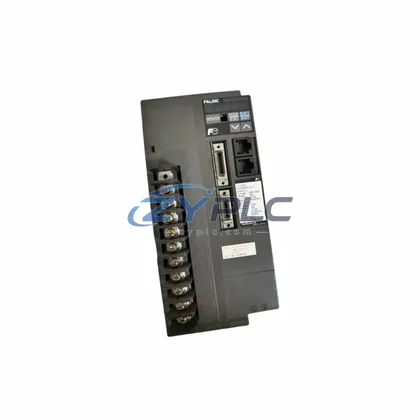
The Bosch Rexroth HCS02.1E-W0054-A-03-NNNN is a compact, high-performance AC servo drive from the IndraDrive C series, engineered to serve as a critical node in modern industrial communication architectures. With native SERCOS III protocol support, this drive does not merely control motor motion — it actively participates in the real-time data fabric that connects field devices, PLC controllers, remote I/O modules, HMI panels, SCADA systems, and upper-level MES platforms into a unified, transparent smart factory network.
In today’s industrial environments, the ability to move data reliably across every layer of the automation pyramid is as important as the mechanical performance of the drive itself. The HCS02.1E-W0054-A-03-NNNN addresses this requirement by integrating seamlessly into SERCOS III ring topologies, enabling deterministic, low-latency communication between the drive and the motion controller — typically a Bosch Rexroth IndraMotion MLC or IndraControl L series PLC. This architecture ensures that position feedback, velocity commands, torque limits, and diagnostic data are exchanged in real time, with cycle times as low as 62.5 µs, supporting the most demanding synchronization requirements in multi-axis machining, packaging, and assembly lines.
Compatibility & Integration Notes
| Parameter |
Specification |
| Communication Protocol |
SERCOS III (IEC 61491) |
| Interface Type |
Dual RJ45 Ethernet ports (ring topology) |
| Transmission Rate |
100 Mbit/s Full Duplex |
| Cycle Time |
62.5 µs – 65 ms (configurable) |
| Network Compatibility |
SERCOS III ring, IndraMotion MLC, IndraControl L/XL |
| Power Rating |
5.4 kVA continuous output |
| DC Bus Voltage |
540 VDC (from HMV01 or HMV02 supply unit) |
| System Application |
CNC, robotics, packaging, assembly, material handling |
| Diagnostic Interface |
IndraWorks Engineering, SERCOS diagnostic tools |
| Warranty |
warranty terms confirmed during quotation — tested before shipment |
Connected Automation Data Flow
Understanding the HCS02.1E-W0054-A-03-NNNN requires viewing it within the full data flow of an automated production cell. At the field level, sensors and encoders feed real-time position and velocity signals directly into the drive’s feedback interface. The drive processes these signals and executes motion commands received over the SERCOS III network from the IndraMotion MLC motion controller, which coordinates multi-axis movements across multiple IndraDrive C units on the same ring segment.
The DC bus powering the HCS02.1E-W0054-A-03-NNNN is typically supplied by a Bosch Rexroth HMV01 or HMV02 regenerative power supply unit, which feeds a shared DC bus rail to which multiple HCS02 drives are connected. This common bus architecture reduces energy consumption through regenerative braking and simplifies cabinet wiring. Alongside the HCS02.1E-W0054-A-03-NNNN, companion drives such as the HCS02.1E-W0028-A-03-NNNN or HCS02.1E-W0012-A-03-NNNN may be deployed on the same bus for lower-power axes, while the HCS03 series handles higher-power spindle or main axis applications.
At the control layer, the IndraControl L45 or IndraControl XM PLC manages I/O signals from remote I/O modules — such as the Rexroth Inline I/O system or third-party PROFINET remote I/O — and coordinates these with the motion commands sent to the drives. The PLC also communicates upward to SCADA and HMI systems via OPC UA or PROFINET, providing operators with real-time visibility into drive status, axis positions, alarm states, and energy consumption. An IndraControl VCP or third-party HMI panel running IndraWorks HMI software displays this data on the shop floor, while a SCADA server aggregates it for production reporting and KPI dashboards.
For facilities integrating legacy fieldbus devices alongside modern Ethernet-based systems, a protocol gateway — such as the HMS Anybus X-gateway or a Bosch Rexroth communication module — bridges PROFIBUS DP, DeviceNet, or Modbus RTU devices into the SERCOS III or PROFINET backbone, ensuring that older sensors, drives, and actuators remain part of the connected data flow without requiring full hardware replacement.
Solving Data Isolation in Industrial Sites
One of the most persistent challenges in industrial automation is data isolation — the condition where machines, drives, and controllers operate in silos, unable to share status information with each other or with upper-level systems. The HCS02.1E-W0054-A-03-NNNN directly addresses this problem through its SERCOS III communication architecture, which provides a standardized, open protocol layer that integrates the drive into the plant-wide data network.
In facilities where multiple generations of equipment coexist, protocol fragmentation is common. A production line may include SERCOS II legacy drives, PROFIBUS-connected sensors, Modbus-based power meters, and Ethernet/IP-enabled robots — all generating valuable data that remains inaccessible to the SCADA system because no common communication layer exists. By deploying the HCS02.1E-W0054-A-03-NNNN as part of a standardized IndraDrive C platform, engineers can consolidate motion control communication onto a single SERCOS III ring, reducing the number of protocol translation points and simplifying network maintenance.
Remote diagnostics represent another critical capability enabled by the drive’s network integration. Through IndraWorks Engineering software, maintenance engineers can remotely access drive parameters, review fault history logs, monitor real-time current and temperature data, and perform firmware updates — all without physical access to the control cabinet. This capability dramatically reduces mean time to repair (MTTR) in geographically distributed facilities or in applications where cabinet access is restricted during production.
Production line transparency is further enhanced by the drive’s ability to report energy consumption data over the SERCOS III network. This data can be aggregated at the PLC or edge gateway level and forwarded to MES or ERP systems, enabling energy cost allocation by production order and supporting ISO 50001 energy management compliance. For facilities pursuing Industry 4.0 or smart factory certification, this level of data granularity — from individual drive to enterprise system — is a foundational requirement.
System expansion is straightforward with the IndraDrive C platform. Additional HCS02 drives can be added to the SERCOS III ring without reconfiguring the existing network, and the IndraMotion MLC controller supports up to 64 axes per ring segment. This scalability ensures that the investment in the HCS02.1E-W0054-A-03-NNNN infrastructure supports future production capacity increases without requiring a complete controls redesign.
Every unit supplied by ZYPLC undergoes pre-shipment functional testing, including communication link verification, parameter upload, and motion response checks. Stock is maintained for rapid dispatch, and all units are covered by a warranty terms confirmed during quotation from the date of delivery.
Industrial Connectivity FAQ
Q: What is the communication latency of the HCS02.1E-W0054-A-03-NNNN over SERCOS III?
A: The SERCOS III interface supports configurable cycle times from 62.5 µs to 65 ms. In typical multi-axis motion applications, a 250 µs or 500 µs cycle time is used, providing deterministic, jitter-free communication suitable for high-speed synchronization between axes.
Q: Is the HCS02.1E-W0054-A-03-NNNN compatible with PROFINET or EtherCAT controllers?
A: The HCS02.1E-W0054-A-03-NNNN uses SERCOS III as its primary communication protocol. Integration with PROFINET or EtherCAT controllers requires a protocol gateway or a Bosch Rexroth communication option module. For native PROFINET connectivity, the IndraDrive Fc or IndraDrive Mi series with PROFINET option cards may be more appropriate.
Q: How is network stability maintained in a SERCOS III ring with multiple HCS02 drives?
A: SERCOS III uses a ring topology with automatic loopback in the event of a cable fault, ensuring that a single cable break does not interrupt communication to all drives on the ring. The IndraMotion MLC controller monitors ring health in real time and generates alarms if communication quality degrades, enabling proactive maintenance before a fault causes production downtime.
Q: What warranty and testing does ZYPLC provide for the HCS02.1E-W0054-A-03-NNNN?
A: All units are tested prior to shipment, including power-on verification, SERCOS III communication link testing, and parameter integrity checks. A warranty terms confirmed during quotation is provided from the date of delivery, covering manufacturing defects and communication interface failures. Expedited shipping via DHL or FedEx is available for urgent requirements.