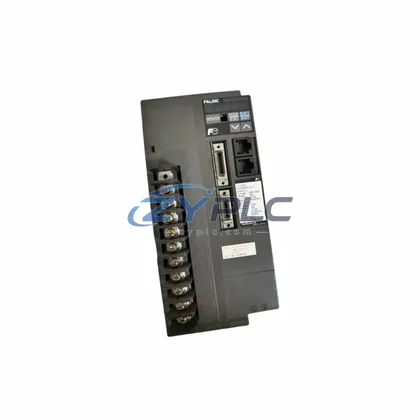
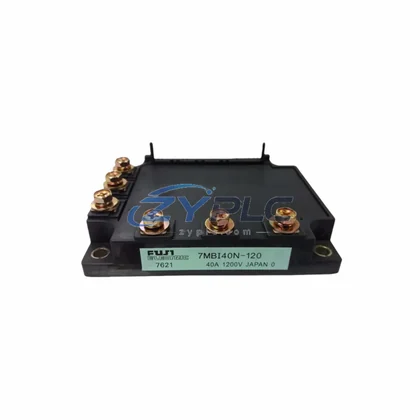
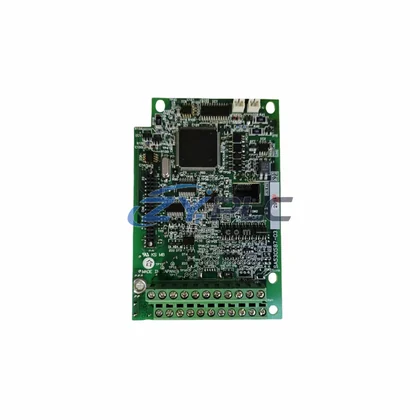
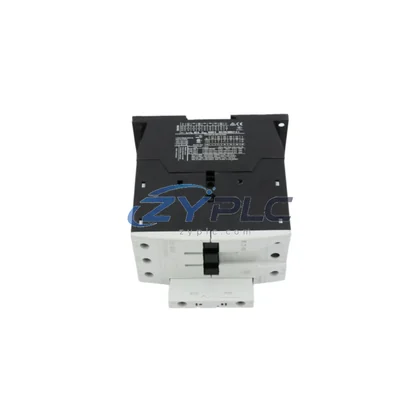
The Bosch Rexroth R91133022C7 (full SKU: R91133022C7 SH01.1C-SE-ENS-EN1-NNN-S2-S-NN-FW) is a high-performance servo drive control board from the IndraDrive series, engineered to deliver measurable operational stability, precise motor control, and reliable operation across demanding industrial production environments. Whether deployed in CNC machining centers, automated assembly lines, packaging systems, or material handling equipment, this control board serves as the intelligent core of a modern, maintenance-focused drive architecture.
Every unit sold by ZYPLC undergoes full functional testing prior to shipment, is backed by a warranty terms confirmed during quotation, and is available from verified inventory for fast global dispatch.
Product Specification Table
| Parameter |
Specification |
| SKU |
R91133022C7 SH01.1C-SE-ENS-EN1-NNN-S2-S-NN-FW |
| Series |
IndraDrive SH01.1C |
| Product Type |
Servo Drive Control Board |
| Brand |
Bosch Rexroth |
| Origin |
Germany (DE) |
| Drive Efficiency Class |
IE4 / Energy-Optimized Servo Control |
| Compatible Systems |
IndraDrive C, IndraDrive M, IndraDrive Mi series |
| Communication Protocol |
SERCOS III, EtherCAT, PROFINET (firmware-dependent) |
| Application Environment |
CNC, Robotics, Packaging, Assembly, Material Handling |
| Energy Saving Value |
Regenerative braking support, dynamic load adaptation, reduced idle losses |
| Warranty |
12 Months — All units tested before shipment |
System Compatibility and Application
The R91133022C7 control board is designed to operate as the command center within a layered IndraDrive automation architecture. In a typical high-efficiency production cell, this board interfaces directly with the IndraDrive C HCS02.1E power section, which handles AC-to-DC conversion with built-in regenerative feedback capability — returning braking energy to the DC bus rather than dissipating it as heat. This alone can reduce net operating load by Actual operating results depend on the installed system, load profile, and commissioning parameters.
On the motion control side, the R91133022C7 communicates with the IndraDrive M HMS01.1N multi-axis supply module, enabling synchronized multi-axis coordination with shared DC bus topology. This architecture minimizes individual axis power draw by allowing energy exchange between axes during acceleration and deceleration phases — a critical advantage in high-cycle robotic and pick-and-place applications.
For motor feedback and closed-loop efficiency, the board integrates seamlessly with IndraDyn S MSK servo motors equipped with high-resolution encoders, enabling sub-millisecond torque response and eliminating the unplanned downtime associated with motor hunting or oscillation. The CSB01.1N control section and CSH01.1C compact servo drive from the same IndraDrive family can be deployed in parallel axes, maintaining a unified firmware environment managed through the IndraWorks Engineering software platform.
Power quality monitoring is handled upstream by the HMV01.1R regenerative supply module, which stabilizes the DC bus voltage and feeds real-time power data back to the control layer. This data, combined with the R91133022C7’s internal diagnostics, enables predictive maintenance scheduling — flagging thermal anomalies, load imbalances, or encoder drift before they cause unplanned downtime.
For I/O integration and fieldbus connectivity, the CFL01.1 communication firmware layer and CDB01.1 digital I/O expansion modules extend the control board’s reach into broader PLC and SCADA environments. When paired with a Rexroth IndraControl L45 PLC or a third-party Siemens S7-1500 controller via PROFINET, the R91133022C7 becomes part of a fully transparent, data-rich automation backbone — where every watt consumed is tracked, every cycle is optimized, and every deviation from baseline is logged for analysis.
Maintenance and Replacement Notes
In real-world production environments, the R91133022C7 delivers maintenance planning across three key dimensions: drive-level efficiency, system-level coordination, and maintenance-driven uptime.
At the drive level, the SH01.1C control board’s adaptive current control algorithm continuously adjusts motor excitation based on actual load demand. During low-load phases — such as idle conveyor segments or tool change intervals — the drive automatically reduces magnetizing current, cutting standby losses without sacrificing response time when full torque is needed again. In high-cycle applications running 20+ operations per minute, this dynamic adaptation can reduce per-shift operating load by a measurable margin compared to fixed-parameter drives.
At the system level, the shared DC bus architecture enabled by the HCS02 and HMS01 power sections means that when one axis decelerates, its regenerated energy is immediately available to an accelerating axis on the same bus. This inter-axis energy recycling reduces peak demand from the mains supply, lowers transformer loading, and smooths the facility’s power factor — all without any additional hardware investment.
From a maintenance perspective, the R91133022C7’s onboard diagnostics continuously monitor drive temperature, bus voltage ripple, encoder signal quality, and current waveform distortion. Anomalies are flagged via the IndraWorks interface or forwarded to the plant SCADA system, enabling maintenance teams to schedule interventions during planned downtime rather than reacting to failures. This predictive approach reduces mean time between failures (MTBF) impact and keeps overall equipment effectiveness (OEE) at target levels.
ZYPLC maintains availability subject to RFQ confirmation of the R91133022C7 and related IndraDrive components, with pre-shipment functional testing on every unit. Lead times are minimized through dedicated inventory management, and all units ship with full documentation and a warranty terms confirmed during quotation covering parts and workmanship.
Product Sourcing FAQ
Q1: How much energy can the R91133022C7 save compared to a standard servo drive?
The R91133022C7 SH01.1C supports regenerative braking and adaptive load control, which together can reduce operating load by Actual operating results depend on the installed system, load profile, and commissioning parameters. Actual savings depend on duty cycle, load profile, and system architecture.
Q2: Is the R91133022C7 compatible with existing IndraDrive C and IndraDrive M power sections?
Yes. The SH01.1C control board is designed for use within the IndraDrive modular platform and is compatible with HCS02, HCS03, HMS01, and HMV01 power sections. Firmware version compatibility should be verified via the IndraWorks Engineering tool before installation.
Q3: Can this control board replace a faulty unit in a running production line without full system reconfiguration?
In most cases, yes. The R91133022C7 supports parameter backup and restore via the IndraWorks platform, allowing a replacement board to be configured to match the outgoing unit’s settings within minutes. ZYPLC recommends verifying the firmware version and axis parameterization before hot-swapping in a live environment.
Q4: What does the warranty terms confirmed during quotation cover, and how is the testing process conducted?
Every R91133022C7 unit supplied by ZYPLC undergoes a full functional test simulating real drive operating conditions — including power-on self-test, communication interface verification, and load response validation. The warranty terms confirmed during quotation covers manufacturing defects and functional failures under normal operating conditions. Units are shipped with test records upon request.