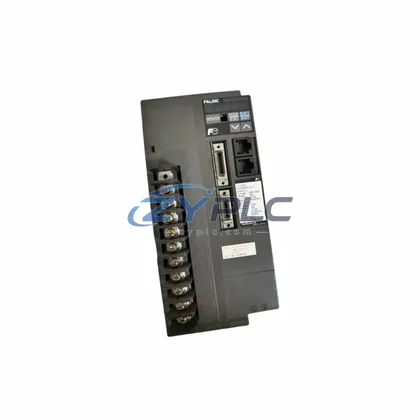
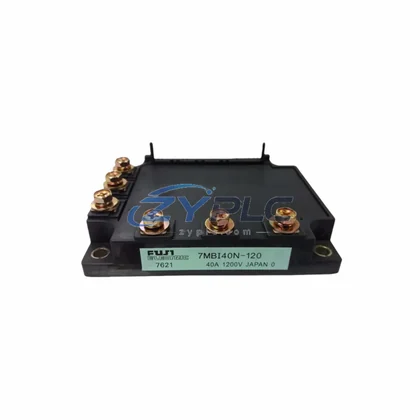
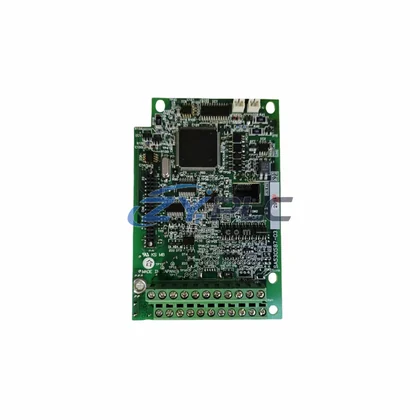
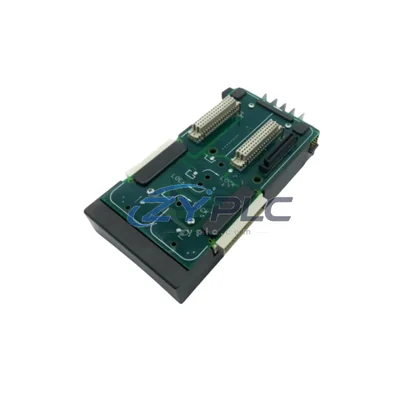
Emerson PR9268/017-100 Servo Motor Module: Control System and system integration for Ovation DCS
The Emerson PR9268/017-100 is a precision servo motor module engineered for seamless deployment within the Emerson Ovation Distributed Control System (DCS) architecture. Rather than functioning as a standalone component, this module is designed to operate as an integral node within a layered automation hierarchy — coordinating signal flow between the control layer, I/O subsystems, network infrastructure, power distribution, human-machine interface (HMI), and final control elements. Its role in the Ovation platform is to deliver consistent, high-resolution motor positioning and feedback management, ensuring that the broader control system maintains synchronization, redundancy, and long-term operational stability across demanding industrial environments.
In modern industrial automation, the reliability of a servo motor module is inseparable from the architecture that surrounds it. The PR9268/017-100 is built to integrate directly with Emerson Ovation controller nodes — such as the Ovation OCR400 Controller — which serve as the central processing units governing process logic, loop control, and inter-module communication. The module receives setpoint commands from the controller via the Ovation high-speed process bus, executes precise motor drive sequences, and returns real-time position and status feedback to the control layer. This closed-loop interaction is fundamental to maintaining process accuracy in applications where millisecond-level response times are critical.
At the I/O layer, the PR9268/017-100 interfaces with Emerson Ovation I/O modules — including analog input/output cards and digital I/O modules — that aggregate field signals from sensors, encoders, and limit switches. These I/O modules feed structured data into the Ovation backplane, where the servo module can access process variables and respond dynamically to changing operating conditions. The backplane architecture of the Ovation system ensures that all modules, including the PR9268/017-100, share a common communication fabric, reducing latency and eliminating the signal integrity issues that arise in loosely coupled systems.
Network-layer integration is equally important. The Ovation DCS platform supports standard industrial communication protocols, and the PR9268/017-100 is compatible with the Ovation network infrastructure that connects field devices, controllers, and operator workstations. This network layer enables remote diagnostics, firmware updates, and real-time performance monitoring — capabilities that are essential for minimizing unplanned downtime in continuous process industries. When paired with Emerson Ovation network switches and communication gateways, the module becomes part of a fully observable and remotely manageable control architecture.
Power supply integrity is a prerequisite for servo module performance. The PR9268/017-100 is designed to operate within the power distribution framework of the Ovation system, which typically includes redundant Emerson Ovation power supply modules that provide regulated DC voltage to all rack-mounted components. Redundant power configurations ensure that a single power supply failure does not interrupt servo operations, a design principle that is especially critical in applications such as turbine control, compressor management, and continuous chemical processing.
From the HMI perspective, operators interact with the PR9268/017-100 indirectly through Emerson Ovation Operator Workstations (OWS), which display real-time motor status, alarm conditions, and historical trend data. The workstation software provides a unified view of the entire control system, allowing engineers to monitor servo performance alongside other process variables without switching between disparate interfaces. This system integration — where the servo module’s data is presented within the broader process context — is a defining characteristic of the Ovation architecture and a key reason why the PR9268/017-100 is preferred for system-level deployments over generic servo solutions.
At the execution layer, the PR9268/017-100 drives physical actuators and motor assemblies that perform the final control actions — valve positioning, conveyor speed regulation, pump control, and rotary actuator management. The module’s output characteristics are matched to the mechanical requirements of these final control elements, ensuring that the electrical and mechanical subsystems operate as a unified system rather than as independent components.
Product Specification Table
| Parameter |
Specification |
| Model |
PR9268/017-100 |
| Brand |
Emerson |
| Series |
Ovation DCS |
| System Role |
Servo Motor Module — Execution Layer Node |
| Product Type |
Servo Motor Module |
| Communication Interface |
Ovation High-Speed Process Bus |
| Installation Environment |
DIN Rail / Rack-Mount, Industrial Control Cabinet |
| Operating Temperature |
0°C to 60°C (typical industrial range) |
| Power Supply |
Compatible with Ovation Redundant Power Supply Modules |
| I/O Compatibility |
Ovation Analog and Digital I/O Modules |
| Origin |
United States |
| Warranty |
warranty terms confirmed during quotation |
| system integration |
Full Ovation DCS Architecture Integration |
| Condition |
New / Tested Surplus |
System Compatibility Notes
The PR9268/017-100 achieves its full performance potential when deployed within a coordinated Ovation system architecture. At the controller level, the Emerson Ovation OCR400 Controller manages the process logic that governs servo module behavior, issuing setpoint commands and receiving status feedback through the Ovation backplane. Adjacent to the controller, Emerson Ovation Power Supply Modules provide the regulated, redundant DC power that the servo module requires for stable, uninterrupted operation.
Signal conditioning and field device interfacing are handled by Emerson Ovation Analog Input Modules and Ovation Digital Output Modules, which translate raw field signals into structured process data that the PR9268/017-100 can act upon. For applications requiring high-density I/O, Emerson Ovation I/O Expansion Modules extend the system’s capacity without requiring additional controller hardware, preserving the architectural consistency of the installation.
Communication between the Ovation DCS and external systems — such as SCADA platforms, historian servers, or enterprise resource planning (ERP) systems — is managed through Emerson Ovation Communication Gateways, which support standard protocols including Modbus TCP, OPC-UA, and DNP3. This gateway layer ensures that the PR9268/017-100’s operational data is accessible to higher-level systems for performance analysis, predictive maintenance, and regulatory reporting.
For operator interaction, Emerson Ovation Operator Workstations provide the graphical interface through which engineers monitor servo module status, configure control parameters, and respond to alarm conditions. Terminal modules and marshalling panels within the control cabinet provide the physical wiring infrastructure that connects the PR9268/017-100 to field devices, ensuring organized, maintainable cable management in complex installations. Together, these components form a cohesive control architecture in which the PR9268/017-100 functions as a reliable, high-performance execution layer node.
Industrial Application Notes
The Emerson PR9268/017-100 is deployed across a wide range of industrial sectors where precise motor control and system-level integration are non-negotiable requirements. In power generation facilities — including coal-fired, gas turbine, and combined-cycle plants — the module is used for turbine governor control, boiler feed pump management, and auxiliary system automation, where the Ovation DCS provides the supervisory framework that coordinates all plant subsystems.
In the petrochemical and refining industries, the PR9268/017-100 supports compressor anti-surge control, reactor feed pump regulation, and distillation column reflux management. These applications demand servo modules that can respond to rapid process changes while maintaining communication integrity with the broader DCS architecture. The module’s compatibility with the Ovation platform ensures that it can be integrated into existing petrochemical control systems without requiring architectural modifications.
Water and wastewater treatment facilities use the PR9268/017-100 for pump station automation, valve positioning in filtration systems, and flow control in distribution networks. The module’s ability to operate within a redundant Ovation architecture is particularly valuable in these applications, where continuous operation is required to meet regulatory compliance and public health standards.
In mining and metallurgical operations, the module supports conveyor drive control, crusher feed regulation, and smelter process automation. The harsh environmental conditions typical of these facilities — including high ambient temperatures, vibration, and electrical noise — make the robust construction and industrial-grade design of the PR9268/017-100 especially appropriate. Packaging and discrete manufacturing lines also benefit from the module’s precise positioning capabilities, enabling high-speed, repeatable motion control in bottling, filling, and assembly applications.
Product Compatibility FAQ
Q1: Is the PR9268/017-100 compatible with all versions of the Emerson Ovation DCS platform, and what are the key integration requirements?
The PR9268/017-100 is designed for the Emerson Ovation DCS architecture and is compatible with Ovation controller generations that support the standard Ovation process bus communication protocol. Integration requires that the module be installed in an Ovation-compatible rack with appropriate power supply modules and that the Ovation controller firmware supports the module’s communication profile. For specific version compatibility, consult the Emerson Ovation hardware compatibility matrix or contact our technical team for pre-sale verification.
Q2: How does the PR9268/017-100 support redundancy and fault tolerance in a critical control architecture?
The module is designed to operate within Ovation’s redundant architecture framework, which supports controller redundancy, power supply redundancy, and network path redundancy. In a redundant configuration, a standby servo module or controller can assume control within milliseconds of a primary module failure, ensuring continuous process operation. The Ovation system’s built-in diagnostics continuously monitor module health and generate alarms when performance deviates from established baselines, enabling proactive maintenance before failures occur.
Q3: What does the warranty terms confirmed during quotation cover, and what support is available for installation and commissioning?
The warranty terms confirmed during quotation covers manufacturing defects, component failures, and performance deviations from published specifications under normal operating conditions. It does not cover damage resulting from improper installation, electrical overstress, or environmental conditions outside the module’s rated operating range. Our technical team provides pre-sale compatibility consultation, installation guidance, and post-sale commissioning support to ensure that the PR9268/017-100 is correctly integrated into your Ovation architecture. Replacement units are dispatched promptly in the event of a warranty claim, minimizing system downtime.