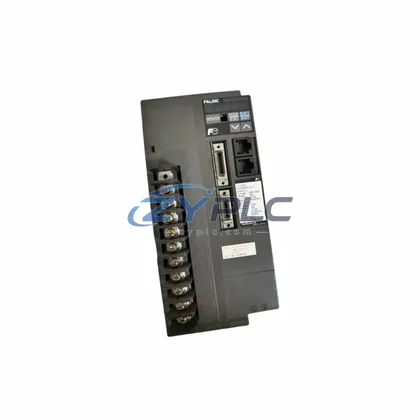
ESTIC ENRZ-DU20 Servo Drive for ENRZ Series
The ESTIC ENRZ-DU20 is a precision servo drive unit engineered as a core component within the ENRZ Series nutrunner control architecture. Rather than functioning as a standalone device, the ENRZ-DU20 is designed to operate within a tightly integrated control hierarchy — coordinating with the ENRZ Series controller, I/O expansion modules, communication gateways, and HMI terminals to deliver consistent, traceable torque fastening across high-demand industrial environments. Its role in the system spans the control layer and execution layer simultaneously, making it a critical node in any ESTIC-based fastening architecture.
In modern industrial automation, the reliability of a servo drive is inseparable from the architecture it inhabits. The ENRZ-DU20 is built to support this philosophy: it receives motion commands from the ENRZ Series master controller, executes precise torque and angle profiles, and feeds real-time feedback data back through the system bus. This closed-loop signal flow ensures that every fastening cycle is monitored, logged, and verifiable — a requirement in automotive assembly, electronics manufacturing, and precision mechanical production lines.
Product Specification Table
| Parameter |
Specification |
| System Role |
Servo Drive Unit — Execution Layer |
| Compatible Series |
ESTIC ENRZ Series Nutrunner Control Systems |
| Drive Type |
AC Servo Drive (Nutrunner-Optimized) |
| Control Interface |
ENRZ Series Proprietary Bus / Serial Communication |
| Power Supply |
Single/Three-Phase AC Input (per ENRZ system spec) |
| Output Capacity |
Matched to ENRZ-DU20 rated motor load |
| Feedback Type |
Encoder feedback via ENRZ motor interface |
| Communication |
ESTIC ENRZ system bus; compatible with PLC/DCS system integration |
| Installation |
Panel-mount, DIN rail compatible, control cabinet rated |
| Operating Temperature |
0°C to 55°C (standard industrial environment) |
| Origin |
Japan |
| Warranty |
— covers drive unit, firmware, and system interface |
System Compatibility Notes
The ENRZ-DU20 does not operate in isolation. Its performance is a direct function of the surrounding system architecture. In a complete ESTIC ENRZ fastening cell, the drive unit interfaces with the ENRZ Series master controller (such as the ENRZ-C10 or ENRZ-C20 controller unit), which manages tool sequencing, torque curve selection, and result judgment. The controller dispatches motion profiles to the ENRZ-DU20 via the ESTIC proprietary system bus, ensuring deterministic command delivery with minimal latency.
On the power layer, the ENRZ-DU20 relies on a stable DC bus or regulated AC supply, typically sourced through the ENRZ Series power supply module or a compatible industrial power unit. Voltage stability directly affects torque repeatability, making the power layer a critical upstream dependency for the drive’s performance.
At the I/O layer, the system integrates ENRZ I/O expansion modules that handle discrete signals — tool enable, cycle start, OK/NG output, and interlock signals — connecting the fastening cell to the broader production line PLC. These I/O modules allow the ENRZ-DU20 to participate in line-level sequencing without requiring direct PLC intervention at the drive level.
For network connectivity, the ENRZ architecture supports integration with PROFIBUS, DeviceNet, or EtherNet/IP communication gateways, enabling the ENRZ-DU20’s fastening results to be transmitted upstream to MES or SCADA systems in real time. This system integration capability is essential for traceability-driven production environments such as automotive body-in-white assembly or engine fastening lines.
The HMI layer is typically served by an ESTIC ENRZ Series handheld terminal or panel-mounted display unit, which provides operators with real-time torque/angle curves, result history, and parameter adjustment access. The HMI communicates with the master controller, which in turn reflects the ENRZ-DU20’s operational state — creating a transparent, top-to-bottom system view.
At the execution layer, the ENRZ-DU20 drives the ESTIC ENRZ Series nutrunner spindle motor, delivering the torque and angle output defined by the active fastening strategy. The motor’s encoder feedback is processed by the drive in real time, enabling dynamic torque compensation and angle monitoring within each fastening cycle. Related spindle assemblies such as the ENRZ-SP series straight nutrunner and ENRZ-AP series angle nutrunner are directly compatible with the ENRZ-DU20 drive interface.
For redundancy and system continuity, engineering teams often specify a spare ENRZ-DU20 drive unit alongside the primary installation, supported by a documented parameter backup stored on the ENRZ master controller. This approach minimizes downtime and supports rapid drive swap procedures without requiring full system reconfiguration.
Industrial Application Notes
The ESTIC ENRZ-DU20 finds its primary application in automotive assembly lines, where torque traceability and cycle-time consistency are non-negotiable. In body assembly, chassis fastening, and powertrain assembly stations, the ENRZ-DU20 drives nutrunner spindles through precisely defined torque-angle strategies, with every result logged and transmitted to the plant’s quality management system via the integrated communication gateway.
In electronics and precision mechanical manufacturing, the ENRZ-DU20 supports micro-torque fastening applications where conventional pneumatic tools cannot achieve the required repeatability. The servo-controlled torque delivery eliminates the variability introduced by air pressure fluctuation, making it suitable for PCB assembly fixtures, connector fastening, and precision housing assembly.
In general industrial manufacturing — including packaging machinery assembly, hydraulic component production, and industrial equipment manufacturing — the ENRZ-DU20 provides a scalable fastening solution that can be integrated into both manual operator stations and fully automated robotic fastening cells. Its compatibility with standard PLC I/O and industrial communication protocols ensures straightforward integration into existing production line architectures without requiring dedicated fastening-specific control infrastructure.
For maintenance and long-term operations, the ENRZ-DU20’s parameter set is stored and managed at the controller level, meaning drive replacement does not require manual re-entry of fastening strategies. Combined with the coverage and available spare unit inventory, engineering and maintenance teams can plan predictive replacement cycles with confidence.
Product Compatibility FAQ
Q1: Is the ENRZ-DU20 compatible with all ENRZ Series controllers, and what communication interface does it use?
The ENRZ-DU20 is designed for use within the ESTIC ENRZ Series architecture and communicates with the ENRZ master controller via the ESTIC proprietary system bus. Compatibility should be confirmed against the specific ENRZ controller model and firmware version in your installation. For system integration with external PLC or DCS systems, the ENRZ communication gateway module handles protocol translation, keeping the drive-to-controller interface within the ESTIC native bus.
Q2: What is covered under the, and how does it apply to system-level installations?
The covers the ENRZ-DU20 drive unit against manufacturing defects and component failure under normal operating conditions. It applies to the drive hardware, firmware integrity, and the system bus interface. Warranty service is coordinated through ZYPLC’s technical support channel, and replacement units are available from stock to minimize production downtime during warranty claims.
Q3: How should the ENRZ-DU20 be commissioned during initial system integration, and what parameters need to be configured?
During commissioning, the ENRZ-DU20 is configured through the ENRZ master controller’s parameter management interface. Key parameters include motor type selection, torque curve assignment, encoder feedback calibration, and I/O signal mapping. It is recommended to perform a dry-run fastening cycle with a torque verification tool before full production deployment. ZYPLC provides pre-shipment functional testing on all ENRZ-DU20 units, and parameter backup files can be supplied upon request to accelerate on-site commissioning.