GE DS200FCRRG1AKD Flux Regulator for DS200: Compatibility and Replacement Notes
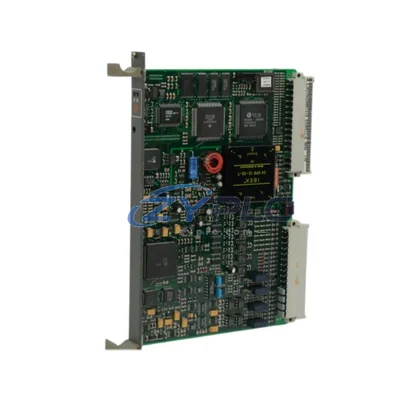
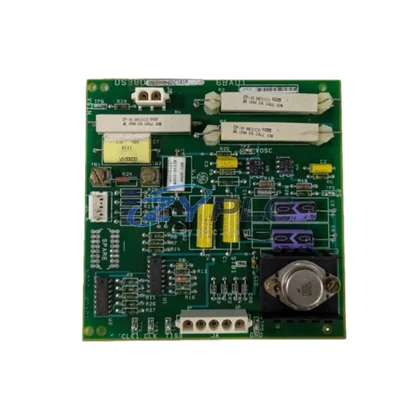
The GE DS200FCRRG1AKD is a Flux Regulator Board engineered specifically for integration within the GE DS200 / Mark VI distributed control system (DCS) architecture. Rather than functioning as a standalone component, this board occupies a critical position within the layered automation hierarchy — bridging the control layer and the power/drive execution layer to ensure precise flux regulation, signal fidelity, and system-wide operational consistency. In complex industrial environments where uptime, redundancy, and long-term maintainability are non-negotiable, the DS200FCRRG1AKD delivers the architectural coherence that modern control engineers demand.
Within a fully configured DS200-based control cabinet, the DS200FCRRG1AKD works in close coordination with upstream CPU and controller boards such as the DS200SDCCG1A (Speed and Direction Control Card) and the DS200TCQCG1A (Torque Control Board), receiving processed command signals and translating them into precise flux regulation outputs directed at the drive and motor execution layer. This signal flow — from the controller core through the regulator board to the power conversion stage — is fundamental to achieving stable motor performance across variable load conditions in demanding industrial processes.
At the I/O layer, the DS200FCRRG1AKD interfaces with analog and digital I/O boards such as the DS200DIODG1A (Digital I/O Board) and DS200AIODG1A (Analog I/O Board), enabling real-time feedback loops that continuously adjust flux parameters in response to process variables. This closed-loop architecture is essential in applications such as rolling mill drives, compressor control, and pump station automation, where even minor deviations in flux regulation can result in process instability or equipment damage.
From a network and communications perspective, the DS200FCRRG1AKD operates within a Mark VI architecture that supports Ethernet-based communication via the DS200TCDAG1A (Communication and Diagnostic Board), enabling seamless integration with plant-level SCADA systems, historian platforms, and remote engineering workstations. This connectivity ensures that flux regulation data is available for real-time monitoring, trend analysis, and predictive maintenance — reducing downtime and extending the operational life of connected drive systems.
Power supply integrity is maintained through dedicated power distribution boards such as the DS200PCCAG1A (Power Supply Board), which provides the regulated DC voltages required by the DS200FCRRG1AKD and adjacent boards within the same backplane assembly. The backplane itself — typically a DS200 series rack chassis — provides the physical and electrical interconnection between all boards, ensuring low-impedance signal paths and mechanical stability in high-vibration industrial environments.
For human-machine interface (HMI) integration, the DS200FCRRG1AKD’s operational status and flux regulation parameters are surfaced through Mark VI-compatible HMI platforms, allowing operators to monitor drive performance, configure setpoints, and respond to alarms without interrupting production. This integration with the HMI layer is a key advantage of the DS200 architecture’s modular design philosophy — every board, including the DS200FCRRG1AKD, contributes to a unified operational picture accessible from the control room.
Redundancy is a core design consideration in the DS200 architecture. The DS200FCRRG1AKD supports hot-standby configurations when paired with redundant controller and I/O boards, ensuring that a single board failure does not result in process shutdown. This redundancy capability is particularly valued in continuous process industries such as petrochemical refining, power generation, and water treatment, where the cost of unplanned downtime far exceeds the cost of spare board inventory.
From a maintenance and lifecycle management perspective, the DS200FCRRG1AKD is designed for field replacement without requiring full system reconfiguration. Experienced control engineers can swap the board, restore configuration parameters from the Mark VI controller’s non-volatile memory, and return the system to full operation within a planned maintenance window. This maintainability, combined with ZYPLC’s Warranty and support terms confirmed before quote and verified pre-shipment testing, makes the DS200FCRRG1AKD a reliable choice for both emergency replacement and planned upgrade projects.
Product Specification Table
| Parameter |
Specification |
| System Role |
Flux Regulator Board — DS200 / Mark VI DCS Architecture |
| Compatible Platform |
GE DS200 Series, Mark VI Distributed Control System |
| Board Function |
Flux regulation signal processing between control and drive execution layers |
| Electrical Interface |
DS200 backplane bus; regulated DC power via DS200 power distribution board |
| Communication Capability |
Mark VI internal bus; compatible with DS200TCDAG1A for Ethernet/SCADA integration |
| I/O Compatibility |
Interfaces with DS200 analog and digital I/O boards for closed-loop feedback |
| Installation Environment |
Industrial control cabinet; DIN rail or rack-mount backplane assembly |
| Operating Temperature |
0°C to 60°C (standard industrial range) |
| Redundancy Support |
Hot-standby redundancy when paired with redundant DS200 controller boards |
| Warranty |
Warranty and support terms confirmed before quote — verified pre-shipment functional testing |
| system integration |
Full system integration support within DS200 / Mark VI control architecture |
| Origin |
United States |
System Compatibility Notes
A complete DS200-based control system integrating the DS200FCRRG1AKD typically includes the following coordinated components across all system layers:
- DS200SDCCG1A — Speed and Direction Control Card: upstream controller providing speed reference and direction commands to the flux regulator.
- DS200TCQCG1A — Torque Control Board: coordinates torque and flux demand signals, working in parallel with the DS200FCRRG1AKD to optimize drive performance.
- DS200DIODG1A — Digital I/O Board: provides discrete feedback signals (fault status, interlock conditions) that influence flux regulation logic.
- DS200AIODG1A — Analog I/O Board: delivers continuous process variable feedback (current, voltage, temperature) for closed-loop flux control.
- DS200TCDAG1A — Communication and Diagnostic Board: enables Ethernet-based communication between the DS200 system and plant SCADA/DCS networks.
- DS200PCCAG1A — Power Supply Board: provides regulated DC power to the DS200FCRRG1AKD and adjacent boards within the backplane assembly.
- DS200 Rack Chassis / Backplane — Physical and electrical interconnection platform for all DS200 series boards.
- Mark VI Controller Module — Central processing unit managing system-wide control logic, configuration storage, and fault diagnostics.
- Mark VI-Compatible HMI Terminal — Operator interface for real-time monitoring of flux regulation parameters and drive system status.
- DS200 Series Terminal Boards — Field wiring termination modules connecting process instrumentation and actuators to the DS200 I/O layer.
This coordinated architecture ensures that the DS200FCRRG1AKD operates not as an isolated component, but as an integral element of a fully validated, redundancy-capable control system — delivering the system consistency, expandability, and long-term maintainability that industrial automation projects require.
Industrial Application Notes
The DS200FCRRG1AKD finds application across a broad spectrum of heavy industrial and process automation environments where precise flux regulation is critical to operational stability:
- Power Generation: In gas turbine and steam turbine control systems, the DS200FCRRG1AKD regulates excitation flux to maintain generator output stability under variable load conditions, working in concert with Mark VI turbine control platforms.
- Petrochemical and Refining: Compressor and pump drive systems in refinery applications rely on accurate flux regulation to maintain process flow rates and prevent surge conditions. The DS200FCRRG1AKD’s integration with the DS200 I/O layer enables real-time process feedback and adaptive control.
- Metals and Mining: Rolling mill and conveyor drive systems in steel and mining operations demand high-dynamic flux regulation to handle rapid load changes. The DS200FCRRG1AKD’s coordination with torque control boards ensures smooth acceleration and deceleration profiles.
- Water and Wastewater Treatment: Variable-speed pump and blower drives in water treatment facilities benefit from the DS200FCRRG1AKD’s stable flux regulation, reducing energy consumption and extending motor service life.
- Packaging and Manufacturing: High-speed production lines require precise motor control across multiple drive axes. The DS200FCRRG1AKD’s integration within the DS200 architecture supports synchronized multi-axis control with consistent flux regulation across all drive channels.
- Pulp and Paper: Paper machine drive sections require tightly coordinated flux and torque regulation to maintain web tension and sheet quality. The DS200FCRRG1AKD’s role in the DS200 control hierarchy ensures the precise inter-drive coordination these applications demand.
Product Compatibility FAQ
Q1: Is the DS200FCRRG1AKD compatible with both DS200 and Mark VI control architectures?
Yes. The DS200FCRRG1AKD is designed for use within the GE DS200 series platform, which forms the hardware foundation of the Mark VI distributed control system. It is fully compatible with Mark VI controller modules, DS200 backplane assemblies, and the associated I/O and communication boards that constitute a complete Mark VI control architecture. Engineers upgrading from earlier DS200 configurations to Mark VI can integrate the DS200FCRRG1AKD without requiring changes to the backplane or power distribution infrastructure.
Q2: What installation and commissioning considerations apply when replacing the DS200FCRRG1AKD in an operating system?
Replacement of the DS200FCRRG1AKD should be performed during a planned maintenance window with the drive system in a safe, de-energized state. Following board installation, the Mark VI controller’s configuration management tools should be used to verify that flux regulation parameters are correctly restored from non-volatile memory. Functional testing — including closed-loop flux response verification and I/O signal integrity checks — should be completed before returning the drive to service. ZYPLC’s pre-shipment testing protocol ensures that each DS200FCRRG1AKD is verified against GE’s original performance specifications prior to dispatch.
Q3: What does the Warranty and support terms confirmed before quote cover, and how does ZYPLC support long-term spare parts availability?
ZYPLC’s Warranty and support terms confirmed before quote covers the DS200FCRRG1AKD against defects in materials and workmanship under normal industrial operating conditions. In the event of a warranty claim, ZYPLC provides direct technical support and replacement coordination to minimize system downtime. For long-term spare parts planning, ZYPLC supports RFQ-based sourcing of DS200 series boards and Mark VI components, enabling rapid response to both emergency replacement requests and planned maintenance schedules. Customers are encouraged to contact ZYPLC’s engineering team to discuss multi-unit procurement strategies that align with their plant’s maintenance intervals and redundancy requirements.