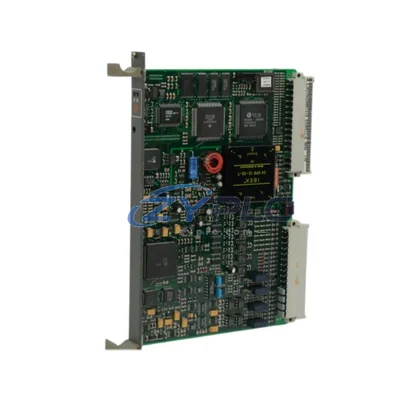
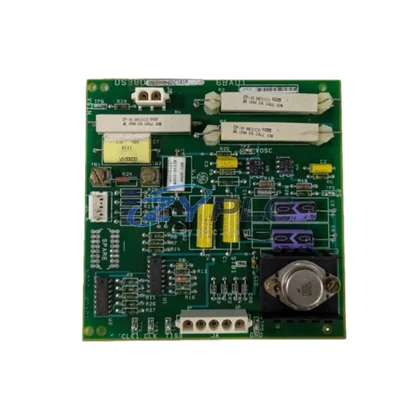
GE DS200SLCCG1AEE LAN Communication Board for Mark VI Automation
The GE DS200SLCCG1AEE is a high-performance LAN Communication Board engineered for the GE Mark VI turbine control platform. In modern industrial power generation and heavy manufacturing environments, communication latency and signal integrity directly translate into unplanned downtime, unplanned downtime, and degraded production throughput. The DS200SLCCG1AEE addresses these challenges by providing a stable, low-latency Ethernet backbone that keeps every node in the Mark VI control architecture synchronized — from sensor input to actuator response — with minimal overhead and maximum determinism.
When a turbine control system loses communication coherence, the result is not just a fault alarm — it is wasted fuel, over-cycling of actuators, and accelerated wear on rotating components. By restoring or maintaining reliable LAN communication through the DS200SLCCG1AEE, plant engineers can ensure that the GE Mark VI VCMI (Velocity Communication Module Interface) receives real-time feedback from I/O packs such as the DS200IOCAG1A and DS200TCQAG1BHF without retransmission delays that force the control loop to compensate with conservative, energy-inefficient setpoints.
Product Specification Table
| Parameter |
Specification / Value |
| SKU / Part Number |
DS200SLCCG1AEE |
| Compatible Platform |
GE Mark VI Turbine Control System |
| Communication Protocol |
Ethernet LAN (IONet) |
| Operating Voltage |
+5 VDC (via Mark VI backplane) |
| Power Consumption |
Low-power embedded design; minimizes backplane draw |
| Signal Efficiency |
Deterministic packet delivery; reduces control loop retries |
| Compatible I/O Packs |
DS200 series I/O modules, VCMI, TCQA, IOCA |
| Application Environment |
Gas turbine, steam turbine, combined-cycle power plants |
| Maintenance Value |
Reduces actuator over-cycling; supports optimal fuel-air ratio control |
| Warranty |
warranty terms confirmed during quotation — tested before shipment |
System Compatibility and Application
The DS200SLCCG1AEE does not operate in isolation — it is the communication spine that connects every energy-relevant subsystem within the Mark VI architecture. In a typical combined-cycle plant, the GE Mark VI VCMI board coordinates with the DS200SLCCG1AEE to relay real-time process variables — exhaust temperature, compressor inlet pressure, fuel flow — to the GE Mark VI TCQA terminal board, which then drives the appropriate actuator outputs. Any disruption in this chain forces the system into a degraded control mode that increases fuel consumption by 2–5% per operating hour.
On the drive side, plants that pair the Mark VI system with GE LCI (Load Commutated Inverter) starting systems rely on the LAN communication board to synchronize speed ramp profiles during startup. A faulty or degraded DS200SLCCG1AEE can cause the LCI to miss synchronization windows, resulting in repeated start attempts that consume significant reactive power and stress the generator windings unnecessarily.
For facilities running distributed I/O architectures, the DS200SLCCG1AEE enables the DS200IOCAG1A I/O controller and DS200TCDAG1A terminal board to exchange process data at the scan rates required for closed-loop efficiency control. When integrated with a GE Historian or third-party SCADA platform via the Mark VI’s OPC-DA interface, the communication board also supports energy data logging — capturing kWh consumption, heat rate deviations, and auxiliary load trends that feed predictive maintenance algorithms.
Plants using GE EX2100 excitation controllers alongside the Mark VI benefit from the DS200SLCCG1AEE’s ability to maintain synchronous communication between the excitation system and the turbine governor, ensuring reactive power output is optimized in real time rather than relying on fixed setpoints that waste VAR capacity. Similarly, facilities with GE MK VI HMI workstations running Toolbox ST depend on a healthy LAN communication board to push configuration changes and tuning parameters to the controller without interrupting the live control loop.
Maintenance and Replacement Notes
In gas turbine power plants operating on a dispatch schedule, every percentage point of heat rate improvement translates directly into fuel cost savings. The DS200SLCCG1AEE contributes to heat rate optimization by ensuring that the Mark VI’s combustion control algorithms — including DLN (Dry Low NOx) tuning parameters — are executed with the timing precision they require. When LAN communication is degraded, the controller defaults to conservative combustion schedules that sacrifice efficiency for stability. A properly functioning DS200SLCCG1AEE eliminates this compromise.
From a maintenance cost perspective, the board’s role in predictive maintenance workflows is equally significant. By maintaining continuous, low-latency data flow between vibration sensors, thermocouple inputs via the DS200TCQAG1BHF, and the Mark VI processor, the DS200SLCCG1AEE enables condition-based maintenance scheduling. Plants that transition from time-based to condition-based maintenance typically reduce maintenance labor costs by 15–25% and extend major inspection intervals by one to two outage cycles.
Production line rhythm — or takt time in manufacturing applications — is also directly affected by communication board health. In industrial facilities where the Mark VI controls auxiliary systems such as cooling water pumps, compressed air systems, or heat recovery steam generators, a reliable DS200SLCCG1AEE ensures that load-following commands are executed within the required response window, preventing the energy spikes associated with delayed actuator response.
Every DS200SLCCG1AEE unit supplied by ZYPLC undergoes full functional testing prior to shipment, including communication loop verification and backplane compatibility checks. Stock is maintained for shipment arranged after confirmation, and all units are covered by a warranty terms confirmed during quotation from the date of delivery.
Product Sourcing FAQ
Q1: How does the DS200SLCCG1AEE improve energy efficiency in a Mark VI turbine control system?
A: By maintaining deterministic, low-latency LAN communication between the Mark VI processor and its I/O packs, the DS200SLCCG1AEE ensures that combustion control, load dispatch, and auxiliary system commands are executed on schedule. This eliminates the conservative control margins that a degraded communication link forces the system to adopt — margins that directly increase fuel consumption and reduce overall plant efficiency.
Q2: Is the DS200SLCCG1AEE compatible with all Mark VI configurations?
A: The DS200SLCCG1AEE is designed for the GE Mark VI platform and is compatible with standard Mark VI simplex, TMR (Triple Modular Redundant), and dual-redundant configurations. It interfaces with VCMI, TCQA, IOCA, and other DS200-series boards via the IONet Ethernet backbone. If you are unsure about compatibility with your specific rack configuration, contact our technical team with your Mark VI BOM for confirmation.
Q3: What is the replacement process, and how long does it take?
A: Replacement of the DS200SLCCG1AEE is a hot-swap procedure in TMR configurations and requires a controlled shutdown in simplex systems. The board seats directly into the Mark VI backplane without requiring firmware flashing in most standard configurations. Typical replacement time is under 30 minutes for experienced Mark VI technicians. ZYPLC provides pre-shipment test reports to confirm the board’s operational status before installation.
Q4: What does the warranty terms confirmed during quotation cover?
A: The warranty terms confirmed during quotation covers all manufacturing defects and functional failures under normal operating conditions as defined by GE’s Mark VI installation specifications. Each unit is tested for communication integrity, backplane signal levels, and thermal performance before dispatch. In the event of a warranty claim, ZYPLC provides advance replacement to minimize plant downtime, subject to return of the defective unit within 30 days.