GE DS200TCQBG1BBC RST Overflow Board for Mark V: Control System and Upstream–Downstream Coordination
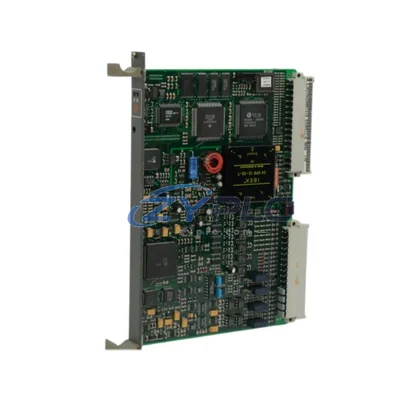
The GE DS200TCQBG1BBC is a dedicated RST (Reset/Overflow) Board engineered for deployment within the GE Mark V and Mark VI turbine control platform, one of the most widely adopted distributed control architectures in power generation, oil & gas, and heavy industrial environments. Rather than functioning as a standalone component, the DS200TCQBG1BBC is designed to operate as an integral node within a layered automation hierarchy — coordinating signal flow, managing overflow conditions, and maintaining system-level integrity across the full control stack.
In modern turbine control installations, system reliability depends not on any single board but on the coherent interaction between the control layer, I/O layer, communication layer, power supply layer, human-machine interface layer, and execution layer. The DS200TCQBG1BBC occupies a critical position within this hierarchy: it manages RST overflow logic that directly influences how the DS200TCQAG1A processor board interprets and routes control signals, ensuring that transient overflow conditions do not propagate into erroneous actuator commands or trip sequences.
When integrated with the DS200TCDAG1A diagnostic board and the DS200TCEAG1B excitation control board, the DS200TCQBG1BBC contributes to a redundant signal verification loop that is fundamental to the Mark V’s triple-redundant (TMR) architecture. This TMR design — where three independent control paths vote on every output — depends on each board performing its designated function without ambiguity. The RST overflow board ensures that voting logic remains clean and that no single overflow event can corrupt the consensus output to downstream actuators or servo valves.
From a power architecture perspective, the DS200TCQBG1BBC operates within the backplane power distribution managed by the DS200TCPSG1A power supply board. Stable, conditioned DC power is a prerequisite for the precise analog signal handling that the overflow board performs. Any voltage ripple or transient on the backplane rail can introduce false overflow triggers; the TCPSG1A’s regulated output eliminates this risk, making the two boards functionally interdependent in any well-engineered installation.
At the I/O layer, the DS200TCQBG1BBC interfaces with field signal conditioning boards such as the DS200TCTSG1A terminal board, which aggregates thermocouple, RTD, and discrete I/O signals from turbine sensors. Overflow conditions detected at the TCQBG1BBC level are often traceable to signal anomalies originating at the terminal board — making coordinated diagnostics between these two boards a standard practice during commissioning and fault isolation. Engineers familiar with the DS200 ecosystem understand that troubleshooting the TCQBG1BBC in isolation, without reviewing the TCTSG1A signal inputs, is an incomplete diagnostic approach.
The communication layer of the Mark V architecture relies on the DS200TCQCG1B communication board to relay control status, alarm states, and diagnostic data to the plant DCS or SCADA system via MODBUS or proprietary GE protocols. The RST overflow status managed by the DS200TCQBG1BBC is among the data points transmitted upstream, enabling operators at the Cimplicity HMI workstation to monitor overflow events in real time and correlate them with process variables such as turbine speed, exhaust temperature, and fuel flow. This closed-loop visibility is essential for predictive maintenance strategies in long-cycle industrial operations.
For installations requiring hot-standby redundancy, the DS200TCQBG1BBC is typically deployed in paired configurations within the Mark V’s R, S, and T controller chassis. Each chassis houses its own overflow board, and the TMR voting mechanism ensures that a single board failure does not interrupt turbine operation. This architecture supports online replacement — a critical capability in power plants and petrochemical facilities where downtime carries significant financial and safety consequences. Maintaining a qualified spare DS200TCQBG1BBC in inventory is therefore a standard recommendation in GE Mark V maintenance programs.
From an engineering and commissioning standpoint, the DS200TCQBG1BBC requires careful attention to backplane seating, connector integrity, and firmware compatibility with the resident DS200TCQAG1A processor. Field engineers should verify that the board revision level is consistent with the installed Mark V software version to avoid compatibility issues that can manifest as spurious overflow alarms or communication faults. ZYPLC’s technical team can assist with revision verification prior to shipment, ensuring that the supplied board is immediately deployable without additional configuration overhead.
Long-term maintenance of the DS200TCQBG1BBC involves periodic inspection of the board’s electrolytic capacitors, which are subject to aging in high-temperature turbine enclosure environments. Proactive replacement of aging boards — rather than reactive replacement after failure — is the preferred strategy for facilities operating under continuous availability requirements. ZYPLC supports RFQ-based sourcing for tested and verified DS200TCQBG1BBC units, each covered by a Warranty and support terms confirmed before quote, supporting both emergency replacement and planned maintenance cycles.
All DS200TCQBG1BBC units supplied by ZYPLC undergo functional verification testing prior to dispatch, including backplane interface checks, signal path continuity verification, and visual inspection for component-level damage. This process ensures that every board shipped is prepared for installation after site verification, reducing the risk of introducing a secondary fault during a maintenance window. Combined with our system integration support — where our engineers review your specific Mark V configuration before recommending a replacement — ZYPLC provides a supply chain solution that goes beyond simple parts distribution.
Product Specification Table
| Parameter |
Specification |
| Part Number |
DS200TCQBG1BBC |
| Manufacturer |
General Electric (GE) |
| Series |
DS200 / Mark V Turbine Control |
| Function |
RST Overflow Board — Reset and overflow signal management within TMR control architecture |
| System Role |
Control Layer — Triple Modular Redundant (TMR) signal overflow management |
| Compatible Platform |
GE Mark V, Mark VI Turbine Control Systems |
| Backplane Interface |
DS200 series VME-style backplane |
| Operating Voltage |
+5 VDC / ±15 VDC (backplane supplied via DS200TCPSG1A) |
| Operating Temperature |
0°C to +60°C (standard industrial enclosure) |
| Communication Capability |
Internal backplane bus; status relay to DS200TCQCG1B communication board |
| Redundancy Support |
TMR (Triple Modular Redundant) — R/S/T chassis deployment |
| Installation Environment |
Control cabinet / turbine control panel; DIN rail or card cage mounting |
| Condition |
Tested, verified, ready for installation |
| Warranty |
Warranty and support terms confirmed before quote (ZYPLC) |
| Origin |
USA |
System Compatibility Notes
The DS200TCQBG1BBC achieves its full operational value only when considered within the context of the complete Mark V control system. A typical coordinated architecture includes the following components working in concert:
The DS200TCQAG1A processor board serves as the primary computational node, executing turbine control algorithms and issuing commands based on sensor inputs and operator setpoints. The DS200TCQBG1BBC directly supports this processor by managing overflow conditions that could otherwise corrupt the processor’s output register states. Upstream, the DS200TCTSG1A terminal board aggregates field signals — speed pickups, thermocouple inputs, vibration sensors — and presents them to the control layer in a conditioned format. Any signal anomaly at the terminal board level that exceeds the processor’s input range is flagged by the overflow board before it can propagate into a control error.
Power integrity is maintained by the DS200TCPSG1A power supply board, which provides regulated backplane voltages to all DS200 series boards including the TCQBG1BBC. The DS200TCDAG1A diagnostic board monitors board-level health across the chassis, providing fault isolation data that maintenance engineers use to identify failing components before they cause system trips. For communication with plant-level systems, the DS200TCQCG1B communication board bridges the Mark V internal bus to external MODBUS or Ethernet networks, transmitting overflow status and alarm data to the Cimplicity HMI operator workstation.
In installations requiring expanded I/O capacity, the DS200TCEAG1B excitation control board and associated DS200TCRAG1A relay output board extend the system’s ability to interface with generator excitation systems and discrete output devices such as solenoid valves and motor starters. The DS200TCQBG1BBC’s overflow management function ensures that expanded I/O configurations do not introduce signal contention on the backplane bus, maintaining system stability as the architecture scales.
Industrial Application Notes
The DS200TCQBG1BBC finds application across a broad range of industrial sectors where the GE Mark V and Mark VI platforms are deployed as the primary turbine control solution.
In power generation facilities — including combined-cycle gas turbine plants, steam turbine installations, and cogeneration systems — the Mark V platform manages critical turbine parameters including speed, temperature, pressure, and fuel flow. The RST overflow board’s role in maintaining clean signal states is directly linked to turbine availability and grid stability. A spurious overflow condition that triggers an unnecessary trip can result in significant generation loss and grid frequency deviation.
In oil & gas applications, including offshore platform compressor trains and onshore pipeline booster stations, the Mark V controls gas turbine-driven compressors operating under continuous duty cycles. The DS200TCQBG1BBC supports the high-reliability requirements of these installations by ensuring that overflow events — which can occur during rapid load changes or emergency shutdowns — are managed cleanly without corrupting the control state machine.
In petrochemical and refinery environments, where turbine-driven pumps and compressors are integral to process continuity, the Mark V’s TMR architecture — supported by the DS200TCQBG1BBC — provides the fault tolerance required by functional safety standards such as IEC 61511. The overflow board’s contribution to TMR voting integrity is a documented element of the safety instrumented system (SIS) architecture in many refinery installations.
In mining and metallurgical applications, where large electric motors and turbine-driven equipment operate under variable load conditions, the DS200TCQBG1BBC supports stable control performance across wide operating ranges. Its overflow management function is particularly valuable during motor starting sequences, where inrush currents can generate transient signal conditions that would otherwise challenge the control system’s input handling.
Product Compatibility FAQ
Q1: Is the DS200TCQBG1BBC compatible with both Mark V and Mark VI control systems?
The DS200TCQBG1BBC is primarily designed for the GE Mark V turbine control platform and its DS200 series backplane architecture. Compatibility with Mark VI systems depends on the specific Mark VI configuration and backplane revision. ZYPLC recommends providing your Mark V/VI system serial number and software version prior to ordering so our technical team can confirm compatibility and identify any revision-specific requirements. This system integration review is included at no additional cost with every order.
Q2: Can the DS200TCQBG1BBC be replaced online without shutting down the turbine?
In a properly configured TMR (Triple Modular Redundant) Mark V installation, the R, S, and T controllers operate in parallel, and the system is designed to tolerate the loss of one controller without initiating a turbine trip. This means that in a TMR system, the DS200TCQBG1BBC in one controller chassis can theoretically be replaced while the other two controllers maintain turbine operation. However, online replacement procedures must be performed strictly in accordance with GE’s Mark V maintenance documentation and site-specific safety procedures. ZYPLC supplies pre-tested boards to minimize the time the system operates in a degraded state during replacement.
Q3: What does the Warranty and support terms confirmed before quote cover, and what support is available during the warranty period?
ZYPLC’s Warranty and support terms confirmed before quote covers manufacturing defects, component failures, and functional performance issues identified under normal operating conditions consistent with the DS200TCQBG1BBC’s design specifications. If a board fails within the warranty period, ZYPLC will provide a replacement unit at no charge, subject to failure verification. During the warranty period, ZYPLC’s technical team is available to assist with installation questions, compatibility verification, and fault diagnosis. Warranty claims are processed through our standard RMA procedure, with replacement units typically dispatched within 3–5 business days of claim approval.