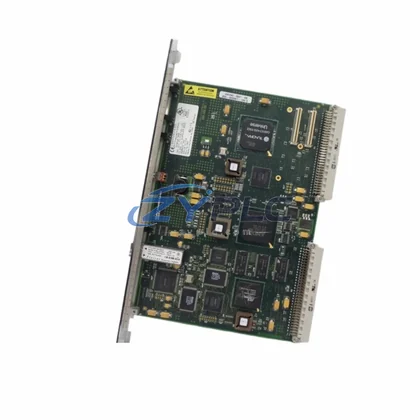
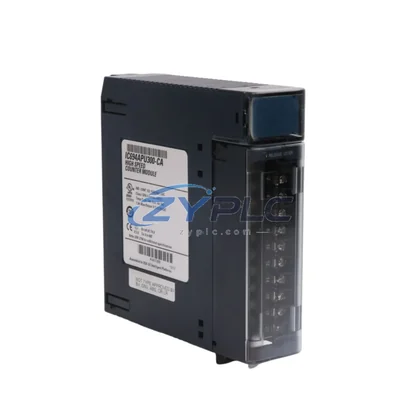
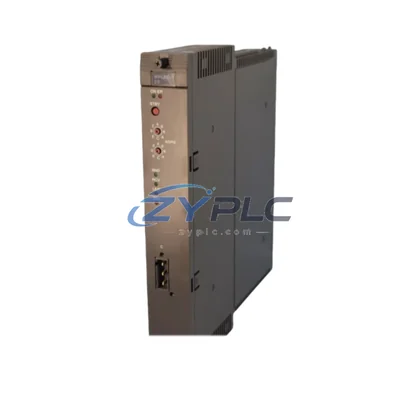
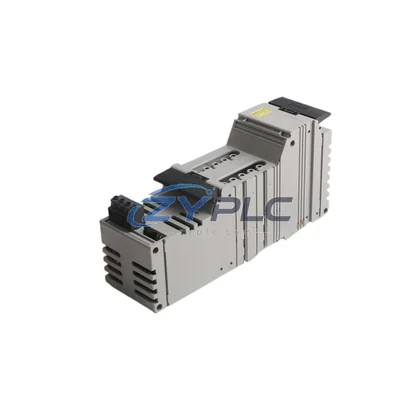
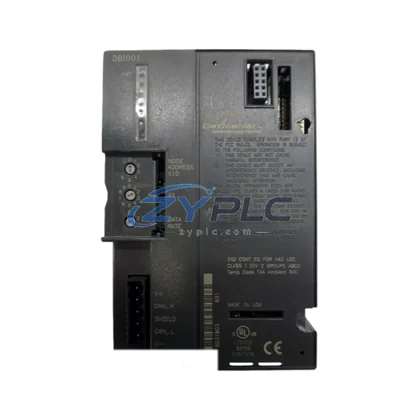
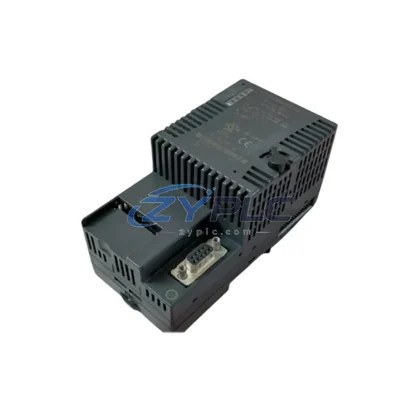
The GE IC693ALG223 is a 16-channel current analog input module purpose-built for the GE Series 90-30 programmable logic controller platform. Within a layered industrial control architecture, this module occupies a critical position at the I/O layer, serving as the primary interface between field-level process signals and the CPU’s real-time data processing engine. Rather than functioning as a standalone component, the IC693ALG223 is engineered to operate in tight coordination with the broader Series 90-30 rack system, enabling engineers to build scalable, redundant, and maintainable automation solutions across demanding industrial environments.
In a complete Series 90-30 control system, the IC693ALG223 slots directly into the IC693CHS391 or IC693CHS397 baseplate, sharing the backplane bus with the IC693CPU374 or IC693CPU375 central processing unit. The module accepts 4–20 mA or 0–20 mA current signals from field transmitters, converting them to 15-bit digital values that the CPU processes in real time. This tight integration between the analog front end and the CPU’s scan cycle ensures deterministic signal acquisition, which is essential for closed-loop process control in applications where signal latency directly affects product quality or system safety.
System architects designing for high-availability environments frequently pair the IC693ALG223 with the IC693PWR321 or IC693PWR330 power supply modules, which provide regulated 5 VDC and 24 VDC rails to the rack. Stable power delivery is non-negotiable for analog accuracy: voltage ripple or transient spikes on the backplane bus can introduce measurement errors that propagate through the control loop. The IC693PWR321’s built-in overcurrent protection and the IC693PWR330’s extended input voltage range make both units well-suited for pairing with the IC693ALG223 in environments subject to utility fluctuations or generator-backed power systems.
At the network layer, the IC693ALG223 participates in the broader control architecture through the CPU’s Ethernet or serial communication ports. When the Series 90-30 system is integrated with a SCADA or DCS platform via the IC693CMM321 communications coprocessor or the IC693CMM311 serial communications module, analog data acquired by the IC693ALG223 is made available to supervisory systems in real time. This system integration capability allows operators to monitor process variables, configure alarm thresholds, and trend historical data without interrupting the PLC scan cycle—a key advantage in continuous process industries.
For applications requiring expanded I/O capacity, the IC693ALG223 can be deployed across multiple racks connected via the IC693BEM331 bus expansion module. This architecture allows a single CPU to manage analog inputs distributed across several physical enclosures, which is common in large-scale water treatment plants, petrochemical facilities, and power generation substations where field instruments are geographically dispersed. The bus expansion architecture preserves scan cycle determinism while eliminating the need for additional CPUs or inter-controller communication overhead.
At the human-machine interface layer, analog values acquired by the IC693ALG223 are typically displayed on operator panels connected via the IC693CMM321 or through OPC-DA/UA servers linked to the CPU’s Ethernet port. Engineers configuring the system in Proficy Machine Edition can map IC693ALG223 channel data directly to HMI tags, enabling real-time visualization of flow rates, temperatures, pressures, and other process variables without intermediate data conversion steps. This direct tag mapping reduces engineering time during commissioning and simplifies long-term maintenance by preserving a clear signal chain from field instrument to operator display.
Redundancy planning is a central consideration when deploying the IC693ALG223 in critical infrastructure applications. While the Series 90-30 platform supports CPU redundancy through the IC693CPU374 hot-standby configuration, analog I/O redundancy is typically achieved by installing parallel IC693ALG223 modules on separate racks, each connected to the same field transmitter via signal splitters. This approach ensures that a single module failure does not interrupt process monitoring, which is a mandatory requirement in SIL-rated applications in the oil and gas, chemical, and nuclear power sectors.
From a maintenance and lifecycle management perspective, the IC693ALG223’s modular form factor allows field replacement without tools or rack power interruption in systems equipped with hot-swap-capable backplanes. Spare module management is simplified by the module’s broad compatibility across the Series 90-30 rack family, meaning a single spare unit can serve as a replacement across multiple rack configurations. ZYPLC maintains availability subject to RFQ confirmation of the IC693ALG223 with full functional testing and a warranty terms confirmed during quotation, ensuring that replacement units meet original GE factory specifications and can be deployed with confidence in production environments.
Product Specification Table
| Parameter |
Specification |
| System Role |
Analog Input Module – I/O Layer |
| Compatible Platform |
GE Series 90-30 PLC |
| Number of Channels |
16 (current input) |
| Input Signal Range |
4–20 mA / 0–20 mA (software selectable per channel) |
| Resolution |
15-bit (32,768 counts) |
| Input Impedance |
250 Ω (typical) |
| Isolation |
500 VAC field-to-backplane isolation |
| Backplane Compatibility |
IC693CHS391, IC693CHS397, IC693CHS398 |
| Power Consumption |
5 VDC from backplane (module-powered) |
| Operating Temperature |
0°C to 60°C |
| Communication |
Backplane bus (Series 90-30 proprietary); SCADA integration via CPU Ethernet/serial |
| Mounting |
DIN rail / panel mount via Series 90-30 baseplate |
| Certifications |
UL Listed, CE Marked |
| Warranty |
warranty terms confirmed during quotation (ZYPLC availability subject to RFQ confirmation) |
| system integration |
Proficy Machine Edition, OPC-DA/UA, SCADA/DCS compatible |
System Compatibility Notes
A complete Series 90-30 control system built around the IC693ALG223 typically includes the following coordinated components: the IC693CPU374 or IC693CPU375 as the central processing unit managing scan cycle and program execution; the IC693PWR321 or IC693PWR330 power supply providing regulated backplane power; the IC693CHS391 10-slot baseplate as the primary rack structure; the IC693BEM331 bus expansion module for distributed I/O across multiple enclosures; the IC693CMM321 communications coprocessor for high-speed Ethernet integration with SCADA and historian systems; the IC693CMM311 serial communications module for legacy Modbus RTU or SNP protocol connectivity; the IC693MDL655 discrete output module for actuator and relay control in the same rack; and the IC693ALG392 analog output module for closed-loop control of variable-speed drives, control valves, and other modulating actuators. Together, these modules form a cohesive control architecture in which the IC693ALG223 serves as the primary analog data acquisition front end, feeding real-time process data to the CPU for PID control, alarm management, and data logging functions.
Industrial Application Notes
The IC693ALG223 is deployed across a wide range of industrial sectors where multi-channel analog signal acquisition is a core control requirement. In water and wastewater treatment facilities, the module monitors flow transmitters, pH sensors, dissolved oxygen probes, and level transducers across multiple process stages, enabling the CPU to execute dosing control, pump sequencing, and regulatory compliance reporting from a single rack. In oil and gas pipeline and compression station applications, the IC693ALG223 acquires pressure, temperature, and flow signals from field instruments in hazardous areas, with the 500 VAC field-to-backplane isolation providing the electrical separation required by area classification standards. In power generation and substation automation, the module integrates with protection relay systems and maintenance planning platforms via the CPU’s Ethernet port, providing real-time analog telemetry to SCADA systems. In petrochemical and refinery process control, the IC693ALG223 supports continuous monitoring of reactor temperatures, column pressures, and feed flow rates, with Proficy Machine Edition providing the engineering environment for loop tuning and alarm configuration. In mining and metallurgical applications, the module’s wide operating temperature range and robust backplane isolation make it suitable for deployment in variable-environment control rooms serving crushing, grinding, and flotation circuits. Across all these sectors, the IC693ALG223’s 16-channel density reduces rack space requirements and simplifies wiring compared to single-channel or 8-channel alternatives, contributing to lower total installed cost and reduced long-term maintenance burden.
Product Compatibility FAQ
Q1: Is the IC693ALG223 compatible with all Series 90-30 baseplates, and can it be mixed with discrete I/O modules in the same rack?
Yes. The IC693ALG223 is compatible with all standard Series 90-30 baseplates, including the IC693CHS391 (10-slot), IC693CHS397 (10-slot with expansion), and IC693CHS398 (5-slot). It can be installed in any I/O slot alongside discrete input and output modules such as the IC693MDL655 and IC693MDL340, as well as other analog modules. Slot assignment is configured in Proficy Machine Edition’s hardware configuration tool, which automatically maps each module’s I/O data to the CPU’s reference table. There are no slot-ordering restrictions for analog modules within the Series 90-30 rack architecture.
Q2: How does the IC693ALG223 support system redundancy, and what is the recommended architecture for high-availability applications?
The IC693ALG223 itself does not include built-in redundancy, but it is fully compatible with Series 90-30 CPU redundancy configurations using the IC693CPU374 hot-standby pair. For analog I/O redundancy, the recommended approach is to install parallel IC693ALG223 modules on separate racks, each connected to the same field transmitter via passive signal splitters or active signal conditioners. The primary CPU reads from the primary analog rack; upon CPU failover, the standby CPU assumes control and reads from the secondary analog rack. This architecture is commonly used in SIL 2-rated applications in the chemical, oil and gas, and power generation sectors.
Q3: What does the warranty terms confirmed during quotation cover, and how does ZYPLC support long-term maintenance and spare parts availability for the IC693ALG223?
ZYPLC’s warranty terms confirmed during quotation covers functional defects in the IC693ALG223 under normal operating conditions, including channel accuracy failures, backplane communication faults, and power regulation issues. Each unit is tested against GE factory specifications prior to shipment. For long-term maintenance planning, ZYPLC maintains availability subject to RFQ confirmation of the IC693ALG223 and compatible Series 90-30 components, enabling rapid replacement without extended lead times. Engineers are encouraged to contact ZYPLC’s technical team for system-level compatibility verification, multi-unit procurement planning, and application-specific configuration guidance.