GE IS200EPCTG1AAA: Industrial Data Link for Mark VI Smart Factory Connectivity
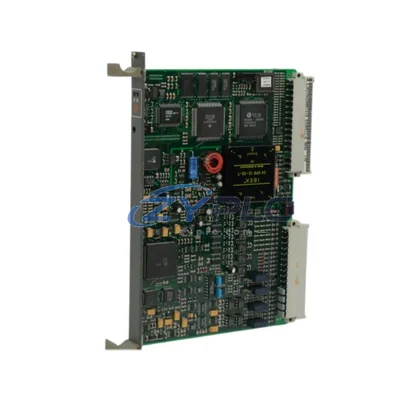
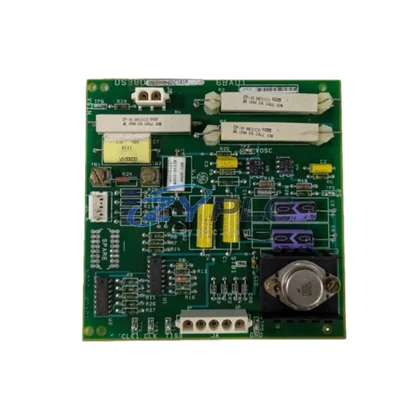
The GE IS200EPCTG1AAA is a high-reliability exciter power and communication interface board engineered for GE’s Mark VI turbine control platform. In modern industrial environments where data continuity between field devices and supervisory systems is mission-critical, the IS200EPCTG1AAA serves as a foundational node in the plant-wide communication architecture — bridging exciter subsystems, PLC controllers, remote I/O modules, HMI panels, and SCADA platforms into a unified, real-time data network.
Designed to operate within GE’s Mark VI distributed control system (DCS) ecosystem, this board supports the high-speed serial and proprietary backplane communication protocols that define the Mark VI’s internal data bus. Signal acquisition begins at the exciter level, where voltage, current, and firing angle data are captured and conditioned before being transmitted upstream through the Mark VI controller rack. From there, the IS200EPCTG1AAA participates in the coordinated data flow that feeds into plant SCADA systems, enabling operators to monitor turbine excitation performance in real time from centralized HMI workstations.
Compatibility & Integration Notes
| Parameter |
Specification |
| SKU / Part Number |
IS200EPCTG1AAA |
| Brand / Manufacturer |
GE (General Electric) |
| Series / Platform |
Mark VI Turbine Control System |
| Module Function |
Exciter Power & Communication Interface |
| Communication Protocol |
GE Mark VI Proprietary Backplane Bus, Serial Communication |
| Interface Type |
Backplane I/O, Serial Port, Internal Bus Connector |
| Transmission Capability |
Real-time exciter data, firing pulse signals, status feedback |
| Network Compatibility |
GE Mark VI DCS, Mark VIe, Ethernet Gateway via UCVEH / UCVEH2 |
| System Application |
Gas Turbine Excitation Control, Power Generation, SCADA/HMI Integration |
| Product Type |
Industrial Communication Module / Circuit Board |
| Origin |
United States |
| Warranty |
Warranty and support terms confirmed before quote |
| Availability |
Verified Availability confirmed by RFQ | shipment timing confirmed after RFQ |
| Shipping |
DHL / FedEx Global Express |
Connected Automation Data Flow
Within a gas turbine power plant or industrial generation facility, the IS200EPCTG1AAA operates at the intersection of power electronics and digital control. The exciter subsystem — responsible for regulating generator field current — generates continuous analog and digital signals that must be accurately captured, processed, and relayed to the Mark VI controller rack in real time. This board handles that critical interface layer.
The data flow begins at the exciter bridge, where the IS200EPCTG1AAA captures firing angle commands from the GE IS200EACFG1A (Exciter AC Feedback Board) and synchronizes them with the generator’s voltage reference. These signals are then passed through the Mark VI backplane to the GE IS215VCMIH2C (VME Communication Module), which aggregates data from multiple I/O boards across the controller rack. The IS215VCMIH2C acts as the primary gateway between the Mark VI’s internal bus and the plant’s Ethernet-based SCADA network.
On the field device side, the IS200EPCTG1AAA works in coordination with the GE IS200TRLYH1B (Relay Output Board) to execute protection trip commands when excitation anomalies are detected. Simultaneously, the GE IS200AEPAH1B (Analog I/O Board) feeds process variables — such as generator terminal voltage and reactive power — into the same data pipeline, ensuring that the SCADA historian receives a complete picture of the excitation system’s operating state.
At the supervisory level, the Mark VI communicates with GE ToolboxST-based HMI workstations over the plant’s industrial Ethernet backbone. Operators can monitor IS200EPCTG1AAA-related parameters — including exciter output voltage, field current, and alarm states — directly from the HMI dashboard. When integrated with a GE UCVEH2 Ethernet communication module, the Mark VI can also push real-time data to third-party SCADA platforms via Modbus TCP or OPC-DA, enabling cross-platform visibility across mixed-vendor automation environments.
For remote I/O expansion, the Mark VI platform supports distributed I/O racks connected via the GE IS200BICLH1C (Backplane Interconnect Board), which extends the communication reach of the IS200EPCTG1AAA’s data outputs to remote terminal units (RTUs) and edge gateways. This architecture is particularly valuable in large power plants where the exciter control panel is physically separated from the main turbine control room. Variable frequency drives (VFDs) connected to auxiliary systems — such as cooling fans and lube oil pumps — can also receive speed reference commands derived from the excitation control loop, further integrating the IS200EPCTG1AAA into the plant’s broader automation data fabric.
Solving Data Isolation in Industrial Sites
One of the most persistent challenges in legacy power generation and industrial automation facilities is protocol fragmentation — where exciter control systems, turbine controllers, protection relays, and SCADA platforms each speak different communication languages, creating data silos that impede real-time visibility and remote diagnostics.
The GE IS200EPCTG1AAA, as part of the Mark VI ecosystem, directly addresses this challenge. Its integration with the Mark VI’s unified backplane communication architecture eliminates the need for external protocol converters between the exciter subsystem and the main turbine controller. All excitation data — firing pulses, field current feedback, alarm states, and protection signals — flows natively through the Mark VI’s internal bus, ensuring zero-latency data availability at the controller level.
For sites that require connectivity to modern Ethernet-based SCADA or cloud-based monitoring platforms, the Mark VI’s gateway modules (such as the UCVEH2) provide seamless protocol translation from the proprietary Mark VI bus to Modbus TCP, OPC-UA, or DNP3 — without requiring modifications to the IS200EPCTG1AAA or the exciter hardware. This means that even aging exciter systems can be brought into a modern Industrial IoT (IIoT) architecture with minimal engineering effort.
Remote diagnostics is another area where the IS200EPCTG1AAA’s integration value becomes clear. Because all excitation parameters are visible on the SCADA/HMI network, maintenance engineers can perform remote fault analysis — identifying whether an excitation anomaly originates at the power bridge, the feedback circuit, or the control algorithm — without requiring physical access to the exciter panel. This capability significantly reduces mean time to repair (MTTR) and supports predictive maintenance programs that rely on continuous data trending.
Production line transparency is further enhanced by the IS200EPCTG1AAA’s role in the Mark VI’s alarm and event management system. Every excitation fault, protection trip, and parameter deviation is logged with a millisecond-resolution timestamp and transmitted to the SCADA historian, providing a complete audit trail for post-event analysis and regulatory compliance reporting. For facilities looking to expand their turbine fleet or upgrade existing units, the Mark VI’s modular architecture — anchored by boards like the IS200EPCTG1AAA — allows system capacity to be scaled without redesigning the communication infrastructure.
Industrial Connectivity FAQ
Q1: What communication protocols does the GE IS200EPCTG1AAA support, and is it compatible with third-party SCADA systems?
The IS200EPCTG1AAA communicates natively over the GE Mark VI proprietary backplane bus. For integration with third-party SCADA systems, the Mark VI platform uses gateway modules such as the UCVEH2 to translate internal data to standard industrial protocols including Modbus TCP, OPC-DA, OPC-UA, and DNP3. This makes the IS200EPCTG1AAA compatible with virtually any modern SCADA or DCS platform without hardware modification.
Q2: How does the IS200EPCTG1AAA ensure network stability and minimize communication latency in real-time excitation control?
The IS200EPCTG1AAA is designed for deterministic, low-latency communication within the Mark VI’s synchronous backplane architecture. The internal bus operates on a fixed scan cycle, ensuring that excitation commands and feedback signals are processed within the controller’s defined control loop period — typically in the range of 10–20 milliseconds. This deterministic behavior is essential for maintaining generator voltage stability and preventing excitation-related protection trips.
Q3: Can the IS200EPCTG1AAA be integrated into an existing Mark VI system without a full system shutdown?
Board replacement in the Mark VI system typically requires the affected controller module to be taken offline, but the Mark VI’s redundant controller architecture (where applicable) allows hot-standby switchover before maintenance. We recommend consulting GE’s Mark VI installation procedures and coordinating with your control system integrator before performing any board replacement. All IS200EPCTG1AAA units supplied by ZYPLC are pre-tested and verified against GE’s functional specifications prior to shipment.
Q4: What warranty and quality assurance does ZYPLC provide for the IS200EPCTG1AAA?
Every IS200EPCTG1AAA shipped by ZYPLC carries a warranty and support terms confirmed before quote covering functional defects under normal operating conditions. Each unit undergoes pre-shipment functional testing to verify communication integrity, power output, and signal conditioning performance. Availability and shipment timing are confirmed by RFQ via DHL or FedEx international express, with typical delivery to major industrial hubs within 3–7 business days. For volume orders or urgent requirements, contact our technical sales team for priority fulfillment.