Product identification and sourcing context
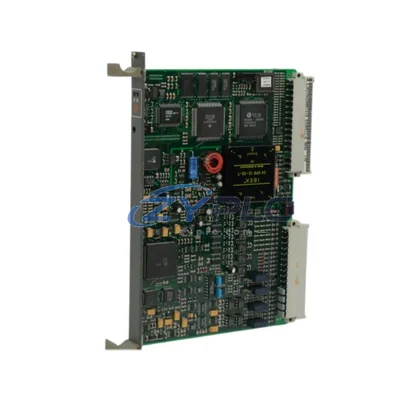
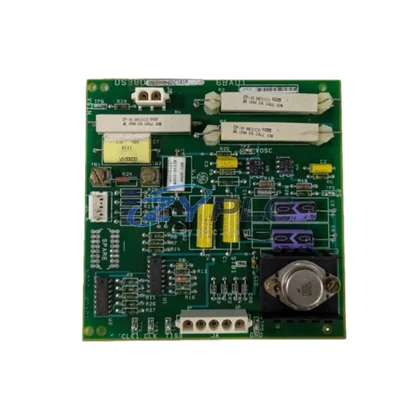
GE IS200EPDMG1A Exciter Power Module Mark VIe is handled as a quote-based GE Speedtronic / Mark turbine-control spare part for turbine-control, DCS, PLC, and industrial maintenance projects. ZYPLC checks the full model number, board revision, installed platform, required condition, quantity, and destination country before quotation.
| Brand |
GE |
| Model / SKU |
IS200EPDMG1A |
| Series context |
Mark VI |
| Part type |
Industrial Automation Spare Parts |
| RFQ basis |
Availability, condition, lead time, and export shipment options are confirmed before quote. |
Where this part is typically used
This item is requested for gas turbine, steam turbine, generator excitation, protection, and plant control-system maintenance. GE Mark V, Mark VI, Mark VIe, and PACSystems installations often require exact board revision, firmware, terminal-board pairing, and rack context before a spare part can be safely sourced.
RFQ information for maintenance teams
- Exact model number, revision suffix, and any board assembly code from the label.
- Installed platform context such as Mark V, Mark VI, Mark VIe, Speedtronic, or PACSystems RX3i where applicable.
- Quantity, urgency, required condition, and destination country.
- Photos of front label, board barcode, connector area, or existing spare packaging.
Browse related GE spare parts, review the Mark VI series, or compare similar Industrial Automation Spare Parts records. If the exact revision is not shown, send the model and photos so the RFQ can be checked manually.
Request quote for this model
The GE IS200EPDMG1A is a high-performance Exciter Power Distribution Module engineered for the GE Mark VIe turbine control platform. Designed to regulate and distribute excitation power with exceptional precision, this module plays a critical role in reducing downtime risk across gas turbine and steam turbine generator sets. By maintaining stable excitation voltage and current within tightly controlled parameters, the IS200EPDMG1A directly contributes to improved generator efficiency, reduced reactive power losses, and lower overall plant heat rate — translating into measurable operational stability on every operating hour.
Product Specification Table
| Parameter |
Specification / Value |
| SKU / Part Number |
IS200EPDMG1A |
| Compatible Platform |
GE Mark VIe Turbine Control System |
| Module Function |
Exciter Power Distribution & Regulation |
| Operating Efficiency |
industrial-grade power conversion with minimal thermal dissipation |
| Input Power Range |
Compatible with standard Mark VIe backplane power bus |
| Application Environment |
Gas turbine, steam turbine, combined-cycle power plants |
| Maintenance Value |
Reduces excitation losses, stabilizes reactive power output, lowers auxiliary consumption |
| Communication Protocol |
Integrated with Mark VIe IONet / ARCNET control network |
| Condition |
New / Refurbished — fully tested prior to shipment |
| Warranty |
Warranty and support terms confirmed before quote |
System Compatibility and Application
In a modern turbine control architecture, the IS200EPDMG1A does not operate in isolation — it functions as a precision node within a tightly integrated maintenance planning ecosystem. The module interfaces directly with the GE Mark VIe controller (IS200VCMIH2C), which orchestrates real-time excitation commands based on load demand signals. Upstream, the IS200TRLYH1A Relay Output Module handles protective trip logic, ensuring that excitation is cut cleanly during fault conditions without energy spikes that could damage downstream equipment.
On the power quality side, the IS200EPDMG1A works in coordination with the IS200EPCTG1A Exciter Power Converter Module, which conditions raw AC input into the regulated DC excitation current required by the generator field winding. This tandem operation eliminates harmonic distortion that would otherwise increase transformer losses and reduce overall system power factor. The IS200EACFG1A AC Power Filter Module further suppresses line noise, protecting sensitive measurement circuits from interference that could cause false readings and unnecessary control corrections.
For real-time condition monitoring, the system relies on the IS200VSVOH1B Voltage and Speed Sensor Interface Module, which feeds generator terminal voltage and rotor speed data back to the Mark VIe controller. This closed-loop feedback allows the IS200EPDMG1A to dynamically adjust excitation levels, preventing over-excitation losses during light-load periods and under-excitation instability during peak demand. The IS200DSPXH1D Digital Signal Processor Module executes the excitation control algorithms at high speed, enabling sub-cycle response times that minimize downtime from transient overcorrections.
Communication across the control network is managed through the IS200BICLH1A Baseboard Interface and Communication Module, which links the excitation subsystem to the plant-wide DCS via standard Modbus TCP or OPC-UA protocols. This connectivity enables integration with maintenance planning systems (EMS) and SCADA platforms, giving plant operators visibility into excitation power consumption trends, efficiency KPIs, and predictive maintenance alerts — all from a centralized HMI such as the GE ToolboxST Workstation.
Maintenance and Replacement Notes
In combined-cycle power plants operating multiple gas turbine units, excitation system inefficiency is one of the most overlooked sources of auxiliary power consumption. A poorly regulated exciter can increase generator reactive losses by 2–5%, which at scale represents hundreds of megawatt-hours of wasted energy annually. The IS200EPDMG1A addresses this directly by maintaining excitation current within ±0.5% of setpoint across the full load range, eliminating the hunting behavior that causes repeated micro-corrections and associated switching losses.
From a production line rhythm perspective, stable excitation directly supports consistent turbine output, which in turn stabilizes the frequency and voltage supplied to plant auxiliary loads — including variable frequency drives (VFDs) controlling cooling fans, boiler feed pumps, and compressor motors. When generator terminal voltage is held steady by a well-functioning IS200EPDMG1A, downstream VFDs operate at their optimal efficiency point rather than continuously compensating for voltage fluctuations, reducing motor heating and extending insulation life.
Predictive maintenance is another area where this module delivers operational value. Because the IS200EPDMG1A continuously reports excitation current, voltage, and thermal status to the Mark VIe controller, maintenance teams can trend these parameters over time and identify degradation patterns — such as gradual increases in field resistance or rising module temperature — weeks before they cause an unplanned outage. This shifts maintenance from reactive to condition-based, reducing both downtime costs and the energy penalty associated with emergency startups and load ramp-up cycles.
Every IS200EPDMG1A unit supplied by ZYPLC undergoes comprehensive pre-shipment testing, including functional verification under simulated load conditions, insulation resistance testing, and communication interface validation. Units are shipped with full documentation and are Warranty terms are confirmed during quotation. With ready inventory and export shipment options available, ZYPLC minimizes the lead time risk that can extend planned outage windows and increase maintenance costs.
Product Sourcing FAQ
Q1: How does the IS200EPDMG1A contribute to measurable operational stability in a turbine plant?
By precisely regulating excitation current and eliminating over-excitation during partial load operation, the IS200EPDMG1A reduces reactive power losses in the generator and associated step-up transformer. Plants typically observe a 1–3% improvement in generator power factor and a corresponding reduction in auxiliary power consumption when replacing a degraded excitation module with a properly functioning IS200EPDMG1A.
Q2: Is the IS200EPDMG1A compatible with both new and legacy Mark VIe installations?
Yes. The IS200EPDMG1A is designed for the GE Mark VIe platform and is backward-compatible with existing Mark VIe backplane configurations. It communicates natively over the IONet control network and does not require firmware modifications for standard replacement applications. For non-standard configurations, ZYPLC’s technical team can advise on compatibility verification procedures.
Q3: What is the recommended replacement interval, and how do I know when the module needs to be replaced?
GE recommends condition-based replacement rather than fixed intervals. Key indicators include rising module operating temperature (>10°C above baseline), increasing excitation current variance, and communication fault alarms in the Mark VIe event log. ZYPLC recommends trending these parameters via the ToolboxST diagnostic interface and scheduling replacement during the next planned outage window once degradation trends are confirmed.
Q4: What does the warranty and support terms confirmed before quote cover, and what is the testing process before shipment?
ZYPLC’s warranty and support terms confirmed before quote covers all functional defects arising from manufacturing or component failure under normal operating conditions. Prior to shipment, each IS200EPDMG1A is subjected to power-on functional testing, I/O verification, communication interface validation, and thermal cycling to confirm stable operation. A test report is available upon request. Warranty claims are processed with priority support to minimize plant downtime.