GE
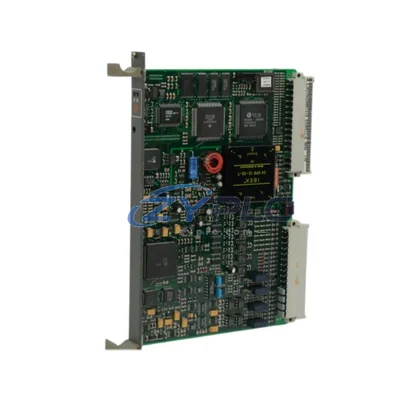
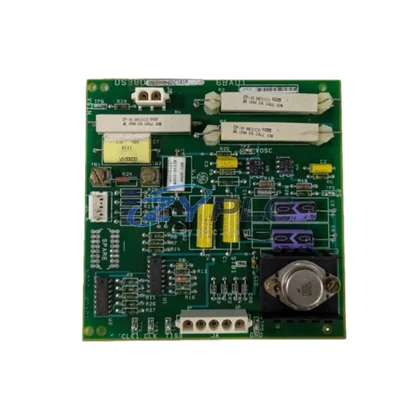
GE IS200TBCIH1BCE Terminal Board Mark VI

GE IS200TBCIH1BCE Mark VI terminal board module for energy-efficient turbine control. Tested, 12-month warranty, fast global shipping from ZYPLC.
GE
GE IS200TBCIH1BCE Mark VI terminal board module for energy-efficient turbine control. Tested, 12-month warranty, fast global shipping from ZYPLC.
Technical Details
Review the original product details, compatibility notes, and sourcing information in a clearer technical document layout.
The GE IS200TBCIH1BCE is a precision-engineered terminal board module designed for the GE Mark VI turbine control platform. As a critical signal interface component within the Mark VI architecture, the IS200TBCIH1BCE plays a direct role in reducing unnecessary energy consumption by ensuring clean, low-loss signal routing between field instrumentation and the core control processors. In modern industrial facilities where energy efficiency is a board-level priority, the integrity of every I/O connection directly impacts how accurately the control system can respond to load changes, optimize fuel consumption, and minimize idle-state power draw.
At ZYPLC, every IS200TBCIH1BCE unit is sourced from verified supply channels, subjected to outgoing shipment testing, and backed by a 12-month warranty. Our inventory is maintained to support rapid deployment for both planned maintenance cycles and unplanned downtime recovery.
| Parameter | Specification / Value |
|---|---|
| Part Number / SKU | IS200TBCIH1BCE |
| Brand | GE (General Electric) |
| Series | Mark VI Turbine Control System |
| Module Type | Terminal Board Module (I/O Interface) |
| Operating Power Consumption | Low-draw passive interface; minimizes parasitic load on control bus |
| Signal Routing Efficiency | High-integrity differential signal paths; reduces noise-induced re-polling cycles |
| Compatible Control Processors | GE Mark VI VCMI, VCRC, VTUR, VSVO processor boards |
| Compatible I/O Boards | IS200 series I/O modules (e.g., IS200BIICH1A, IS200VSVOH1B) |
| Application Environment | Gas turbine, steam turbine, combined-cycle power plants, compressor stations |
| Maintenance Value | Reduces signal fault-driven shutdowns; supports continuous optimized load dispatch |
| Origin | United States |
| Warranty | 12 Months — Covered by ZYPLC Quality Assurance Program |
| Testing | Pre-shipment functional verification performed on every unit |
| Availability | In-stock; ready for same-week dispatch |
The IS200TBCIH1BCE does not operate in isolation — it is one node in a tightly integrated maintenance planning and control architecture. Understanding how it interacts with surrounding components is essential for engineers optimizing turbine efficiency and minimizing auxiliary power consumption.
At the processor level, the Mark VI system relies on redundant control boards such as the IS200VCMIH1B (VCMI communication module) and the IS200VCRCH1B (VCRC core processor) to execute real-time control algorithms. The IS200TBCIH1BCE serves as the physical termination point that bridges field wiring to these processors, and any degradation in terminal board performance — loose connections, oxidized contacts, or failed isolation — directly increases the processor’s interrupt load, forcing more frequent scan cycles and elevating overall system power draw.
On the I/O side, the terminal board interfaces with modules such as the IS200BIICH1A (analog input board) and the IS200AAIAH1A (analog output board), which handle real-time feedback from thermocouples, pressure transducers, and flow meters. Accurate analog signal acquisition is the foundation of efficient combustion control: when the Mark VI receives clean, low-noise data from these I/O boards through a properly functioning IS200TBCIH1BCE, it can execute tighter fuel-air ratio adjustments, reducing excess fuel burn and lowering NOx emissions per megawatt-hour generated.
For servo and actuator control — critical in variable inlet guide vane (VIGV) positioning and fuel valve modulation — the IS200VSVOH1B (servo output board) depends on the terminal board to relay position feedback and command signals with minimal latency. Precise actuator response directly translates to faster load-following capability and reduced unplanned downtime during transient operating conditions.
The Mark VI system also integrates with plant-level SCADA and maintenance planning systems via communication modules such as the IS200VCNIH1B (network interface board), which supports Modbus, Profibus, and Ethernet-based protocols. The IS200TBCIH1BCE’s role in maintaining signal integrity ensures that the data flowing to these communication layers accurately reflects turbine operating state, enabling plant operators and maintenance planning software to make informed dispatch decisions without relying on stale or corrupted sensor readings.
Power supply integrity is maintained through dedicated Mark VI power distribution boards such as the IS200EPBAG1A, which conditions and distributes 28VDC across the I/O and terminal board layers. A well-functioning IS200TBCIH1BCE reduces the risk of ground faults and leakage currents that can destabilize the power rail and trigger protective shutdowns — each of which represents a measurable energy and production loss event.
In combined-cycle power plants and industrial compressor stations, unplanned turbine trips are among the most costly energy events a facility can experience. A single trip on a 100MW gas turbine unit can result in tens of thousands of dollars in lost generation revenue, restart fuel costs, and wear on hot-section components. The IS200TBCIH1BCE contributes to trip prevention by ensuring that the Mark VI control system receives continuous, high-fidelity signals from field instruments — eliminating the false trips caused by intermittent terminal connections or degraded signal isolation.
From a production line rhythm perspective, facilities that maintain a healthy inventory of critical spare parts — including terminal board modules like the IS200TBCIH1BCE — consistently achieve higher equipment availability rates. Mean Time To Repair (MTTR) for Mark VI-related faults drops significantly when the replacement module is on-site rather than on order. ZYPLC’s stocking model is specifically designed to support this operational philosophy: we maintain ready inventory of IS200 series components so that your maintenance team can execute a board swap within a single shift rather than waiting weeks for procurement.
Predictive maintenance programs that incorporate vibration analysis, thermal imaging, and control system diagnostic logs can identify degrading terminal board connections before they cause a fault. When the Mark VI’s self-diagnostic routines flag elevated signal variance on a specific I/O channel, the IS200TBCIH1BCE is often the first physical component to inspect. Having a tested, warranty-backed replacement available from ZYPLC means that the transition from diagnosis to resolution is measured in hours, not days — keeping your turbine on the dispatch curve and your energy output optimized.
For facilities running multiple turbine units on a shared Mark VI network, the cumulative effect of maintaining all terminal board modules in peak condition is substantial. Across a four-unit combined-cycle plant, eliminating signal-fault-driven derates and trips can recover hundreds of operating hours per year — directly improving capacity factor and reducing the levelized cost of energy (LCOE) for the facility.
Q1: How does the IS200TBCIH1BCE contribute to operational stability in a Mark VI-controlled turbine?
The IS200TBCIH1BCE ensures low-loss, high-integrity signal routing between field sensors and the Mark VI control processors. Clean signal paths allow the control system to execute tighter combustion optimization loops, reducing fuel consumption per unit of output. It also eliminates false fault conditions that trigger unnecessary load reductions or shutdowns, both of which waste energy during restart sequences.
Q2: Is the IS200TBCIH1BCE compatible with all Mark VI system configurations?
The IS200TBCIH1BCE is designed for use within the GE Mark VI turbine control platform and is compatible with the standard IS200 series I/O and processor board ecosystem. For specific rack configurations or redundant system architectures (TMR vs. simplex), we recommend confirming the exact slot assignment and wiring diagram with your Mark VI system documentation or contacting ZYPLC’s technical team for application support.
Q3: What is the recommended replacement interval, and how do I know when to replace the terminal board?
GE does not publish a fixed calendar-based replacement interval for terminal board modules; replacement is typically condition-based. Indicators that the IS200TBCIH1BCE may need replacement include persistent analog signal alarms on specific I/O channels, elevated signal noise reported by the Mark VI diagnostic system, visible corrosion or heat damage on terminal blocks, or a confirmed intermittent connection fault during maintenance inspection. ZYPLC’s pre-shipment tested units ensure you are installing a verified-functional replacement.
Q4: What does ZYPLC’s 12-month warranty cover for the IS200TBCIH1BCE?
ZYPLC’s 12-month warranty covers functional defects identified under normal operating conditions consistent with the Mark VI system’s design specifications. Each unit undergoes pre-shipment functional verification before dispatch. In the event of a warranty claim, ZYPLC will provide a replacement unit or issue a credit, subject to return inspection. Contact our team at plc.sales@zyplc.com or +86 19859288691 to initiate a warranty inquiry.
© 2026 ZYPLC. All rights reserved.
Original Source: https://zyplc.com
Contact: +86 19859288691 | plc.sales@zyplc.com