GE IS200TTURH1BCC: Industrial Data Link for Mark VI Smart Factory Connectivity
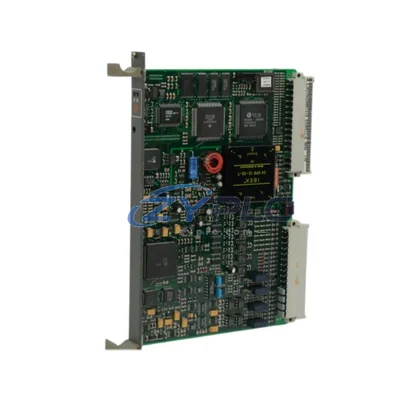
The GE IS200TTURH1BCC is a high-reliability Turbine Trip Unit engineered for the GE Mark VI turbine control platform. Designed to serve as a critical node in the industrial data chain, this module bridges field-level turbine protection logic with upper-layer control and monitoring systems — enabling seamless data flow across SCADA, DCS, HMI, and remote diagnostic platforms in modern smart factory and power generation environments.
In today’s industrial landscape, real-time signal integrity and protocol-consistent communication are non-negotiable. The IS200TTURH1BCC fulfills this demand by providing deterministic trip logic execution, synchronized status reporting, and structured data output compatible with the Mark VI communication architecture. Whether deployed in gas turbine, steam turbine, or combined-cycle power plants, this module ensures that every protection event — from overspeed detection to flame-out response — is captured, transmitted, and logged with zero ambiguity.
Compatibility & Integration Notes
| Parameter |
Specification |
| Compatible Platform |
GE Mark VI Turbine Control System |
| Communication Protocol |
IONet (GE Proprietary), Modbus RTU/TCP, PROFIBUS DP |
| Interface Type |
Backplane I/O, Serial RS-485, Ethernet (via gateway) |
| Data Transmission |
Real-time trip signal, status feedback, diagnostic data |
| Network Compatibility |
Mark VI VCMI, VSVO, TTUR series backplane architecture |
| SCADA/HMI Integration |
Compatible via Mark VI HMI (Cimplicity), third-party OPC-DA/UA |
| System Application |
Gas Turbine, Steam Turbine, Combined Cycle Power Plants |
| Warranty |
Warranty and support terms confirmed before quote | Availability confirmed by RFQ | Global Shipping |
Connected Automation Data Flow
The IS200TTURH1BCC operates at the heart of the Mark VI protection chain. Signal acquisition begins at the turbine’s physical sensors — including speed pickups, flame detectors, vibration transducers, and exhaust thermocouples — which feed raw analog and digital data into the Mark VI I/O terminal boards. The IS200TTURH1BCC receives processed trip logic from these inputs and executes protection sequences in coordination with companion modules such as the IS200VSVOH1B servo driver board and the IS200VCMIH2C communication interface module.
Within the Mark VI rack, the trip unit communicates over the proprietary IONet backbone, synchronizing with the IS215VCMIH2CB controller module to ensure that all protection states are reflected in real time on the operator HMI — typically running GE Cimplicity SCADA software. Alarm events, trip histories, and diagnostic codes are pushed upstream through the IS200EPCTG1A Ethernet gateway module, making them accessible to plant-level SCADA servers and remote monitoring dashboards.
For facilities integrating legacy field devices, the Mark VI architecture supports protocol bridging via Modbus RTU and PROFIBUS DP gateways, allowing the IS200TTURH1BCC’s trip data to be consumed by third-party DCS platforms, historian servers, and MES systems. Remote I/O expansion is handled through IS200TRLYH1B relay output boards, which translate trip commands into hardwired actuator signals for fuel valves, inlet guide vanes, and generator breakers.
In combined-cycle plants, the IS200TTURH1BCC works in tandem with IS200TREGH1B turbine regulation boards and IS200TSVOH1A servo output modules to maintain coordinated protection across both gas and steam turbine trains. Edge computing nodes and industrial IoT gateways can subscribe to the Mark VI’s OPC-UA data streams, enabling predictive maintenance analytics and AI-driven anomaly detection without interrupting the real-time control loop.
Solving Data Isolation in Industrial Sites
One of the most persistent challenges in turbine control environments is protocol fragmentation — where trip units, servo controllers, I/O modules, and SCADA systems speak different communication languages, creating data silos that delay fault response and obscure plant-wide visibility. The GE IS200TTURH1BCC addresses this directly by operating natively within the Mark VI’s unified IONet architecture, eliminating the translation overhead that typically introduces latency in heterogeneous control networks.
For plants running mixed-vendor environments, the Mark VI’s gateway capabilities allow IS200TTURH1BCC trip data to be normalized and forwarded to Modbus TCP or PROFIBUS DP segments, ensuring that even legacy PLCs and third-party SCADA platforms receive consistent, timestamped protection data. This removes the data isolation barrier between turbine protection systems and plant-level MES or ERP platforms.
Remote monitoring and diagnostics are further enhanced by the module’s integration with GE’s Mark VI diagnostic toolset, which provides live parameter trending, trip event logs, and firmware health checks accessible from any networked engineering workstation. This capability dramatically reduces mean-time-to-repair (MTTR) by enabling remote fault isolation before a maintenance technician reaches the turbine deck.
System expansion is straightforward: additional IS200-series I/O and communication modules can be added to the Mark VI rack without reconfiguring the IS200TTURH1BCC’s core protection logic, supporting phased plant upgrades and capacity expansions with minimal downtime. Every unit shipped undergoes full functional testing and burn-in verification, Warranty terms are confirmed during quotation.
Industrial Connectivity FAQ
Q1: What communication protocols does the GE IS200TTURH1BCC support for SCADA integration?
The IS200TTURH1BCC communicates natively over GE’s IONet protocol within the Mark VI backplane. For SCADA integration, data is accessible via OPC-DA/UA through the Mark VI HMI server (GE Cimplicity), and can be bridged to Modbus TCP or PROFIBUS DP using Mark VI gateway modules for third-party DCS and historian connectivity.
Q2: How does the IS200TTURH1BCC ensure network stability in high-vibration turbine environments?
The module is designed to MIL-spec environmental standards, with conformal-coated PCBs and backplane-mounted connectors that resist vibration, humidity, and EMI. The IONet communication layer includes built-in redundancy and watchdog timers that detect and report communication faults within milliseconds, ensuring protection logic remains active even during network disturbances.
Q3: Can the IS200TTURH1BCC be integrated into an existing Mark VI system without full rack replacement?
Yes. The IS200TTURH1BCC is a hot-swappable module within the Mark VI rack architecture. It can be installed or replaced without powering down the entire control system, provided proper isolation procedures are followed. System expansion with additional I/O or communication modules does not require reconfiguration of the trip unit’s core logic.
Q4: What does the warranty and support terms confirmed before quote cover, and how is pre-shipment testing conducted?
Every IS200TTURH1BCC unit undergoes full functional testing — including trip logic verification, communication interface checks, and thermal burn-in — prior to shipment. The warranty and support terms confirmed before quote covers manufacturing defects and functional failures under normal operating conditions. RFQ-confirmed units are available for same-week global shipping, with full traceability documentation provided upon request.
—