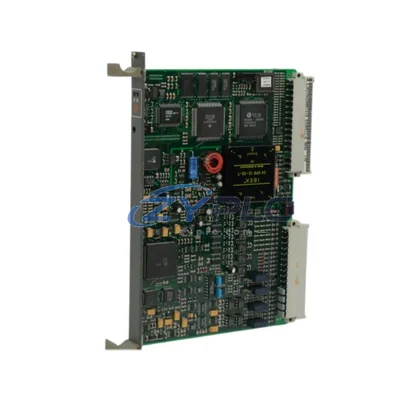
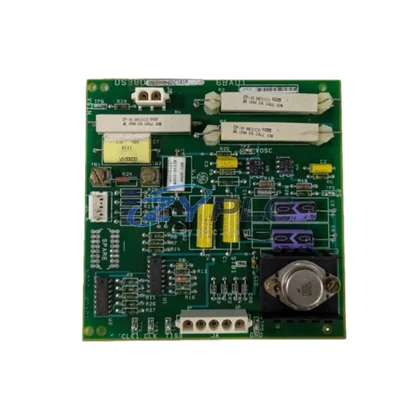
GE IS200TTURH1BED Termination Board for Mark VI Automation
The GE IS200TTURH1BED is a high-efficiency termination board module designed for the GE Mark VI turbine control system. As a critical interface component within the Mark VI architecture, the IS200TTURH1BED manages I/O signal routing between field devices and the core control processors, directly influencing how efficiently a turbine or industrial plant consumes energy, responds to load changes, and maintains operational continuity. For facilities focused on reducing idle operating load, minimizing unplanned downtime, and optimizing production line throughput, this board represents a foundational investment in control system integrity.
Product Specification Table
| Parameter |
Specification / Value |
| SKU / Part Number |
IS200TTURH1BED |
| Brand & Series |
GE Mark VI Turbine Control |
| Module Type |
Termination Board (I/O Interface) |
| Operating Voltage |
24 VDC (typical Mark VI backplane) |
| Signal Compatibility |
Analog & Digital I/O, Thermocouple, RTD inputs |
| Compatible Systems |
GE Mark VI, Mark VIe turbine control platforms |
| Application Environment |
Gas turbine, steam turbine, combined-cycle power plants |
| Maintenance Value |
Reduces signal loss, eliminates redundant wiring faults, lowers I/O-related unplanned downtime |
| Country of Origin |
United States |
| Warranty |
warranty terms confirmed during quotation — tested before shipment |
System Compatibility and Application
In a modern turbine control environment, energy efficiency is not achieved by a single component — it is the result of a tightly integrated system where every module performs its role with minimal overhead. The IS200TTURH1BED termination board sits at the heart of this architecture, serving as the structured wiring interface that connects field instrumentation to the Mark VI controller core.
Within a typical Mark VI cabinet, the IS200TTURH1BED works alongside processor boards such as the IS200TPROH1B and I/O pack modules like the IS200IOCIH2A to ensure that sensor data — from thermocouples, RTDs, pressure transmitters, and speed pickups — is accurately captured and transmitted with minimal latency. Accurate, low-latency data acquisition is the first step in maintenance-focused control: when the controller receives clean signals, it can make precise fuel-flow and load-dispatch decisions that avoid over-firing and reduce heat-rate losses.
On the drive side, the Mark VI system interfaces with excitation controllers and generator protection relays. Boards like the IS200EACFG1A excitation board and the IS200VSVOH1B VSO output board work in coordination with the IS200TTURH1BED to regulate generator output and reactive power, directly impacting plant-level energy efficiency. When these boards operate with clean, well-terminated signal paths, the risk of spurious trips — which waste startup fuel and increase thermal cycling stress — is significantly reduced.
Communication integrity is equally important. The Mark VI platform supports IONET and Modbus protocols, and modules such as the IS200BICIH1A communication interface board relay real-time operational data to plant DCS and SCADA systems. This data loop enables operators to monitor operating load trends, identify inefficient operating windows, and schedule predictive maintenance before a fault causes an unplanned outage. The IS200TTURH1BED, by providing a reliable and correctly terminated I/O foundation, ensures that this data pipeline remains uninterrupted.
Power supply stability is another dimension of maintenance planning. The IS200PSCDH1A power supply conditioner board within the Mark VI cabinet regulates voltage to all downstream modules, including the IS200TTURH1BED. Stable, conditioned power prevents micro-interruptions that can cause false alarms, unnecessary shutdowns, and the associated energy penalties of restart sequences.
Maintenance and Replacement Notes
In gas turbine power plants and combined-cycle facilities, the Mark VI control system is responsible for managing fuel-to-power conversion efficiency across the entire operating envelope. The IS200TTURH1BED contributes to this goal by ensuring that every field signal — exhaust temperature, compressor inlet pressure, flame detector output, vibration sensor reading — arrives at the controller with full fidelity and without wiring-induced noise or ground loops.
When termination boards are degraded or improperly wired, the controller may receive erroneous readings that cause it to apply conservative operating limits, effectively de-rating the turbine and reducing output per unit of fuel consumed. Replacing a faulty or end-of-life termination board with a tested IS200TTURH1BED can restore the turbine to its designed heat-rate curve, recovering efficiency losses that accumulate silently over months of degraded operation.
From a maintenance cost perspective, the IS200TTURH1BED’s robust terminal block design reduces the frequency of field wiring inspections. Secure, vibration-resistant terminations mean fewer intermittent faults, fewer nuisance trips, and fewer man-hours spent chasing signal anomalies. This directly translates to higher equipment utilization rates and lower maintenance labor costs per megawatt-hour generated.
For facilities managing multiple turbine units, maintaining a spare IS200TTURH1BED in inventory is a recognized best practice for minimizing mean time to repair (MTTR). A verified, pre-tested spare board can be swapped in during a planned outage window, avoiding the extended lead times associated with OEM procurement and keeping the unit available for dispatch during peak demand periods — when energy prices and efficiency premiums are highest.
Every unit of the IS200TTURH1BED supplied by ZYPLC undergoes functional testing and burn-in verification prior to shipment, with full documentation provided. This ensures that the board performs to specification from the first moment of installation, eliminating the commissioning delays and re-testing cycles that consume engineering time and defer the operational stability the upgrade is intended to deliver.
Product Sourcing FAQ
Q1: How does replacing the IS200TTURH1BED improve turbine energy efficiency?
A degraded termination board introduces signal noise, ground loops, and intermittent open circuits that cause the Mark VI controller to apply conservative operating limits. Restoring clean I/O signal paths with a tested IS200TTURH1BED allows the controller to operate the turbine at its designed efficiency point, reducing specific fuel consumption and improving heat rate.
Q2: Is the IS200TTURH1BED compatible with both Mark VI and Mark VIe systems?
The IS200TTURH1BED is designed for the GE Mark VI turbine control platform. Compatibility with Mark VIe depends on the specific cabinet configuration and I/O pack assignments. We recommend verifying your cabinet drawing and I/O pack model numbers before ordering. Our technical team can assist with cross-referencing.
Q3: What is the recommended replacement interval, and how should the board be tested before installation?
GE Mark VI termination boards do not have a fixed calendar replacement interval, but should be inspected during every major outage for terminal corrosion, insulation degradation, and connector wear. Each IS200TTURH1BED supplied by ZYPLC is tested under simulated operating conditions prior to shipment. Upon receipt, verify continuity on all terminal blocks and confirm correct seating in the backplane before energizing.
Q4: What warranty and after-sales support does ZYPLC provide?
All IS200TTURH1BED units carry a warranty terms confirmed during quotation covering manufacturing defects and functional failures under normal operating conditions. ZYPLC maintains inventory stock for rapid dispatch, with most orders shipped within 1–3 business days. Post-sale technical support is available via email and phone for installation guidance, compatibility questions, and warranty claims.
RFQ sourcing notes for GE IS200TTURH1BED Termination Board Mark VI
Product identification: GE IS200TTURH1BED Termination Board Mark VI is listed by ZYPLC as a Termination Board for RFQ-based industrial automation spare-part sourcing. The working identity should be confirmed against the complete model number, visible suffix, nameplate photo, and installed-system requirement before quotation.
System context: GE turbine-control, PACSystems, and Speedtronic parts often require board revision, Mark platform, and cabinet position verification. The current catalog context links this item with Mark VI and Industrial Automation Spare Parts, but final compatibility should always be checked against the buyer’s rack, panel, controller, drive, DCS, safety, or field-device configuration.
Application use: This product is handled as an industrial automation spare part where the exact model, suffix, and application context guide sourcing. Maintenance teams usually request this type of part when a production line, process unit, drive cabinet, monitoring rack, robot cell, or control cabinet needs a direct replacement or a verified compatible sourcing option.
- Complete model number / SKU: IS200TTURH1BED
- Quantity, destination country, and required delivery urgency
- Condition requirement: new surplus, refurbished, tested used, or compatible replacement
- Photos of the front label, side label, terminal block, connector, or installed cabinet position
- Any firmware, revision, voltage, communication, coating, or suffix requirement visible on the existing part
Availability, condition, and shipment
Availability is confirmed via RFQ. ZYPLC does not use this page to guarantee immediate stock, a fixed price, or one default condition. Where applicable, condition, testing scope, packing method, lead time, and export shipment options are confirmed in the quotation before payment.
Internal sourcing paths
Related model pages
FAQ
Can ZYPLC quote this exact model?
Send the full model number, photos, quantity, destination, and urgency. ZYPLC will review availability, condition, lead time, and sourcing options before quotation.
Can a similar model replace it?
Not automatically. Similar-looking industrial modules may differ by suffix, firmware, voltage, communication option, revision, or safety approval. Compatibility must be confirmed before using an alternative.
Is this an online checkout item?
No. This product page supports RFQ-based sourcing rather than automated checkout. The confirmed quotation should define condition, price, shipment method, and any available test or inspection scope.