GE IS210BPPBH2CAA Bus Protection for Mark VI: Compatibility and Replacement Notes
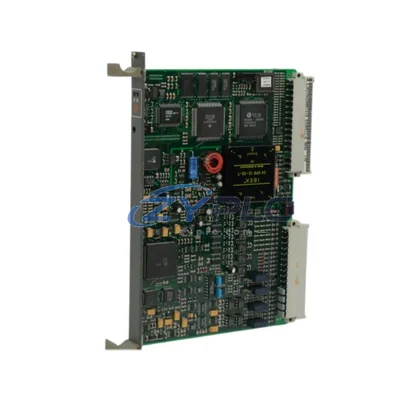
The GE IS210BPPBH2CAA is a Bus Protection Board engineered specifically for deployment within the GE Mark VI and Mark VIe turbine control platform — one of the most widely adopted distributed control architectures in power generation, oil & gas, and heavy industrial environments. Rather than functioning as a standalone component, the IS210BPPBH2CAA occupies a critical position within the VME-based I/O and communication backbone of the Mark VI system, providing bus-level fault isolation, signal integrity protection, and backplane continuity that directly supports the reliability of the entire control loop.
In a fully integrated Mark VI architecture, the IS210BPPBH2CAA works in close coordination with the VCMI (VME Communication Module Interface), the PPRO (Protection Processor) board, and the VTUR (Turbine Control) module to ensure that bus faults do not propagate across control domains. Its role is analogous to a circuit-level firewall within the VME backplane — intercepting transient overcurrents, isolating faulty segments, and maintaining signal continuity to adjacent I/O boards such as the IS200TRLYH1B relay output module and the IS200VSVOH1B servo driver interface. This level of system integration is what distinguishes a properly engineered turbine control system from a loosely assembled collection of modules.
Product Specification Table
| Parameter |
Specification |
| Part Number |
IS210BPPBH2CAA |
| Manufacturer |
GE (General Electric) |
| Compatible Platform |
Mark VI / Mark VIe Turbine Control System |
| System Role |
VME Bus Protection Board — backplane fault isolation and signal integrity |
| Form Factor |
VME 6U board, rack-mounted within Mark VI I/O enclosure |
| Operating Voltage |
+5 VDC / ±12 VDC (VME standard bus supply) |
| Operating Temperature |
0°C to +60°C (standard industrial range) |
| Communication Interface |
VME backplane bus; compatible with IONet and ARCNET communication layers |
| Protection Function |
Bus overcurrent protection, segment isolation, backplane continuity monitoring |
| Installation Environment |
Control cabinet / turbine control enclosure; DIN rail or rack-mount compatible |
| Revision |
H2CAA (hardware revision 2, conformal coating variant A) |
| Warranty |
warranty terms confirmed during quotation — covers manufacturing defects and functional failure under normal operating conditions |
System Compatibility Notes
The IS210BPPBH2CAA does not operate in isolation. Its value is realized only when it is correctly positioned within a complete Mark VI control architecture that spans the control layer, I/O layer, network layer, power layer, HMI layer, and actuator layer. Understanding these interdependencies is essential for system engineers responsible for turbine control upgrades, panel replacements, or long-term maintenance planning.
At the control layer, the IS210BPPBH2CAA interfaces directly with the VCMI board, which manages VME bus arbitration and communication between the PPRO protection processor and the I/O subsystem. A fault on the bus — whether caused by a failing I/O board or a transient surge — can corrupt the PPRO’s real-time data stream, triggering spurious trips or masking genuine fault conditions. The IS210BPPBH2CAA prevents this by isolating the affected bus segment before the fault propagates.
At the I/O layer, the board works alongside analog input modules such as the IS200AEPAH1B and digital output boards like the IS200TRLYH1B. These modules depend on stable VME bus communication to relay thermocouple readings, vibration signals, and relay commands to the PPRO. Any bus instability directly degrades the fidelity of these signals, which in a gas turbine or steam turbine application can have serious operational consequences. The IS210BPPBH2CAA maintains the electrical integrity of the backplane that these modules share.
At the network layer, the Mark VI system typically employs IONet (a proprietary GE Ethernet-based I/O network) or ARCNET for inter-module communication. The IS200VCMIH2C VCMI module manages this network interface, and its performance is contingent on a clean VME bus environment. Bus noise or partial failures that go undetected can introduce latency or packet loss in the IONet fabric, degrading the system’s deterministic response characteristics. The IS210BPPBH2CAA’s bus monitoring function supports the stability of this network layer by preventing upstream electrical disturbances from reaching the communication interface.
At the power layer, the Mark VI enclosure is typically supplied by redundant DC power modules — often the IS200EPBAG1A or equivalent power supply boards — that feed the VME backplane rails. The IS210BPPBH2CAA’s overcurrent protection function acts as a secondary safeguard, ensuring that a localized power anomaly on one board does not collapse the shared bus supply and take down the entire rack.
At the HMI and supervisory layer, operators interact with the turbine control system through GE’s ToolboxST configuration environment or through a dedicated HMI workstation running Cimplicity or a third-party SCADA platform. The data integrity that these interfaces depend on — real-time process values, alarm states, and control outputs — flows through the VME bus that the IS210BPPBH2CAA protects. A compromised bus protection board can manifest as intermittent data dropouts or unexplained alarm floods at the HMI level, making the IS210BPPBH2CAA a critical but often overlooked component in HMI reliability.
At the actuator layer, servo valves, IGV actuators, and fuel control valves receive their positioning commands through servo driver boards such as the IS200VSVOH1B. These commands are generated by the PPRO and transmitted across the VME bus. The IS210BPPBH2CAA ensures that this command pathway remains electrically clean and fault-free, supporting precise actuator response and reducing the risk of control deviation during transient load conditions.
Industrial Application Notes
The IS210BPPBH2CAA finds its primary application in power generation facilities operating GE Frame 6B, Frame 7E, Frame 9E, or aeroderivative gas turbines equipped with the Mark VI or Mark VIe control system. In these environments, the bus protection board is a standard component of the VME I/O enclosure and is typically replaced on a condition-based or time-based maintenance schedule aligned with major turbine inspections.
In combined-cycle power plants, where both gas turbines and steam turbines may share a common Mark VI control platform, the IS210BPPBH2CAA plays a role in maintaining the electrical separation between control domains. This is particularly important in plants where the Mark VI system manages both the gas turbine and the heat recovery steam generator (HRSG) control loops from a shared VME rack configuration.
In oil & gas upstream and midstream facilities — including compressor stations, LNG terminals, and offshore platforms — the Mark VI system is frequently deployed to control gas turbine-driven compressors. In these applications, the IS210BPPBH2CAA contributes to the system’s SIL (Safety Integrity Level) compliance by ensuring that bus faults do not compromise the integrity of the protection logic executed by the PPRO board.
In petrochemical and refinery environments, where continuous process availability is paramount, the IS210BPPBH2CAA supports the redundant architecture of the Mark VIe system. Mark VIe installations often employ triple-redundant (TMR) control configurations, where three independent PPRO boards vote on control outputs. The bus protection board ensures that each PPRO’s VME bus segment remains isolated from the others, preserving the independence of the voting logic that is fundamental to TMR reliability.
For water treatment and municipal utility applications where GE Mark VI systems are used to control large pump drives or blower systems, the IS210BPPBH2CAA supports long-term system availability in environments where maintenance windows are infrequent and spare parts logistics require careful planning. ZYPLC maintains availability subject to RFQ confirmation of the IS210BPPBH2CAA to support rapid deployment in these time-sensitive scenarios.
Product Compatibility FAQ
Q1: Is the IS210BPPBH2CAA compatible with both Mark VI and Mark VIe systems, and can it be used in a TMR (Triple Modular Redundant) configuration?
A: Yes. The IS210BPPBH2CAA is designed for the GE Mark VI VME-based I/O architecture and is also compatible with Mark VIe systems that retain the VME backplane structure. In TMR configurations, each redundant control lane maintains its own VME bus segment, and the IS210BPPBH2CAA can be installed in each lane independently to preserve the electrical isolation between voting channels. Engineers should verify the hardware revision (H2CAA) against the system’s Bill of Materials to confirm compatibility with the specific rack and backplane assembly in use.
Q2: What are the installation and commissioning considerations when replacing the IS210BPPBH2CAA in a live Mark VI system?
A: Replacement of the IS210BPPBH2CAA should be performed during a planned maintenance window with the turbine in a safe shutdown state. The VME rack must be de-energized before the board is removed to prevent bus transients that could affect adjacent modules. After installation, the system should be powered up in sequence — power supply boards first, followed by the VCMI and PPRO boards — and the ToolboxST diagnostic environment should be used to verify bus integrity and confirm that all I/O modules are communicating correctly before returning the turbine to service.
Q3: What does the warranty terms confirmed during quotation cover, and what support is available for long-term spare parts planning?
A: The warranty terms confirmed during quotation provided by ZYPLC covers manufacturing defects and functional failures under normal operating conditions for the IS210BPPBH2CAA. This includes failure of the bus protection circuitry, backplane connector integrity, and onboard passive components. The warranty does not cover damage resulting from incorrect installation, overvoltage events beyond the VME specification, or physical mishandling. For long-term spare parts planning, ZYPLC recommends maintaining at least one IS210BPPBH2CAA per VME rack as a cold standby, given the board’s role in system-level bus protection. Our team can assist with multi-unit procurement and inventory management for facilities operating multiple Mark VI or Mark VIe systems.
© 2026 ZYPLC. All rights reserved.
Contact: +86 19859288691 | plc.sales@zyplc.com