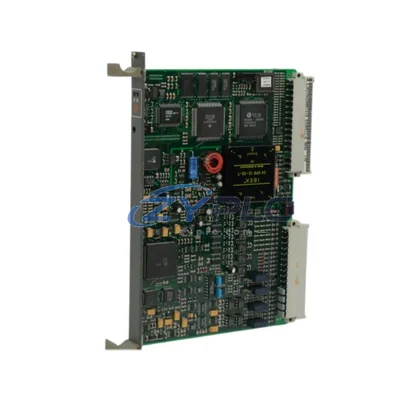
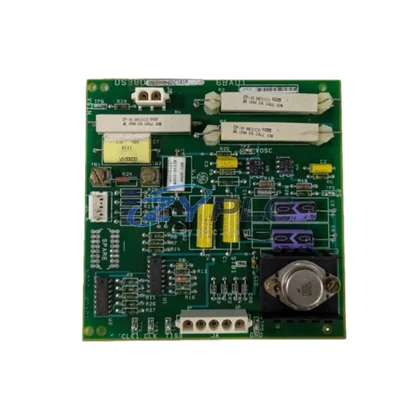
GE IS210MACCG1A Analog Control Module for Mark VI: Compatibility and Replacement Notes
The GE IS210MACCG1A is a precision analog control module engineered for deployment within the GE Mark VI turbine control system architecture. Rather than functioning as a standalone component, the IS210MACCG1A occupies a critical position within a layered automation hierarchy — bridging the analog signal world of field instrumentation with the digital processing core of the Mark VI controller platform. Its role spans the I/O layer and the control layer simultaneously, making it indispensable for system architects who demand signal fidelity, architectural consistency, and long-term operational reliability across gas turbine, steam turbine, and combined-cycle power generation environments.
In a fully integrated Mark VI control system, the IS210MACCG1A works in close coordination with the VCMI (VME Communications Module Interface) and the VTUR (Turbine Control Module) to ensure that analog process variables — including temperature, pressure, flow, and vibration signals — are accurately conditioned, converted, and delivered to the CPU for real-time processing. The module’s analog input channels are designed to accept standard 4–20 mA and thermocouple/RTD signals, providing the control layer with the high-resolution data it requires for precise turbine sequencing, load control, and protective tripping logic.
Product Specification Table
| Parameter |
Specification |
| Part Number |
IS210MACCG1A |
| Manufacturer |
General Electric (GE) |
| Compatible Platform |
GE Mark VI Turbine Control System |
| System Role |
Analog I/O Control Module — I/O Layer |
| Signal Types Supported |
4–20 mA, Thermocouple, RTD (inferred from Mark VI MACC series) |
| Communication Interface |
VME Backplane / Mark VI Internal Bus |
| Installation Environment |
Control cabinet / Mark VI panel enclosure, DIN-rail or rack-mount compatible |
| Operating Temperature |
0°C to 60°C (standard industrial range) |
| Power Supply Compatibility |
Mark VI distributed DC power rail (typically 28 VDC) |
| Redundancy Support |
TMR (Triple Modular Redundancy) and Simplex configurations |
| system integration |
Full system integration with Mark VI VCMI, VTUR, and I/O terminal boards |
| Warranty |
Warranty and support terms confirmed before quote — all units tested prior to shipment |
| Origin |
United States |
System Compatibility Notes
The IS210MACCG1A does not operate in isolation. Its value is fully realized only when it is understood as part of a coordinated Mark VI control system architecture. In a typical TMR (Triple Modular Redundancy) configuration, three IS210MACCG1A modules may be deployed in parallel — each reading the same field signal independently — with the VCMI module performing voting logic to eliminate single-point failures and ensure continuous process control even during partial hardware degradation. This redundancy architecture is fundamental to power generation applications where unplanned shutdowns carry significant operational and financial consequences.
At the I/O layer, the IS210MACCG1A interfaces directly with GE Mark VI terminal boards such as the IS200TBCIH1C or IS200TBAIH1C, which serve as the physical connection point for field wiring. These terminal boards route analog signals from sensors, transmitters, and actuators into the MACC module’s input channels. The clean separation between the terminal board and the control module simplifies field wiring, reduces noise coupling, and allows the IS210MACCG1A to be replaced during maintenance without disturbing field cable terminations — a critical advantage in live plant environments.
At the control layer, the IS210MACCG1A communicates with the VTUR turbine control module and the VCMI communications interface via the VME backplane. The VTUR executes the turbine control algorithms — speed governing, load sharing, fuel control, and protective logic — while the IS210MACCG1A continuously supplies it with conditioned analog data. The VCMI, in turn, manages communication between the Mark VI controller and higher-level systems such as the plant DCS (Distributed Control System) or SCADA platform via protocols including Modbus TCP, Profibus, or GE’s proprietary SRTP Ethernet.
At the power layer, the IS210MACCG1A relies on the Mark VI distributed DC power supply architecture, typically sourced from redundant IS200EPSCG1A or equivalent power supply modules. Redundant power feeds ensure that a single power supply failure does not interrupt analog signal processing, maintaining system availability during maintenance windows or unexpected supply faults.
At the human-machine interface (HMI) layer, operators interact with the data processed by the IS210MACCG1A through GE’s ToolboxST configuration and diagnostic software, or through plant-level HMI systems connected via the VCMI’s Ethernet gateway. Real-time analog trends, alarm states, and channel diagnostics are all visible at the HMI, enabling operators to monitor signal quality and respond to process deviations without requiring physical access to the control cabinet.
At the execution layer, the analog outputs conditioned by the IS210MACCG1A drive actuators, control valves, and variable-speed drives that directly govern turbine operation. The accuracy and stability of the IS210MACCG1A’s signal processing directly determines the precision of fuel valve positioning, inlet guide vane control, and cooling system regulation — making it a foundational element of turbine performance optimization.
Industrial Application Notes
The IS210MACCG1A finds application across a broad range of industrial sectors where the GE Mark VI platform is deployed as the primary turbine or process control system.
In power generation — including gas-fired combined-cycle plants, steam turbine installations, and peaking power facilities — the IS210MACCG1A supports continuous analog monitoring of exhaust temperatures, compressor discharge pressures, and fuel flow rates. Its integration within the Mark VI TMR architecture ensures that critical measurements are never lost due to a single module failure, supporting the high-availability requirements of grid-connected generation assets.
In oil and gas applications, including offshore platforms, LNG compression trains, and pipeline compressor stations, the IS210MACCG1A provides the analog I/O backbone for gas turbine-driven compressors. Its ability to handle thermocouple and RTD inputs makes it well-suited for high-temperature process monitoring in environments where signal accuracy directly impacts safety system performance.
In petrochemical and refinery environments, the IS210MACCG1A supports turbine-driven pump and compressor control within larger DCS-integrated architectures. Its system integration capability allows it to exchange process data with upstream and downstream control nodes, enabling coordinated process optimization across multiple unit operations.
In industrial manufacturing and utilities, including cogeneration plants and district energy systems, the IS210MACCG1A contributes to stable, efficient turbine operation that underpins facility-wide maintenance planning. Its Warranty and support terms confirmed before quote and proven reliability in long-cycle industrial applications make it a preferred choice for maintenance engineers managing aging Mark VI fleets.
Product Compatibility FAQ
Q1: Is the IS210MACCG1A compatible with both TMR and Simplex Mark VI configurations?
Yes. The IS210MACCG1A is designed for use in both TMR (Triple Modular Redundancy) and Simplex Mark VI architectures. In TMR systems, three modules operate in parallel with voting logic managed by the VCMI to eliminate single-point failures. In Simplex configurations, a single module handles all analog I/O for the associated control channels. System architects should confirm the specific Mark VI panel configuration (MKVI TMR vs. Simplex) before ordering to ensure the correct quantity and terminal board pairing.
Q2: Can the IS210MACCG1A be replaced without shutting down the turbine in a TMR system?
In a properly configured TMR Mark VI system, it is possible to replace one IS210MACCG1A module while the other two continue to provide redundant analog inputs, allowing the turbine to remain online during the swap. However, this procedure requires careful coordination with the plant’s safety management system, confirmation that the remaining two channels are healthy, and adherence to GE’s hot-swap procedures as documented in the Mark VI maintenance manual. ZYPLC recommends consulting your control system engineer before performing any live module replacement.
Q3: What does the Warranty and support terms confirmed before quote cover, and how does ZYPLC support long-term maintenance?
All IS210MACCG1A units supplied by ZYPLC are Warranty terms are confirmed during quotation. Each module undergoes functional testing prior to shipment to verify analog channel performance, backplane communication integrity, and power supply compatibility. For long-term maintenance support, ZYPLC supports RFQ-based sourcing of IS210MACCG1A and related Mark VI components — including terminal boards, power supply modules, and VCMI cards — enabling rapid replacement to minimize turbine downtime. Contact our technical team for system-level procurement support and compatibility verification.