Honeywell EC7830A1066: Industrial Data Link and Smart Factory Connectivity for 7800 Series Burner Management Systems
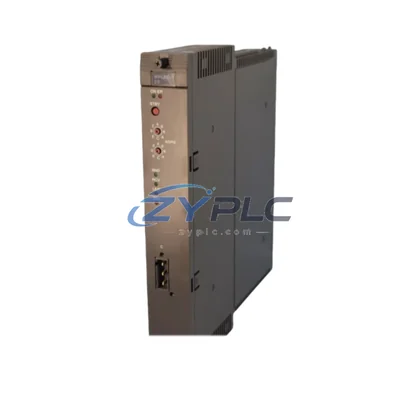
The Honeywell EC7830A1066 is a flame safeguard relay module engineered for the 7800 Series Burner Management System (BMS) platform — one of the most widely deployed combustion control architectures in industrial process heating, power generation, and utility applications worldwide. Far beyond a standalone relay component, the EC7830A1066 functions as a critical node in the industrial data chain, bridging field-level combustion signals with supervisory control layers including SCADA, DCS, and plant-wide HMI networks. Its role in the control hierarchy spans signal acquisition, safety interlock logic, status feedback, and real-time alarm propagation — making it indispensable to any facility that demands continuous burner uptime, regulatory compliance, and transparent process visibility.
In modern smart factory and process plant environments, combustion systems are no longer isolated islands. The EC7830A1066 integrates directly with the broader 7800 Series ecosystem, receiving discrete inputs from UV flame detectors, ignition transformers, gas valve actuators, and combustion air proving switches. These field signals are processed through the module’s internal safety logic and relayed upstream to the Honeywell RM7800 Series primary control, which coordinates the full burner sequence — pre-purge, ignition trial, main flame establishment, and post-purge. The EC7830A1066 acts as the relay interface that ensures each stage of this sequence is confirmed before the next is permitted, enforcing the fail-safe logic that industrial combustion standards demand.
Compatibility & Integration Notes
| Parameter |
Specification |
| Product SKU |
EC7830A1066 |
| Brand / Series |
Honeywell / 7800 Series |
| Module Type |
Burner Controller Relay Module (Flame Safeguard) |
| Compatible Primary Control |
Honeywell RM7800 Series (RM7800A, RM7800G, RM7800L, RM7800M) |
| Signal Interface |
Discrete I/O — flame signal, valve feedback, interlock inputs |
| Communication Compatibility |
Hardwired interlock bus; compatible with S7800A1142 Keyboard Display Module for local diagnostics |
| Network / SCADA Integration |
Via Honeywell 7800 SERIES Data Communications Module (DCM) or plant DCS hardwired I/O |
| Operating Voltage |
120 VAC / 240 VAC (application-dependent) |
| Operating Temperature |
-40°C to +60°C |
| Approvals / Standards |
UL Listed, CE Marked, FM Approved — IEC 61511 / NFPA 85 compliant architecture |
| Mounting |
Plug-in relay base, compatible with 7800 Series relay module sockets |
| Warranty |
warranty terms confirmed during quotation — tested prior to shipment |
Connected Automation Data Flow
Understanding the EC7830A1066’s value requires viewing it within the full combustion control data flow rather than as an isolated component. At the field device layer, UV flame sensors — such as the Honeywell C7027A or C7035A ultraviolet flame detector — continuously monitor burner flame presence and transmit analog or discrete flame signals to the EC7830A1066 relay module. These signals are validated against the burner sequence state managed by the RM7800L or RM7800G primary burner control, which serves as the central processing unit of the 7800 Series BMS architecture.
Upstream from the primary control, the S7800A1142 Keyboard Display Module provides local operator interface capability — displaying lockout codes, sequence status, and diagnostic history directly at the burner panel. This local HMI layer is essential during commissioning and maintenance, allowing engineers to step through the burner sequence, read flame signal strength, and reset lockout conditions without requiring remote system access. For facilities with centralized control rooms, the 7800 Series Data Communications Module (DCM) extends this diagnostic data over RS-485 or proprietary Honeywell network links to plant SCADA systems, enabling real-time burner status monitoring, alarm annunciation, and historical data logging.
At the process control layer, the EC7830A1066’s relay outputs interface with the plant’s distributed control system (DCS) or programmable logic controller — such as a Honeywell HC900 Hybrid Controller or a third-party PLC — through hardwired discrete I/O. Burner run status, lockout status, and valve position feedback are transmitted as digital signals to the DCS I/O modules, where they are integrated into the plant-wide process control strategy. This integration allows the DCS to coordinate burner operation with upstream process variables such as steam header pressure, heat exchanger outlet temperature, and fuel flow rate — closing the loop between combustion control and process optimization.
For facilities operating multiple burners across a production line or utility plant, the EC7830A1066 supports a scalable architecture where each burner cell contains its own RM7800 primary control and associated relay modules, with all units networked to a central SCADA or building management system (BMS gateway). Industrial Ethernet switches — such as managed switches supporting PROFINET or Modbus TCP — aggregate burner data from multiple cells and route it to the supervisory layer, where operators can monitor all burners simultaneously, compare flame signal trends, and receive predictive maintenance alerts before a lockout event occurs.
The power supply layer supporting the EC7830A1066 and its associated 7800 Series components typically includes a dedicated 24 VDC industrial power supply with redundant input capability, ensuring that a single power fault does not interrupt burner safety monitoring. Surge protection devices on the field wiring inputs protect the relay module from transient voltages generated by ignition transformer firing — a common source of relay module degradation in high-cycle combustion applications.
Solving Data Isolation in Industrial Sites
One of the most persistent challenges in industrial combustion facilities is the data isolation that exists between burner management systems and plant-wide automation networks. Legacy BMS installations often operate as standalone safety systems with no digital communication to the plant DCS or SCADA, leaving operators dependent on local panel indicators and manual log sheets to track burner performance. The EC7830A1066, when deployed within a fully configured 7800 Series architecture including the DCM communications module, directly addresses this isolation by providing a structured data pathway from the burner field level to the supervisory network.
Protocol fragmentation is another common barrier. Many industrial sites operate mixed-protocol environments where combustion controllers use proprietary communication formats while the plant DCS communicates over PROFIBUS, Modbus, or Industrial Ethernet. The 7800 Series architecture resolves this through gateway modules and hardwired I/O bridges that translate burner status data into standard process signals compatible with any DCS or SCADA platform. This eliminates the need for custom protocol converters and reduces integration engineering time during plant expansion or system upgrades.
Remote monitoring capability is increasingly critical for facilities operating unmanned or semi-attended burner systems — particularly in remote power generation, pipeline heating, and offshore process applications. The EC7830A1066’s integration with the 7800 Series network architecture enables remote lockout detection, flame signal trending, and burner cycle counting through the plant SCADA system, allowing maintenance teams to diagnose faults and plan corrective action before dispatching field personnel. This capability directly reduces unplanned downtime and extends the service intervals of combustion system components.
Production line transparency — the ability to see real-time burner status alongside process KPIs — is a key requirement for facilities pursuing Industry 4.0 and smart factory objectives. By integrating EC7830A1066-based burner cells into the plant data infrastructure, process engineers gain visibility into combustion efficiency, fuel consumption per production cycle, and burner availability metrics. This data supports continuous improvement initiatives, energy management programs, and regulatory reporting requirements without requiring additional instrumentation or manual data collection.
Industrial Connectivity FAQ
Q1: Can the EC7830A1066 communicate directly with a SCADA or DCS system over Modbus or PROFIBUS?
The EC7830A1066 itself is a relay module that operates within the 7800 Series hardwired interlock architecture. Direct digital communication to SCADA or DCS is achieved through the 7800 Series Data Communications Module (DCM), which connects to the RM7800 primary control and provides RS-485 or proprietary network output. Hardwired discrete I/O from the relay module outputs can also be wired directly to DCS input cards for basic status integration. For full Modbus TCP or PROFIBUS connectivity, a protocol gateway interfacing with the DCM output is recommended.
Q2: Is the EC7830A1066 compatible with all RM7800 Series primary controls, and what are the key installation requirements?
The EC7830A1066 is designed for use within the Honeywell 7800 Series BMS platform and is compatible with RM7800A, RM7800G, RM7800L, and RM7800M primary controls when used with the appropriate relay module socket base. Installation requires correct socket selection, proper field wiring of flame detector inputs, valve interlock circuits, and safety interlock chains per the 7800 Series wiring diagram. Commissioning should include a full burner sequence test, flame signal strength verification using the S7800A1142 display module, and lockout simulation to confirm relay operation before placing the system in service.
Q3: What does the warranty terms confirmed during quotation cover, and how is the EC7830A1066 tested before shipment?
Every EC7830A1066 unit supplied by ZYPLC is tested for relay contact continuity, coil resistance, and functional operation prior to shipment. The warranty terms confirmed during quotation covers manufacturing defects and functional failures under normal operating conditions from the date of delivery. Units are shipped in anti-static protective packaging with inspection documentation. For applications requiring additional traceability, batch records and test reports are available upon request. Warranty claims are processed through direct contact with the ZYPLC technical support team.
Q4: How does the EC7830A1066 support system expansion when adding burner capacity to an existing plant?
The 7800 Series modular architecture allows additional burner cells — each equipped with an RM7800 primary control, EC7830A1066 relay module, and associated field devices — to be added to an existing plant network without modifying the core control architecture. Each new burner cell connects to the plant SCADA or DCS through the same hardwired I/O or DCM network interface used by existing cells, maintaining a consistent data structure across all burners. This scalability makes the 7800 Series and EC7830A1066 a preferred platform for phased plant expansions and capacity upgrade projects.