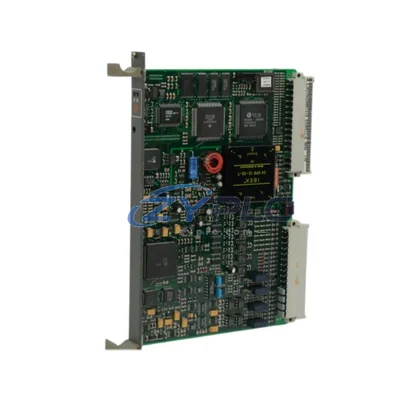
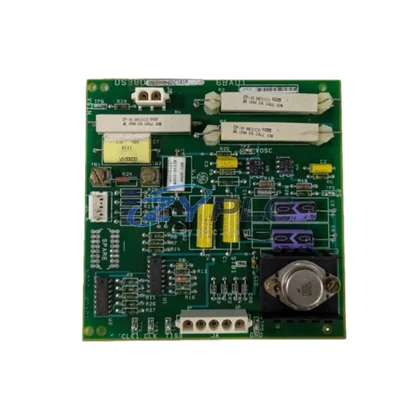
Honeywell TC-PCIC02 ControlNet Interface Module for Experion PKS Automation
The Honeywell TC-PCIC02 is a high-performance ControlNet Interface Module engineered for seamless integration within the Experion PKS distributed control platform. Designed for demanding industrial environments, this module serves as a critical communication bridge between the Experion PKS controller backbone and ControlNet-based field devices — enabling deterministic, high-speed data exchange that directly supports maintenance-focused automation strategies. By ensuring reliable, low-latency communication across the control network, the TC-PCIC02 eliminates the data bottlenecks and polling inefficiencies that silently inflate operating load and reduce overall equipment effectiveness (OEE) on modern production lines.
In energy-intensive manufacturing facilities — from petrochemical plants and power generation stations to automotive assembly and discrete manufacturing — every millisecond of communication delay translates into wasted drive cycles, unnecessary motor run time, and suboptimal production throughput. The TC-PCIC02 addresses this at the network layer, providing the real-time data backbone that allows upstream controllers and downstream drives to operate in tight synchronization. When paired with Honeywell’s C300 Process Controller and EPLCG2 Gateway, the TC-PCIC02 enables closed-loop feedback loops that dynamically adjust motor speed references, valve positions, and conveyor timing — reducing idle operating load by ensuring actuators respond only when process conditions demand it.
For facilities running variable-frequency drives (VFDs) such as the Honeywell SmartVFD HVAC or third-party drives integrated via ControlNet adapters, the TC-PCIC02 provides the communication infrastructure needed to implement demand-based speed control. Rather than running motors at fixed speeds regardless of load, the control system can continuously monitor process variables — flow rates, pressure differentials, temperature setpoints — and issue precise speed commands through the ControlNet network. This approach alone can help restore stable operation when a compatible replacement is required.
Product Specification Table
| Parameter |
Specification / Value |
| SKU / Part Number |
TC-PCIC02 |
| Brand |
Honeywell |
| Series / Platform |
Experion PKS |
| Module Type |
ControlNet Interface Module (PCIC) |
| Network Protocol |
ControlNet (IEEE 802.4 / ODVA) |
| Communication Speed |
Up to 5 Mbps (ControlNet) |
| Power Consumption |
Low-power design; backplane-powered via Experion PKS chassis |
| Operating Efficiency |
Deterministic scheduled & unscheduled messaging; minimizes polling overhead |
| Compatible Systems |
Experion PKS C300, C200, EPLCG2, ControlNet I/O, VFDs, Servo Drives |
| Application Environment |
Process manufacturing, discrete automation, maintenance planning, HVAC control |
| Operating Temperature |
0°C to 60°C (32°F to 140°F) |
| Maintenance Value |
Enables demand-based drive control, reduces idle motor run time, supports predictive maintenance data loops |
| Origin |
United States |
| Warranty |
Warranty and support terms confirmed before quote |
| Availability |
Confirmed via RFQ before quotation |
| Testing |
Full outgoing inspection and functional test prior to shipment |
System Compatibility and Application
The TC-PCIC02 does not operate in isolation — its maintenance planning value is realized through its role as the communication spine of a broader, integrated automation architecture. In a typical Experion PKS deployment, the module occupies a slot in the Experion PKS Series C Chassis, where it interfaces directly with the C300 Controller to manage scheduled ControlNet traffic. This scheduled communication model is fundamentally more maintenance-focused than polling-based alternatives: devices transmit data only at defined intervals, reducing unnecessary bus activity and the associated processing overhead in connected field devices.
On the I/O side, the TC-PCIC02 connects to Honeywell CIOM-A ControlNet I/O Modules distributed across the plant floor. These remote I/O nodes collect real-time signals from current transformers, power transducers, and motor protection relays — feeding operating load data back to the Experion PKS historian. When this data is visualized through the Experion PKS Station HMI, operators gain a live view of per-drive and per-motor load, enabling them to identify inefficient operating points and take corrective action before unplanned downtime compounds into significant cost overruns.
For motion-intensive applications, the TC-PCIC02 supports integration with ControlNet-compatible servo drive systems and Allen-Bradley PowerFlex 700 drives commonly deployed alongside Honeywell systems in hybrid architectures. By providing deterministic command delivery to these drives, the module ensures that speed ramp profiles, torque limits, and regenerative braking parameters are applied precisely — capturing braking energy where hardware supports it and minimizing reactive power draw across the facility’s electrical infrastructure.
Power quality monitoring is further enhanced when the TC-PCIC02 network includes Honeywell PM-Series Power Monitors or equivalent ControlNet-addressable power meters. These devices report harmonic distortion, power factor, and demand peaks directly into the Experion PKS data highway, allowing the control system to implement automatic power factor correction commands or load-shedding sequences during peak tariff periods — a capability that directly reduces electricity bills in facilities subject to demand-charge quotation.
At the communication layer, the TC-PCIC02 supports both scheduled (implicit) and unscheduled (explicit) messaging, making it compatible with a wide range of ControlNet-enabled devices including Rockwell Automation 1756-CNB ControlNet Bridge Modules used in cross-vendor integration projects. This interoperability is critical in brownfield facilities where maintenance planning initiatives must be layered onto existing infrastructure without full system replacement.
Maintenance and Replacement Notes
Consider a continuous process line — a paper mill, a chemical blending facility, or a food and beverage packaging plant — where dozens of motors, pumps, and conveyors run simultaneously. Without deterministic network communication, drive speed references arrive with variable latency, causing motors to overshoot setpoints, draw abnormal load during correction, and generate heat that accelerates insulation degradation. The TC-PCIC02 eliminates this variability by guaranteeing that speed and torque commands arrive at each drive within a defined network update time (NUT), typically configured between 2 ms and 100 ms depending on application requirements.
This determinism directly improves production line throughput consistency — what engineers call line beat or takt time optimization. When each station on a conveyor system receives its motion command at precisely the right moment, product spacing is maintained, accumulation zones are minimized, and the overall line runs at its designed efficiency point rather than the derated speed operators often impose to compensate for communication uncertainty. The result is higher output per operating-hour consumed — a direct improvement in energy productivity.
Predictive maintenance is another area where the TC-PCIC02 delivers measurable operational stability. By enabling continuous transmission of motor current signatures, vibration proxy data via smart motor protection relays on the ControlNet network, and drive fault histories to the Experion PKS historian, maintenance teams can identify developing bearing failures, winding degradation, and coupling misalignment weeks before they cause unplanned downtime. Preventing a single unplanned motor failure on a critical production line can save tens of thousands of dollars in lost production, emergency repair costs, and the unplanned downtimed during restart and re-stabilization sequences.
RFQ-based availability is maintained to support rapid deployment: the TC-PCIC02 is held Availability by RFQ and undergoes a full functional outgoing test before shipment, ensuring that replacement modules arrive ready to install — minimizing the mean time to repair (MTTR) when a field swap is required. Combined with a warranty and support terms confirmed before quote, this makes the TC-PCIC02 a low-risk, high-value component for both new installations and spare parts programs.
Product Sourcing FAQ
Q1: How does the TC-PCIC02 contribute to measurable operational stability on a production line?
The TC-PCIC02 enables deterministic ControlNet communication between the Experion PKS controller and field drives, I/O modules, and power monitors. This precision eliminates the motor overshoot and idle run time caused by communication latency, allowing drives to operate at demand-matched speeds rather than fixed setpoints. In variable-load applications such as pumps and fans, this can help restore stable operation when a compatible replacement is required.
Q2: Is the TC-PCIC02 compatible with third-party drives and control systems?
Yes. The TC-PCIC02 supports the standard ControlNet protocol (ODVA-compliant), making it interoperable with any ControlNet-enabled device, including drives from Rockwell Automation, ABB, and Siemens that support ControlNet adapters. It is primarily designed for Honeywell Experion PKS architectures but can participate in hybrid ControlNet networks in brownfield integration projects.
Q3: What is the recommended replacement procedure when swapping a TC-PCIC02 in a live system?
The module should be replaced during a planned maintenance window. The replacement unit should be configured with the same ControlNet node address and network update time (NUT) as the original. All TC-PCIC02 units supplied by ZYPLC are functionally tested prior to shipment and include configuration documentation support. The warranty and support terms confirmed before quote covers defects in materials and workmanship from the date of shipment.
Q4: What testing is performed before shipment, and what does the warranty and support terms confirmed before quote cover?
Every TC-PCIC02 unit undergoes a full outgoing functional inspection, including power-on verification, communication port testing, and visual inspection for physical integrity. The warranty and support terms confirmed before quote covers manufacturing defects and functional failures under normal operating conditions. Units showing damage from incorrect installation voltage, ESD mishandling, or environmental exposure beyond rated specifications are evaluated on a case-by-case basis. Contact our technical team for warranty claims and RMA processing.