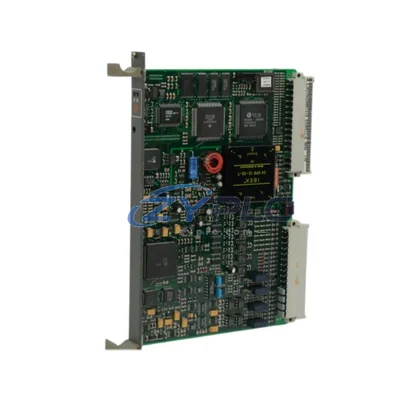
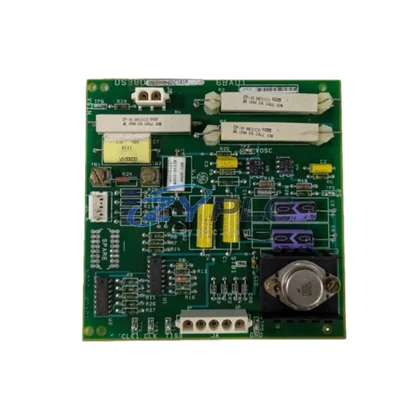
ICS Triplex T8293C PDU for Trusted TMR: Power Distribution in Layered Control System Design
The ICS Triplex T8293C Power Distribution Unit is a purpose-engineered component within the Trusted TMR (Triple Modular Redundant) control platform, designed to deliver stable, conditioned power across the full depth of a safety-critical automation architecture. In high-availability industrial environments — where unplanned downtime carries operational, financial, and safety consequences — the T8293C serves as the electrical backbone that enables every upstream and downstream module to perform within specification. Its role is not simply to distribute power; it is to ensure that the entire T8000 system architecture maintains coherence, redundancy, and deterministic behavior from the control layer through to the field device layer.
Understanding the T8293C requires viewing it within the context of the complete Trusted TMR system rather than as a standalone component. The Trusted platform is structured around a triple-redundant voting architecture in which three independent processing channels continuously compare outputs and resolve discrepancies through majority logic. For this architecture to function correctly, each channel must receive clean, isolated, and uninterrupted power — a requirement that the T8293C is specifically designed to fulfill. By providing dedicated power distribution with channel-level isolation, the T8293C ensures that a power anomaly in one channel does not propagate to the others, preserving the integrity of the TMR voting mechanism and maintaining SIL 3 functional safety compliance.
Product Specification Table
| Parameter |
Specification |
| Model |
T8293C |
| Manufacturer |
ICS Triplex |
| Series |
Trusted TMR / T8000 |
| System Role |
Power Distribution Unit — TMR Channel Power Supply |
| Architecture Compatibility |
Trusted TMR Triple Modular Redundant Control Platform |
| Functional Safety |
SIL 3 Capable (IEC 61508) |
| Power Input |
24 VDC Nominal (compatible with T8000 chassis power rails) |
| Channel Isolation |
Independent per TMR channel (A, B, C) |
| Communication Capability |
Passive power distribution; integrates with T8000 backplane bus |
| Installation Environment |
Control cabinet / DIN rail; industrial rated for harsh environments |
| Operating Temperature |
0°C to +60°C |
| Origin |
United Kingdom |
| Warranty |
warranty terms confirmed during quotation |
| system integration |
Full system integration with Trusted T8000 system architecture |
System Compatibility Notes
The T8293C operates at the intersection of the power layer and the control layer, making it a critical enabler of system-wide reliability. In a fully configured Trusted TMR system, the T8293C works in direct coordination with the T8110 Trusted TMR Processor Module, which houses the triple-redundant CPUs responsible for executing the safety application logic. Without stable, isolated power delivered by the T8293C, the processor’s three voting channels cannot maintain synchronization, and the system’s ability to detect and tolerate single-point failures is compromised.
At the I/O layer, the T8293C supports the power requirements of digital and analog I/O modules such as the T8431 Digital Input Module and the T8451 Analog Input Module, both of which interface directly with field instruments including pressure transmitters, temperature sensors, and valve position feedback devices. These modules depend on consistent backplane power to maintain signal integrity and accurate process variable representation. The T8293C’s channel-isolated power distribution ensures that I/O module faults do not cascade into adjacent channels, preserving the diagnostic coverage required for SIL 3 operation.
The T8800 Trusted TMR Chassis and its associated backplane provide the physical and electrical framework within which the T8293C is installed. The backplane distributes power and communication signals across all installed modules, and the T8293C’s compatibility with the T8000 backplane bus ensures seamless integration without requiring additional power conditioning hardware. Engineers commissioning a new Trusted system or expanding an existing one can install the T8293C directly into the chassis without firmware configuration, reducing installation time and minimizing the risk of commissioning errors.
For communication-intensive architectures, the T8293C supports the power requirements of gateway and communication modules such as the T8310 Modbus Communication Module and the T8320 PROFIBUS DP Gateway, which bridge the Trusted TMR platform with plant-wide DCS, SCADA, and historian systems. Stable power delivery to these modules is essential for maintaining deterministic communication cycles and preventing spurious trip signals caused by power-induced communication timeouts.
At the human-machine interface layer, operator workstations and engineering terminals connected to the Trusted platform via the T8910 Engineering Workstation Interface rely on the overall system’s power stability to maintain live diagnostic views and online configuration access. The T8293C’s role in maintaining clean power across the TMR channels directly supports the availability of these diagnostic interfaces during normal operation and during fault investigation scenarios.
Redundant power input configurations using dual T8290 Series Power Supply Modules in parallel with the T8293C distribution unit provide N+1 power redundancy at the system level, ensuring that a single power supply failure does not interrupt control system operation. This architecture is particularly important in continuous process industries where a control system shutdown triggers a full plant trip with significant production and safety implications.
Industrial Application Notes
The T8293C finds its most critical applications in industries where process continuity and functional safety are non-negotiable requirements. In oil and gas processing and petrochemical facilities, the Trusted TMR platform — powered and stabilized by the T8293C — is deployed as the Safety Instrumented System (SIS) for emergency shutdown (ESD), fire and gas detection (F&G), and high-integrity pressure protection (HIPPS) applications. The T8293C’s channel isolation ensures that the SIS remains operational even under adverse electrical conditions, meeting the requirements of IEC 61511 for functional safety in the process industry.
In power generation and transmission environments, including nuclear, thermal, and renewable energy facilities, the T8293C supports Trusted TMR deployments used for turbine protection, reactor trip systems, and grid synchronization control. The deterministic power delivery provided by the T8293C is essential for maintaining the sub-millisecond response times required by these protection systems.
For water and wastewater treatment infrastructure, the T8293C enables Trusted TMR systems to manage pump protection, chemical dosing interlocks, and overflow prevention logic with the reliability required for continuous municipal operations. In mining and metallurgical applications, the T8293C supports conveyor protection systems, crusher interlocks, and smelter process control architectures where electrical noise and power fluctuations are common challenges that the T8293C’s isolation design is specifically engineered to address.
In pharmaceutical and fine chemical manufacturing, where batch process integrity and regulatory compliance demand complete audit trails and fault-tolerant control, the T8293C’s contribution to system uptime and diagnostic transparency supports both operational efficiency and GMP compliance. Across all these sectors, the T8293C’s warranty terms confirmed during quotation and global parts availability ensure that maintenance teams can plan replacements proactively, minimizing unscheduled downtime and supporting long-term asset management strategies.
Product Compatibility FAQ
Q1: Is the T8293C compatible with all variants of the Trusted TMR T8000 chassis, and can it be installed in an existing system without a full shutdown?
The T8293C is designed for use within the ICS Triplex Trusted TMR T8000 platform and is compatible with standard T8000 series chassis configurations. In most Trusted TMR deployments, the redundant architecture allows for hot-swap maintenance procedures on non-faulted channels, meaning the T8293C can often be replaced or installed during live system operation without requiring a full process shutdown. Engineers should consult the Trusted system engineering manual and confirm the specific chassis revision and safety function state before performing any live maintenance activity.
Q2: How does the T8293C support long-term maintenance planning and spare parts management in a safety-critical control system?
The T8293C is a field-replaceable unit within the Trusted TMR architecture, and its standardized form factor within the T8000 platform means that a single spare unit can serve as a replacement across multiple chassis positions. The included warranty terms confirmed during quotation covers manufacturing defects and provides a defined support baseline for maintenance budgeting. For facilities operating under IEC 61511 functional safety management requirements, maintaining a documented spare parts inventory that includes the T8293C is a recognized best practice for managing proof-test intervals and ensuring rapid restoration of full TMR redundancy following a channel fault.
Q3: What commissioning steps are required when integrating the T8293C into a new or expanded Trusted TMR architecture?
Commissioning the T8293C within a Trusted TMR system involves physical installation into the designated chassis slot, verification of backplane connector seating, and confirmation of channel power rail voltages using the Trusted engineering workstation diagnostic tools. No firmware configuration is required for the T8293C itself, as it is a passive power distribution component. However, engineers should verify that the overall system power budget — accounting for all installed I/O, communication, and processor modules — remains within the T8290 series power supply specifications. Post-installation, a channel-level power diagnostic should be performed via the engineering workstation to confirm that all three TMR channels are receiving power within tolerance before returning the system to operational mode. system integration with the broader T8000 architecture is confirmed through the system’s built-in self-test routines.