ICS Triplex TPG-1RM Power Gateway for Trusted: Compatibility and Replacement Notes
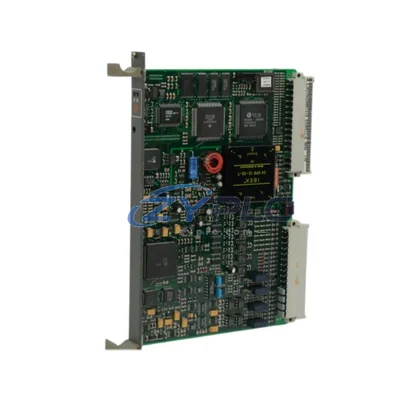
In safety-critical and high-availability industrial automation environments, the power distribution and gateway layer is not a peripheral concern — it is a foundational element of system integrity. The ICS Triplex TPG-1RM Power Gateway Module is engineered specifically for deployment within the ICS Triplex Trusted Series Triple Modular Redundancy (TMR) distributed control system architecture, where every component must contribute to fault tolerance, signal continuity, and long-term operational reliability. Rather than functioning as a standalone unit, the TPG-1RM is designed to operate as a coordinated node within a layered automation hierarchy, interfacing with the control layer, I/O subsystems, communication backplane, and field execution devices in a unified and deterministic manner.
Understanding the TPG-1RM requires understanding the architecture it serves. The Trusted platform is built around a 1oo2D (one-out-of-two with diagnostics) or 2oo3 (two-out-of-three) voting logic structure, where power integrity is as critical as signal integrity. The TPG-1RM provides conditioned, monitored, and fault-isolated power distribution to the chassis backplane, ensuring that upstream power anomalies — voltage sags, transient spikes, or supply failures — do not propagate into the control or I/O layers. This makes it an indispensable component in any Trusted-based safety instrumented system (SIS) or process control network.
Product Specification Table
| Parameter |
Specification |
| Model / SKU |
TPG-1RM |
| Brand |
ICS Triplex |
| Series |
Trusted (TMR / SIL-3 Capable) |
| System Role |
Power Gateway Module — Chassis Backplane Power Distribution |
| Architecture Layer |
Power Layer / Chassis Infrastructure |
| Redundancy Support |
Dual / Triple Redundant Power Input Compatible |
| Input Voltage Range |
18–32 VDC (nominal 24 VDC) — field-confirmed per system revision |
| Output |
Regulated backplane power to Trusted chassis modules |
| Fault Isolation |
Independent per-module power path with diagnostic feedback |
| Communication Interface |
Backplane bus — compatible with Trusted chassis communication architecture |
| Mounting |
Trusted Series chassis slot — DIN rail or panel-mount enclosure |
| Operating Temperature |
0°C to +60°C (standard industrial range) |
| Ingress Protection |
IP20 (panel-mounted, control cabinet installation) |
| Certifications |
SIL-3 capable (IEC 61508), CE, UL — per system configuration |
| Country of Origin |
United Kingdom |
| Warranty |
warranty terms confirmed during quotation — covered from date of shipment |
| Availability |
RFQ Available — global shipping supported |
System Compatibility Notes
The TPG-1RM does not operate in isolation. Its value is realized through its role as the power foundation for a complete Trusted Series control node. In a typical Trusted TMR architecture, the chassis houses a combination of the ICS Triplex T8110 Trusted TMR Processor as the central controller, alongside T8120 and T8121 Trusted TMR I/O Modules for digital and analog signal acquisition. These I/O modules depend on stable, conditioned backplane power — precisely what the TPG-1RM delivers — to maintain voting logic accuracy and prevent spurious trips or missed fault detection.
On the communication side, the Trusted architecture typically integrates T8310 and T8311 Trusted Communication Interface Modules, which handle Modbus, PROFIBUS, or proprietary Trusted network protocols. These modules share the same chassis backplane and are equally dependent on the power integrity maintained by the TPG-1RM. Any instability in the power gateway layer would directly compromise communication latency and data integrity across the control network.
For redundant power input configurations — common in SIL-2 and SIL-3 applications — the TPG-1RM is often deployed alongside a secondary power gateway module, forming a 1+1 redundant power supply arrangement. This mirrors the redundancy philosophy applied to the ICS Triplex T8800 Trusted Power Supply Units, which feed conditioned DC power into the gateway layer. Together, the T8800 and TPG-1RM form a two-tier power protection architecture that eliminates single points of failure at the chassis level.
At the field execution layer, the Trusted system interfaces with final control elements — including smart valve positioners, variable frequency drives, and relay output modules such as the T8431 Trusted Relay Output Module — through the I/O layer that the TPG-1RM supports. The signal path from field sensor through I/O module, across the backplane, and into the TMR processor is only as reliable as the power infrastructure that sustains it. The TPG-1RM ensures this path remains uninterrupted even during partial power supply degradation.
For human-machine interface integration, Trusted-based systems commonly connect to Wonderware InTouch or Yokogawa CENTUM VP HMI platforms via OPC-DA or OPC-UA gateways. The stability of these supervisory connections depends on the deterministic operation of the underlying control chassis — which begins with reliable power distribution from modules like the TPG-1RM. Engineers commissioning Trusted-based SIS or DCS nodes consistently identify the power gateway layer as the first checkpoint in system validation procedures.
Industrial Application Notes
The ICS Triplex TPG-1RM finds application across a broad range of industries where process safety, system uptime, and regulatory compliance are non-negotiable requirements.
In oil and gas processing and petrochemical facilities, Trusted TMR systems are deployed as emergency shutdown systems (ESD) and burner management systems (BMS). The TPG-1RM supports continuous operation of these safety-critical nodes, where a power interruption at the chassis level could trigger unplanned shutdowns or, worse, mask a genuine process hazard. Its fault-isolated power distribution ensures that a single power supply degradation event does not compromise the entire safety loop.
In electric power generation and transmission — including thermal, nuclear, and renewable energy facilities — the Trusted platform is used for turbine control, generator protection, and substation automation. The TPG-1RM’s compatibility with redundant power architectures makes it well-suited for these environments, where IEC 61511 and IEC 61508 compliance is mandatory and system availability targets exceed 99.99%.
In water and wastewater treatment plants, Trusted-based control systems manage pump stations, chemical dosing, and filtration processes. The TPG-1RM enables these systems to maintain continuous operation across extended maintenance cycles, reducing the need for planned shutdowns and supporting the long-term asset management strategies that municipal operators require.
In mining, metallurgy, and mineral processing, where harsh electrical environments — including high-frequency switching noise from variable speed drives and heavy motor loads — can introduce power quality issues, the TPG-1RM’s regulated and isolated output protects the Trusted chassis from conducted interference, maintaining control system accuracy in electrically noisy plant environments.
In pharmaceutical and fine chemical manufacturing, where 21 CFR Part 11 and GAMP 5 validation requirements apply, the TPG-1RM’s consistent and documented performance characteristics support the validation documentation process, providing engineers with a stable hardware baseline for IQ/OQ/PQ qualification activities.
Product Compatibility FAQ
Q1: Is the TPG-1RM compatible with all Trusted Series chassis configurations, and can it be hot-swapped during live system operation?
The TPG-1RM is designed for use within the ICS Triplex Trusted Series chassis family and is compatible with standard Trusted backplane configurations. In redundant power gateway arrangements — where a secondary power module is installed and active — the TPG-1RM supports hot-swap replacement without interrupting backplane power to the chassis. This is a key advantage in SIL-rated systems where planned maintenance must not require a full system shutdown. Engineers should verify the specific chassis revision and firmware version against the Trusted system compatibility matrix prior to module replacement to ensure seamless system integration with the existing control architecture.
Q2: How does the TPG-1RM contribute to overall system SIL rating, and what documentation is available for functional safety assessments?
The TPG-1RM is a subsystem component within the broader Trusted TMR safety architecture. Its contribution to the overall SIL rating is assessed as part of the system-level PFD (Probability of Failure on Demand) calculation, in accordance with IEC 61508 and IEC 61511. ICS Triplex provides FMEDA (Failure Mode, Effects, and Diagnostic Analysis) data for Trusted Series modules, which engineers can incorporate into their safety case documentation. When sourced through ZYPLC, the TPG-1RM is supplied with a warranty terms confirmed during quotation and full traceability documentation, supporting the audit requirements of functional safety management systems.
Q3: What is the recommended commissioning procedure for integrating the TPG-1RM into an existing Trusted system, and what long-term maintenance considerations apply?
Commissioning the TPG-1RM in an existing Trusted architecture follows the standard ICS Triplex module installation sequence: chassis power-down (or hot-swap if redundancy permits), module seating and backplane connector verification, power-up with diagnostic LED confirmation, and system-level health check via the Trusted engineering workstation. Long-term maintenance should include periodic inspection of backplane connector integrity, power input voltage verification, and diagnostic log review at scheduled intervals — typically aligned with annual plant turnaround cycles. The warranty terms confirmed during quotation provided by ZYPLC covers manufacturing defects and early-life failures, and our technical team is available to support fault diagnosis and module exchange logistics for global customers.