Novellus VIPC610 VME Process Control for SABRE: Compatibility and Replacement Notes
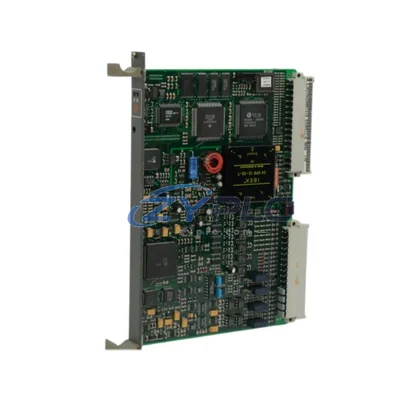
The Novellus VIPC610 VME Process Control Module is a critical component within the SABRE (Sequential Atomic layer deposition By Radical Enhancement) system architecture developed by Novellus Systems. Rather than functioning as a standalone unit, the VIPC610 operates as the central coordination node within a layered VMEbus-based control hierarchy, managing real-time process sequencing, recipe execution, and inter-subsystem communication across the full equipment control stack. Understanding its role requires examining how it interfaces with the control layer, I/O layer, network layer, power layer, human-machine interface layer, and execution layer simultaneously.
In semiconductor capital equipment environments — particularly CVD (Chemical Vapor Deposition) and ALD (Atomic Layer Deposition) platforms — the process control module must maintain deterministic timing, stable signal integrity, and fault-tolerant operation across extended production campaigns. The VIPC610 fulfills this requirement by integrating tightly with the VMEbus backplane, coordinating upstream recipe commands from the host workstation and translating them into precise downstream actuator and valve control signals. Its architecture supports both synchronous and asynchronous process events, enabling the SABRE system to handle multi-step deposition sequences without process interruption.
Part numbers associated with this module include 15-127072-01, 0360-1026C, 91610263, and 02-057663-00, reflecting revision history across SABRE platform generations. Each revision maintains backward compatibility within the VMEbus mechanical and electrical standard, ensuring that replacement or upgrade deployments do not require full system reconfiguration.
Product Specification Table
| Parameter |
Specification |
| System Role |
VMEbus Process Control Module — Central Sequencing & Recipe Execution Node |
| Compatible Platform |
Novellus SABRE CVD/ALD System Architecture |
| Part Numbers |
15-127072-01 / 0360-1026C / 91610263 / VIPC610 / 02-057663-00 |
| Bus Standard |
VMEbus (IEEE 1014) — 6U Form Factor |
| Processor Architecture |
Embedded real-time processor for deterministic process sequencing |
| Communication Capability |
VMEbus backplane, serial I/O interfaces, host workstation communication |
| Electrical Interface |
VMEbus P1/P2 connector standard; 5V/±12V backplane power rails |
| Installation Environment |
Controlled cleanroom or equipment bay; standard VME card cage |
| Operating Temperature |
0°C to 55°C (equipment bay ambient) |
| Vendor |
Novellus Systems (now Lam Research) |
| Origin |
United States |
| Warranty |
— Tested, verified, and ready for system integration |
System Compatibility Notes
The VIPC610 does not operate in isolation. Its value is realized through its position within a coordinated VMEbus card cage that typically includes a dedicated VME CPU board (such as a Motorola MVME series single-board computer), a VME power supply module providing regulated 5V and ±12V rails to all installed cards, and multiple analog and digital I/O boards that interface directly with process sensors, mass flow controllers, pressure transducers, and RF power systems.
Within the SABRE system’s I/O layer, the VIPC610 communicates with discrete I/O modules responsible for valve sequencing — controlling the precise open/close timing of precursor and purge gas valves that define each ALD cycle. Timing accuracy at the millisecond level is essential for film thickness uniformity, and the VIPC610’s real-time execution engine ensures that recipe step transitions occur within specification regardless of host workstation load.
At the network layer, the VIPC610 interfaces with the SABRE system’s host computer via a serial or VMEbus-based communication channel, receiving recipe parameters, process setpoints, and operator commands. This communication path also supports process data logging, alarm reporting, and remote diagnostics — functions that are essential for fab-level manufacturing execution system (MES) integration. In facilities running multiple SABRE chambers, the VIPC610’s consistent communication protocol enables centralized process monitoring without chamber-specific software customization.
The power layer supporting the VIPC610 typically includes a VME-compatible power supply module with sufficient current capacity to support a fully populated card cage. Redundant power architectures — where a secondary power supply module is held in warm standby — are common in high-availability production environments. The VIPC610’s low-power design philosophy ensures that adding or replacing this module does not push the card cage power budget beyond safe operating margins.
At the human-machine interface layer, operators interact with the SABRE system through a dedicated workstation running Novellus process control software. The VIPC610 serves as the execution engine that translates operator-initiated recipe runs into real-time hardware commands, closing the loop between the HMI layer and the physical process. Alarm conditions detected by the VIPC610 — such as interlock faults, communication timeouts, or out-of-range sensor readings — are immediately surfaced to the operator interface, enabling rapid response and minimizing unplanned downtime.
At the execution layer, the VIPC610 coordinates with RF match network controllers, heater control modules, and endpoint detection systems to manage the full deposition process from chamber conditioning through film deposition to post-process purge. This multi-layer coordination capability is what distinguishes the VIPC610 as a system-architecture component rather than a simple I/O card, and it is why maintaining a verified spare in inventory is a standard practice for fabs running SABRE-based production lines.
Industrial Application Notes
The Novellus VIPC610 finds its primary application in semiconductor manufacturing environments where SABRE CVD and ALD systems are deployed for dielectric film deposition — including silicon nitride (SiN), silicon dioxide (SiO₂), and low-k dielectric materials used in advanced logic and memory device fabrication. In these environments, the VIPC610 supports 24/7 production schedules with process stability requirements measured in angstroms of film thickness variation.
In power semiconductor manufacturing, where thick dielectric films are deposited on large-diameter wafers for IGBT and MOSFET device structures, the VIPC610’s precise recipe execution capability ensures that multi-step deposition sequences maintain consistent film properties across the full wafer surface. The module’s ability to manage complex multi-step recipes — including temperature ramp sequences, gas stabilization periods, and plasma ignition events — makes it well-suited to the demanding process windows of power device fabrication.
In compound semiconductor and MEMS manufacturing environments, where SABRE systems are sometimes deployed for conformal film deposition on non-planar substrates, the VIPC610’s flexible I/O architecture supports the customized process sequences required for these specialized applications. Its compatibility with the standard VMEbus ecosystem means that process engineers can extend or modify the control architecture without replacing the core process control module.
For facilities managing aging SABRE system fleets, the availability of a tested and warranted VIPC610 replacement module is a critical factor in equipment lifecycle planning. Rather than committing to a full system replacement — which may involve significant capital expenditure and process requalification — maintenance teams can restore full system functionality by replacing a failed VIPC610 with a verified spare, maintaining production continuity while deferring larger capital decisions.
Product Compatibility FAQ
Q1: Is the VIPC610 compatible with all SABRE system generations, and does it require firmware reconfiguration after installation?
The VIPC610 is designed for compatibility across multiple SABRE platform generations, with part number revisions (15-127072-01, 0360-1026C, 02-057663-00) reflecting incremental hardware updates rather than fundamental architectural changes. In most replacement scenarios, the module can be installed into an existing VME card cage and initialized using the resident system software without requiring firmware reflashing. However, it is recommended to verify the system software version against the module revision level during commissioning, and to perform a full process qualification run before returning the chamber to production. Our technical team can provide revision compatibility guidance specific to your SABRE system configuration.
Q2: How does the VIPC610 support system redundancy, and what is the recommended spare inventory strategy for high-volume production environments?
The VIPC610 itself is a single-module process controller; system-level redundancy in SABRE architectures is typically achieved through spare module inventory rather than hot-standby duplication at the card level. For fabs running multiple SABRE chambers in continuous production, maintaining at least one tested spare VIPC610 per tool cluster is the standard recommendation. Given the lead times associated with sourcing legacy VMEbus modules, having a pre-tested spare with a valid on hand eliminates the risk of extended downtime caused by module failure. Our inventory program supports just-in-time spare procurement for facilities with defined preventive maintenance schedules.
Q3: What testing and validation process does the VIPC610 undergo before shipment, and what does the cover?
Each VIPC610 unit supplied by ZYPLC undergoes functional verification testing that includes VMEbus communication integrity checks, I/O channel validation, and power rail stability testing under simulated load conditions. The covers defects in materials and workmanship identified during normal operation within the specified environmental conditions. Warranty service includes module replacement or repair, with technical support available to assist with installation and commissioning. The warranty period begins from the date of shipment, and warranty claims are processed through our direct support channel to minimize resolution time for production-critical situations.