Parker HID2CS-S4/HID5CS-S4 Industrial Network Interface for HID Series Systems: Bridging the Smart Factory Data Chain
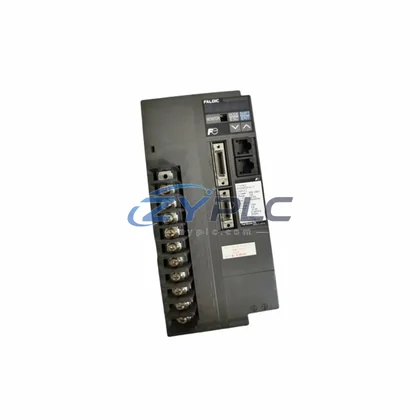
In modern industrial automation environments, the ability to move data seamlessly across every layer of the control architecture — from field-level sensors and actuators to SCADA supervisory systems and cloud-based analytics platforms — defines the competitive edge of a smart factory. The Parker HID2CS-S4 and HID5CS-S4 AC Servo Drives from Parker’s HID Series are engineered precisely for this mission. Combining high-performance motion control with robust industrial communication capabilities, these drives serve as critical network interface nodes within distributed automation architectures, enabling real-time data exchange, remote diagnostics, and seamless protocol bridging across heterogeneous industrial networks.
Whether deployed in precision CNC machining centers, automated assembly lines, packaging machinery, or material handling systems, the HID2CS-S4 and HID5CS-S4 deliver the connectivity and intelligence that modern smart factories demand. Their support for EtherCAT and RS-485 communication protocols ensures compatibility with a wide range of PLCs, HMIs, remote I/O modules, and SCADA gateways — making them a versatile backbone component in any industrial network topology.
Compatibility & Integration Notes
| Parameter |
Specification |
| Communication Protocols |
EtherCAT, RS-485 (Modbus RTU compatible) |
| Interface Types |
RJ45 (EtherCAT), DB9 / Terminal Block (RS-485) |
| Transmission Capability |
Real-time cyclic data exchange; up to 100 Mbps (EtherCAT) |
| Network Compatibility |
EtherCAT master/slave topology; Modbus RTU multi-drop networks |
| System Applications |
PLC motion control, SCADA integration, HMI feedback, remote I/O, servo synchronization |
| Drive Series |
Parker HID Series (HID2CS/S4, HID5CS/S4) |
| Product Type |
AC Servo Drive |
| Origin |
USA (Parker Hannifin Corporation) |
| Warranty |
warranty terms confirmed during quotation — All units shipped with full functional test certification |
Connected Automation Data Flow
The data journey in a smart factory begins at the field level. Sensors — including encoders, proximity switches, and pressure transducers — feed real-time signals into the Parker HID2CS-S4 and HID5CS-S4 servo drives, which process position, velocity, and torque feedback at microsecond cycle times. This low-latency signal acquisition is the foundation of precise motion control and forms the first link in the industrial data chain.
At the controller level, the HID Series drives interface directly with Parker’s ACR9000 multi-axis motion controller via EtherCAT, enabling synchronized multi-axis coordination across complex machine architectures. The ACR9000’s high-speed bus communication ensures that motion commands and status feedback travel between the controller and drives with deterministic timing — a critical requirement for applications such as electronic cam profiling, flying shear, and coordinated pick-and-place operations.
For installations where legacy RS-485 infrastructure is already in place, the HID2CS-S4 and HID5CS-S4 support Modbus RTU communication, allowing integration with Parker’s PAC (Programmable Automation Controller) platforms and third-party PLCs without requiring network infrastructure upgrades. This backward compatibility protects existing capital investments while enabling incremental modernization toward full EtherCAT-based architectures.
Remote I/O expansion is handled through EtherCAT-compatible I/O modules, which connect to the same network segment as the HID Series drives. This allows distributed I/O points — located at machine extremities or in remote control panels — to share the same high-speed communication backbone, eliminating the need for dedicated point-to-point wiring and reducing installation complexity. Parker’s Compax3 servo drive family can operate in parallel on the same EtherCAT ring, providing additional axes of motion control within the same network segment.
At the HMI layer, operator interfaces such as Parker’s TS8000 Touch Screen HMI connect to the network to display real-time drive status, alarm conditions, and production metrics. Operators can monitor motor current, speed, position error, and fault codes directly from the HMI panel, enabling rapid response to process deviations without requiring access to the drive’s physical keypad. The bidirectional data flow between the HID Series drives and the HMI ensures that parameter changes made at the operator interface are immediately reflected in drive behavior.
SCADA integration is achieved through industrial gateways that bridge EtherCAT or Modbus RTU data to higher-level protocols such as OPC-UA, MQTT, or Ethernet/IP. Parker’s 890 Series AC Drive and HPD Series high-performance drives can coexist on the same SCADA-connected network, providing a unified data view across all motion and power conversion assets. SCADA systems can log historical trend data, generate production reports, and trigger automated alarm notifications based on drive-reported fault conditions — enabling proactive maintenance and reducing unplanned downtime.
For edge computing applications, industrial edge gateways aggregate data from the HID2CS-S4 and HID5CS-S4 drives alongside data from variable frequency drives, power meters, and environmental sensors. This aggregated dataset feeds machine learning models that predict bearing wear, detect abnormal vibration signatures, and optimize energy consumption across the production line. Parker’s EPX Series servo drives can be integrated into the same edge architecture, providing additional data streams for cross-drive performance benchmarking.
The complete data chain — from encoder signal acquisition through EtherCAT transmission, PLC processing, HMI visualization, SCADA logging, and edge analytics — is enabled by the HID2CS-S4 and HID5CS-S4’s robust communication architecture. Every node in this chain contributes to the factory’s overall transparency, responsiveness, and intelligence.
Solving Data Isolation in Industrial Sites
One of the most persistent challenges in industrial automation is data isolation — the condition where machines, controllers, and systems operate in silos, unable to share information with adjacent systems or higher-level platforms. The Parker HID2CS-S4 and HID5CS-S4 directly address this challenge through their multi-protocol communication design and open network architecture.
In facilities where multiple generations of equipment coexist, protocol fragmentation is common. Older machines may communicate via RS-485 Modbus RTU, while newer installations use EtherCAT or Ethernet/IP. The HID Series drives’ support for both EtherCAT and RS-485 allows them to serve as protocol bridges within mixed-generation environments, translating data between legacy and modern network segments without requiring dedicated protocol converters or middleware servers.
Remote monitoring is another area where the HID2CS-S4 and HID5CS-S4 deliver significant value. By exposing drive parameters — including fault codes, thermal status, load percentage, and cumulative operating hours — over the network, these drives enable remote diagnostics from engineering workstations, mobile devices, or cloud-based maintenance platforms. Maintenance engineers can identify developing faults, schedule preventive interventions, and verify drive health without traveling to the machine location, reducing both maintenance costs and mean time to repair.
Production line transparency is achieved through continuous data streaming from the HID Series drives to SCADA and MES (Manufacturing Execution System) platforms. Real-time OEE (Overall Equipment Effectiveness) calculations, cycle time monitoring, and reject rate tracking become possible when drive-level data is integrated into the production management layer. This transparency enables data-driven decisions about production scheduling, maintenance prioritization, and capacity planning.
System scalability is built into the HID Series architecture. EtherCAT’s daisy-chain topology allows additional drives, I/O modules, and communication nodes to be added to the network without reconfiguring existing segments. As production requirements grow, the HID2CS-S4 and HID5CS-S4 can be integrated into expanded multi-axis systems alongside Parker’s ACR9000 and PAC controllers, supporting seamless capacity expansion without network redesign.
Industrial Connectivity FAQ
Q1: What is the communication latency of the HID2CS-S4 and HID5CS-S4 over EtherCAT?
EtherCAT is a deterministic real-time protocol with cycle times as low as 100 microseconds. The HID Series drives support standard EtherCAT cycle times compatible with Parker ACR9000 and third-party EtherCAT masters, ensuring sub-millisecond command-to-response latency for demanding motion control applications.
Q2: Are the HID2CS-S4 and HID5CS-S4 compatible with third-party PLCs and SCADA systems?
Yes. The drives’ EtherCAT interface is compatible with any EtherCAT master controller, including Beckhoff TwinCAT, Omron Sysmac, and other IEC 61800-7 CiA 402-compliant systems. The RS-485 Modbus RTU interface is universally compatible with SCADA platforms that support Modbus protocol, including Wonderware, Ignition, and Siemens WinCC.
Q3: How is network stability ensured in high-interference industrial environments?
The HID Series drives are designed for industrial EMC compliance, with shielded communication interfaces and robust noise immunity. EtherCAT’s physical layer uses standard Ethernet cabling with differential signaling, providing inherent noise rejection. For RS-485 installations, proper cable shielding and termination resistors ensure signal integrity over distances up to 1,200 meters.
Q4: What warranty and pre-shipment testing is provided with the HID2CS-S4 and HID5CS-S4?
All Parker HID2CS-S4 and HID5CS-S4 units supplied by ZYPLC are covered by a warranty terms confirmed during quotation from the date of shipment. Each unit undergoes full functional testing prior to dispatch, including communication interface verification, motor control parameter validation, and fault response testing. Availability is confirmed via RFQ for shipment arranged after confirmation, with express logistics options available for urgent requirements.