ProvibTech PT2060/91: Industrial Vibration Interface for Smart Factory Data Links
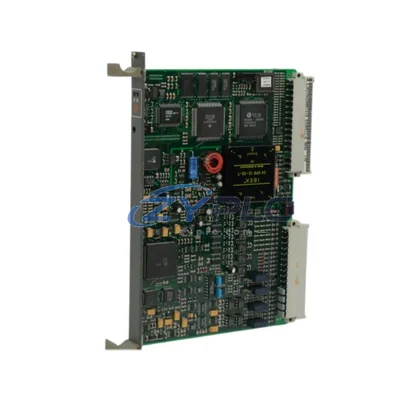
The ProvibTech PT2060/91 is a precision vibration interface module engineered for continuous condition monitoring in demanding industrial environments. As a core component of the PT2060 Series, the PT2060/91 bridges the gap between rotating machinery, field sensors, and upper-level control and monitoring systems — forming a reliable, real-time data link across the entire smart factory network. Whether deployed in power generation, petrochemical processing, heavy manufacturing, or offshore platforms, this module delivers the signal integrity and communication stability that modern predictive maintenance architectures demand.
In a typical smart factory deployment, vibration data originates at the machine level — accelerometers, proximity probes, and velocity sensors mounted on turbines, compressors, pumps, and motors. The PT2060/91 receives these raw analog signals, conditions and digitizes them, and transmits structured vibration data upstream through the plant communication network. This data flow connects seamlessly to PLC controllers, remote I/O modules, SCADA platforms, and HMI systems, enabling operators to monitor bearing health, shaft displacement, and vibration amplitude in real time — without leaving the control room.
Compatibility & Integration Notes
| Parameter |
Specification |
| SKU |
PT2060/91 |
| Brand |
ProvibTech |
| Series |
PT2060 |
| Product Type |
Vibration Interface Module |
| Protocol Support |
Analog signal conditioning; compatible with Modbus RTU/TCP, 4–20 mA, HART (system-dependent) |
| Interface Type |
Multi-channel vibration input; digital output to control network |
| Transmission Capability |
Real-time vibration amplitude, phase, and frequency data |
| Network Compatibility |
Integrates with DCS, SCADA, PLC, and condition monitoring platforms |
| System Application |
Rotating machinery protection, predictive maintenance, smart factory IIoT |
| Origin |
United States |
| Warranty |
|
Connected Automation Data Flow
The PT2060/91 sits at the heart of a layered industrial data architecture. At the field level, vibration transducers — such as the ProvibTech PT2020 series accelerometers and PT2030 proximity probes — feed raw vibration signals directly into the PT2060/91’s input channels. The module processes these signals and outputs conditioned data to the plant network, where ProvibTech PT2060 rack-mounted monitoring systems aggregate multi-channel readings across an entire machine train.
From the monitoring rack, structured data travels via industrial Ethernet or serial communication links to Modbus-compatible PLC controllers — such as those in the Siemens S7 or Allen-Bradley ControlLogix families — where vibration thresholds are cross-referenced with process variables like temperature, pressure, and flow rate. Remote I/O modules installed near field devices relay alarm states and digital outputs back to the central control system, ensuring that trip signals reach safety relays within milliseconds of a threshold breach.
At the supervisory level, SCADA platforms such as Wonderware, Ignition, or OSIsoft PI collect time-stamped vibration trend data from the PT2060/91 network nodes. HMI panels on the plant floor display real-time waveform and spectrum data, giving maintenance technicians immediate visual feedback on machine condition. Edge gateways installed at the network boundary aggregate data from multiple PT2060/91 modules and push compressed trend packages to cloud-based analytics platforms, enabling enterprise-wide asset health dashboards.
For drive-connected machinery, the PT2060/91 data stream integrates with variable frequency drives (VFDs) and servo drive controllers, correlating vibration signatures with motor load and speed profiles to detect resonance conditions before they escalate. Industrial power supplies rated for 24 VDC DIN-rail mounting provide stable, noise-filtered power to the PT2060/91 and associated field devices, maintaining signal accuracy even in electrically noisy environments.
Solving Data Isolation in Industrial Sites
One of the most persistent challenges in industrial condition monitoring is data isolation — vibration data trapped in standalone monitoring systems that cannot communicate with the broader plant control network. The ProvibTech PT2060/91 directly addresses this problem by providing a standardized interface between proprietary vibration monitoring hardware and open industrial communication protocols.
In legacy plants where different machine protection systems operate on incompatible protocols, the PT2060/91 acts as a protocol bridge, converting analog vibration signals into digital data streams that Modbus RTU/TCP-capable controllers and SCADA systems can natively consume. This eliminates the need for manual data transcription, reduces the risk of human error in alarm management, and enables automated alarm escalation workflows within the plant DCS.
For remote monitoring applications — offshore platforms, pipeline compressor stations, or unmanned substations — the PT2060/91 supports remote diagnostics through its network-connected architecture. Maintenance engineers can retrieve vibration trend data, review alarm histories, and adjust monitoring parameters from a central engineering workstation without dispatching field personnel. This capability dramatically reduces maintenance travel costs and enables condition-based maintenance scheduling rather than fixed-interval overhauls.
Production line transparency is another key benefit. By integrating PT2060/91 data into the plant SCADA historian, operations managers gain a complete picture of machine health across the entire production line — from raw material handling conveyors to final product packaging drives. Anomalies that would previously go undetected until a catastrophic failure now trigger early warning alerts, allowing planned maintenance windows to be scheduled during low-production periods. System expansion is equally straightforward: additional PT2060/91 modules can be added to the monitoring rack as new machines are commissioned, with each new node automatically appearing in the SCADA asset tree.
Every PT2060/91 unit shipped by ZYPLC undergoes pre-shipment functional testing, verifying channel accuracy, communication integrity, and alarm output response before dispatch. Units are supplied with a covering manufacturing defects and component failures under normal operating conditions. Availability confirmed via RFQ inventory ensures short lead times for urgent replacement and commissioning projects.
Industrial Connectivity FAQ
Q1: What communication protocols does the ProvibTech PT2060/91 support for SCADA integration?
The PT2060/91 outputs conditioned vibration data compatible with Modbus RTU and Modbus TCP protocols when used within a PT2060 series monitoring rack equipped with appropriate communication cards. This allows direct integration with SCADA platforms including Wonderware, Ignition, and OSIsoft PI, as well as Modbus-capable PLC controllers. For legacy 4–20 mA analog SCADA inputs, the module’s analog output channels provide a direct, protocol-agnostic connection path.
Q2: How does the PT2060/91 maintain network stability in high-vibration or electrically noisy industrial environments?
The PT2060/91 is designed with industrial-grade signal conditioning circuitry that filters electromagnetic interference (EMI) and radio frequency interference (RFI) from the vibration signal path. Galvanic isolation between input channels and the communication bus prevents ground loop noise from corrupting digital data transmission. When powered by a regulated 24 VDC industrial power supply with adequate filtering, the module maintains stable network communication even in environments with heavy motor drives, welding equipment, or high-voltage switchgear nearby.
Q3: Can the PT2060/91 be expanded to monitor additional machines without replacing the existing system?
Yes. The PT2060 series architecture is modular by design. Additional PT2060/91 interface modules can be installed in the same monitoring rack or in expansion racks connected via the system backplane. Each new module is addressed independently within the Modbus register map, allowing the SCADA system to poll additional machine channels without reconfiguring existing nodes. This scalability makes the PT2060/91 suitable for phased plant expansions where new machinery is commissioned incrementally.
Q4: What does the cover, and how is pre-shipment testing conducted?
The covers manufacturing defects, component failures, and functional non-conformance under normal operating conditions as specified in the PT2060/91 datasheet. Prior to shipment, each unit undergoes functional verification including channel signal conditioning accuracy, alarm relay output response, and communication interface continuity checks. Test records are available upon request. Warranty claims are processed through ZYPLC’s technical support team, with replacement units dispatched from Availability confirmed via RFQ inventory to minimize site downtime.