Rexroth DKC01.3-100-7-FW Industrial Network Interface for EcoDrive Systems
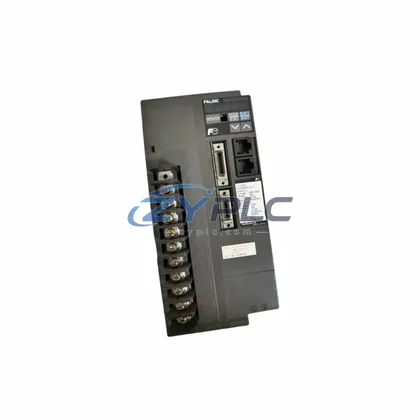
The Rexroth DKC01.3-100-7-FW is a high-performance AC servo drive from Bosch Rexroth’s EcoDrive series, engineered to serve as a critical industrial network interface node within modern smart factory architectures. With a rated output current of 100A and native SERCOS (Serial Real-time Communication System) protocol support, this drive unit bridges the gap between field-level motion devices and upper-level control and monitoring systems — enabling seamless, deterministic data exchange across the entire automation chain.
In today’s connected manufacturing environment, the DKC01.3-100-7-FW is far more than a servo amplifier. It functions as a protocol-aware communication gateway, translating real-time axis position, velocity, torque, and fault data into structured network messages that feed directly into SCADA platforms, HMI terminals, and MES systems. This capability makes it indispensable for facilities pursuing Industry 4.0 transparency, predictive maintenance, and remote diagnostics.
Compatibility & Integration Notes
| Parameter |
Specification |
| SKU |
DKC01.3-100-7-FW |
| Brand / Series |
Bosch Rexroth / EcoDrive |
| Communication Protocol |
SERCOS I/II (Fiber Optic Ring) |
| Interface Type |
SERCOS fiber optic, RS-232 diagnostic port |
| Rated Output Current |
100A |
| Transmission Capability |
Real-time cyclic data: position, velocity, torque, status words |
| Network Compatibility |
SERCOS ring topology; compatible with Rexroth DIAX04, IndraMotion, and third-party SERCOS masters |
| System Application |
CNC machining centers, servo press lines, packaging automation, multi-axis coordinated motion |
| Firmware |
FW (standard EcoDrive firmware variant) |
| Warranty |
warranty terms confirmed during quotation — availability subject to RFQ confirmation, pre-shipment tested |
Connected Automation Data Flow
Understanding the DKC01.3-100-7-FW’s role requires tracing the full data path from signal acquisition to upper-level reporting. At the field level, encoder feedback from servo motors and position sensors is captured by the drive’s internal measurement system and processed in real time. This data is then formatted into SERCOS telegram structures and transmitted over the fiber optic ring to the motion controller — typically a Rexroth CSB01 or CSH01 single-axis controller, or a multi-axis CLM01 controller managing coordinated motion sequences.
Within the SERCOS ring, the DKC01.3-100-7-FW operates alongside companion drives such as the DKC02.3 and DKC03.3 — sharing the same fiber optic backbone and synchronizing axis motion with microsecond-level precision. For applications requiring higher power density, the DKC04.3 series integrates into the same network architecture, allowing engineers to scale axis count without redesigning the communication topology.
At the power supply level, the HCS02 power supply unit feeds the DC bus shared across multiple DKC drives, while the RMB02 mains filter ensures clean power input and EMC compliance — both of which are critical for maintaining SERCOS communication integrity in electrically noisy industrial environments. The firmware package FWA-ECODR3 governs the drive’s motion profiles, homing sequences, and error response behaviors, and can be updated remotely via the RS-232 diagnostic interface or through the SERCOS master during commissioning.
Data flowing upward from the DKC01.3-100-7-FW passes through the motion controller into the plant’s SCADA layer. Here, real-time axis states — including following error, load torque percentage, thermal status, and active fault codes — are visualized on Rexroth IndraControl VCP HMI panels or third-party SCADA terminals. The HMS20 gateway module can further bridge SERCOS data into Profibus DP or EtherNet/IP segments, enabling integration with Siemens S7 PLCs, Allen-Bradley ControlLogix systems, or other non-SERCOS control platforms without replacing the existing drive infrastructure.
This multi-layer data flow — from encoder pulse to SCADA dashboard — is what makes the DKC01.3-100-7-FW a genuine industrial network interface, not merely a drive amplifier. Every axis event, alarm, and performance metric is available to the control system in real time, supporting closed-loop quality control, OEE tracking, and remote diagnostics from any networked workstation.
Solving Data Isolation in Industrial Sites
Many industrial facilities operate with legacy servo systems that generate valuable motion data but have no pathway to share it with modern monitoring or analytics platforms. The DKC01.3-100-7-FW directly addresses this challenge through its native SERCOS protocol implementation, which provides a standardized, deterministic communication channel that higher-level systems can query without custom middleware or proprietary adapters.
Protocol fragmentation — where different machine generations use incompatible fieldbus standards — is one of the most common sources of data isolation on production floors. By deploying the DKC01.3-100-7-FW within a SERCOS ring and using gateway modules such as the HMS20 to bridge into Profibus, EtherNet/IP, or Modbus TCP segments, engineers can unify data from heterogeneous machine populations into a single SCADA namespace. This eliminates the need for manual data collection, reduces operator intervention, and enables plant-wide KPI dashboards that reflect actual machine states in real time.
Remote monitoring and diagnostics are equally critical for reducing unplanned downtime. The DKC01.3-100-7-FW’s fault history, parameter sets, and real-time status can be accessed remotely through the SERCOS master or the RS-232 diagnostic port, allowing maintenance engineers to identify root causes — such as encoder signal degradation, DC bus undervoltage, or thermal overload — before they escalate into production stoppages. This capability supports predictive maintenance strategies and reduces mean time to repair (MTTR) significantly.
For facilities planning production line expansion, the SERCOS ring architecture of the DKC01.3-100-7-FW supports straightforward axis addition: new drives are inserted into the fiber optic ring and assigned SERCOS addresses without rewiring the existing network. This scalability makes the EcoDrive platform a long-term investment for growing automation footprints.
Industrial Connectivity FAQ
Q1: What is the communication latency of the DKC01.3-100-7-FW on a SERCOS network?
SERCOS I/II operates with cycle times as low as 62.5 µs, providing deterministic, jitter-free communication suitable for high-speed multi-axis coordinated motion. Actual cycle time depends on the number of drives in the ring and the SERCOS master configuration.
Q2: Is the DKC01.3-100-7-FW compatible with non-Rexroth SERCOS masters?
Yes. The DKC01.3-100-7-FW conforms to the SERCOS I/II standard (IEC 61491), making it compatible with any certified SERCOS master controller, including those from Siemens, Fanuc, and Beckhoff, provided the master supports the drive’s IDN parameter set.
Q3: How is network stability maintained in electrically noisy factory environments?
SERCOS uses fiber optic transmission, which is inherently immune to electromagnetic interference (EMI). Combined with the RMB02 mains filter on the power supply side and proper cable shielding practices, the DKC01.3-100-7-FW maintains reliable communication even in high-noise environments such as welding lines and large motor installations.
Q4: What does the warranty terms confirmed during quotation cover, and is pre-shipment testing performed?
Every DKC01.3-100-7-FW unit supplied by ZYPLC undergoes pre-shipment functional testing to verify drive initialization, SERCOS communication handshake, and fault-free operation. The warranty terms confirmed during quotation covers hardware defects and communication failures under normal operating conditions. Availability is confirmed via RFQ for shipment arranged after confirmation with full documentation.