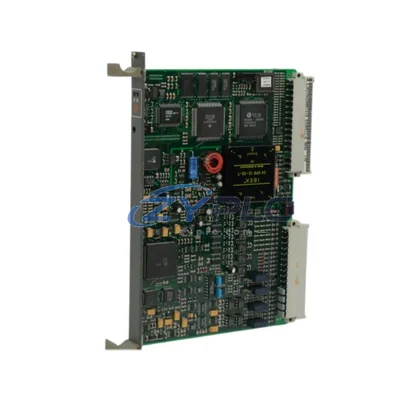
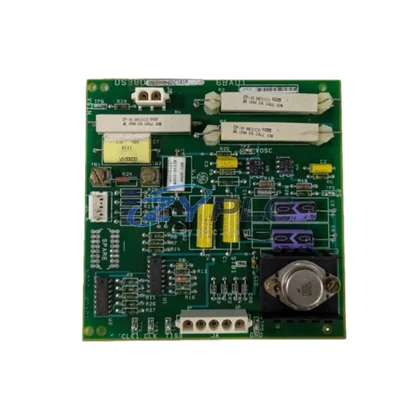
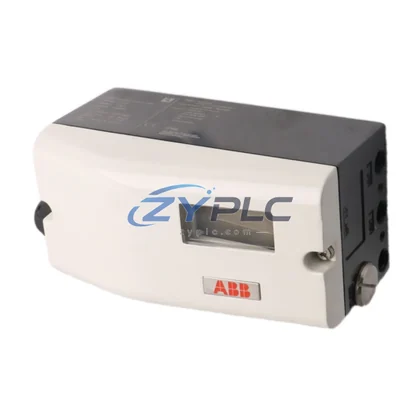
Saia PCD1.M110 Industrial Network Interface: Bridging Smart Factory Data Links
The Saia PCD1.M110 is a high-performance S-Bus communication gateway designed for the Saia PCD1 Series programmable logic controller platform. Engineered by Saia-Burgess Controls, this module serves as the critical data bridge between field-level devices and upper-level control and monitoring systems in modern industrial automation environments. Whether deployed in discrete manufacturing, process control, building automation, or energy management, the PCD1.M110 delivers deterministic, low-latency communication across multi-protocol industrial networks — making it an indispensable component in any smart factory architecture.
Compatibility & Integration Notes
| Parameter |
Specification |
| SKU / Part Number |
PCD1.M110 |
| Brand |
Saia-Burgess Controls |
| Series |
PCD1 Series |
| Primary Protocol |
S-Bus (Saia S-Bus) |
| Secondary Protocol Support |
Profibus DP, Modbus RTU/TCP (via gateway configuration) |
| Interface Type |
Serial RS-232 / RS-485, Ethernet (optional expansion) |
| Transmission Capability |
Real-time cyclic and acyclic data exchange |
| Network Compatibility |
PCD1, PCD2, PCD3 Series controllers; SCADA/HMI systems via S-Bus |
| System Application |
PLC-to-PLC, PLC-to-SCADA, Remote I/O, HMI Integration, Energy Monitoring |
| Operating Temperature |
0°C to +55°C |
| Origin |
Switzerland |
| Warranty |
|
Connected Automation Data Flow
In a typical smart factory deployment, the Saia PCD1.M110 sits at the heart of the communication architecture, orchestrating data flow between heterogeneous devices across the production floor. At the field level, sensors and actuators — including temperature transmitters, pressure transducers, and proximity switches — feed real-time process values into the PCD1 Series controller via local I/O modules such as the PCD1.W300 digital input/output expansion. The PCD1.M110 then aggregates this data and transmits it upstream over the S-Bus network to supervisory systems.
Within the control layer, the PCD1.M110 communicates seamlessly with peer Saia PCD2.M480 and PCD3.M3330 controllers, enabling distributed control architectures where multiple PLCs share process data in real time. This peer-to-peer S-Bus communication eliminates polling delays and ensures that interlocking logic between production cells executes with deterministic timing — critical for coordinated motion control and safety interlock systems.
For drive integration, the PCD1.M110 interfaces with variable frequency drives (VFDs) and servo drives via Profibus DP or Modbus RTU, allowing the PLC to command speed references, read fault registers, and monitor energy consumption from drives such as those in the Saia PCD7 peripheral family. This drive-level data is then forwarded to the SCADA layer, where operators gain full visibility into motor performance and predictive maintenance indicators.
At the HMI layer, Saia PCD7.D457 operator panels connect directly to the PCD1.M110 via S-Bus, rendering live process graphics, alarm banners, and trend displays without requiring an intermediate OPC server. For larger installations, the PCD1.M110 acts as a gateway between the S-Bus field network and Ethernet-based SCADA platforms — including systems running on Saia PG5 programming software — translating S-Bus telegrams into structured data objects that SCADA historians can archive at millisecond resolution.
Remote I/O expansion is handled through PCD3.T665 remote terminal units connected over RS-485 S-Bus segments, extending the control reach to distant field cabinets without running dedicated control cables. Edge gateway devices can further aggregate PCD1.M110 data streams and forward them to cloud-based MES or ERP platforms via MQTT or OPC-UA tunneling, completing the ISA-95 data hierarchy from sensor to enterprise.
Solving Data Isolation in Industrial Sites
One of the most persistent challenges in industrial automation is the fragmentation of communication protocols across legacy and modern equipment. A plant floor may simultaneously operate devices speaking Modbus RTU, Profibus DP, S-Bus, and proprietary vendor protocols — creating data silos that prevent unified monitoring and control. The Saia PCD1.M110 directly addresses this challenge through its multi-protocol gateway capability, acting as a transparent bridge that normalizes data from disparate sources into a unified S-Bus data model accessible to the PCD1 Series controller and any connected SCADA or HMI system.
For remote monitoring, the PCD1.M110 supports remote diagnostics via the S-Bus protocol, allowing maintenance engineers to interrogate controller status, read diagnostic flags, and download updated programs from a central engineering workstation without dispatching field technicians. This capability is particularly valuable in geographically distributed installations such as water treatment facilities, substations, and multi-site manufacturing operations, where travel costs and response times are significant operational concerns.
Production line transparency is achieved through the PCD1.M110’s ability to expose real-time OEE (Overall Equipment Effectiveness) metrics — including availability, performance, and quality data — to SCADA dashboards. By connecting previously isolated machine controllers into a unified network, plant managers gain the visibility needed to identify bottlenecks, reduce downtime, and optimize throughput without invasive infrastructure changes.
System scalability is a core design principle of the PCD1 Series architecture. The PCD1.M110 supports network topologies ranging from simple point-to-point serial links to multi-drop RS-485 bus segments with up to 32 nodes, and can be extended further through repeaters and fiber-optic converters. As production capacity grows, additional PLC nodes, remote I/O stations, and HMI panels can be added to the S-Bus network without reconfiguring the existing communication infrastructure — protecting the initial investment and minimizing commissioning risk.
Every Saia PCD1.M110 unit supplied by ZYPLC undergoes pre-shipment functional testing, including communication loop-back verification, protocol handshake confirmation, and power-on self-test validation. Units are shipped with full documentation and are covered by a, with RFQ-based availability ensuring RFQ-confirmed dispatch to minimize production downtime.
Industrial Connectivity FAQ
Q1: What is the communication latency of the Saia PCD1.M110 on an S-Bus network?
The PCD1.M110 achieves typical S-Bus cycle times of 1–10 ms depending on network load and the number of connected nodes. For time-critical applications, the S-Bus protocol supports priority messaging to ensure that alarm and interlock data is transmitted ahead of lower-priority diagnostic traffic, maintaining deterministic response times even under high network utilization.
Q2: Is the PCD1.M110 compatible with third-party SCADA and HMI systems?
Yes. The PCD1.M110 supports standard S-Bus and Modbus RTU/TCP protocols, which are natively supported by major SCADA platforms including Wonderware, Ignition, and WinCC, as well as HMI panels from third-party manufacturers. For systems requiring OPC connectivity, the Saia PG5 OPC Server provides a standards-compliant interface between the PCD1.M110 and any OPC DA/UA client application.
Q3: How does the PCD1.M110 handle network instability or communication interruptions?
The PCD1.M110 incorporates watchdog timers and communication timeout detection that automatically trigger configurable fallback states when a network segment becomes unavailable. This ensures that field devices revert to safe operating conditions rather than holding last-known values indefinitely, reducing the risk of process upsets during network maintenance or cable faults.
Q4: What warranty and testing does ZYPLC provide with the Saia PCD1.M110?
All PCD1.M110 units are covered by a from the date of shipment. Prior to dispatch, each unit undergoes a pre-shipment functional test including S-Bus communication verification, power supply integrity check, and firmware version confirmation. Availability is confirmed by RFQ for same-day or next-day dispatch, and ZYPLC’s technical team provides post-sale support for integration and commissioning queries.