Siemens 39ACM24BAN 16139-76/09 ACM for TELEPERM M: Control System Integration and Upstream-Downstream Coordination
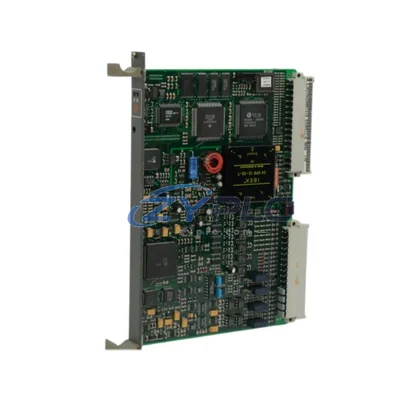
The Siemens 39ACM24BAN (part reference 16139-76/09) is an Advanced Control Module (ACM) engineered for deployment within the TELEPERM M distributed control system and the SIMATIC TDC automation platform. Rather than functioning as a standalone component, this module is designed to operate as a coordinated node within a layered control architecture — interfacing with CPU processors, I/O subsystems, communication gateways, power supply units, and human-machine interface layers to deliver consistent, high-availability process automation across demanding industrial environments.
In modern industrial automation, the reliability of a control system depends not on any single module but on the coherence of the entire architecture. The 39ACM24BAN fulfills a critical role in this ecosystem: it bridges the computational logic of the central processing layer with the physical signal world of field devices, ensuring that control commands are executed with precision and that process feedback is accurately captured and transmitted upstream. Its integration into the TELEPERM M rack system allows engineers to build scalable, modular control cabinets that can be expanded or reconfigured without disrupting ongoing operations.
From a system architecture perspective, the 39ACM24BAN participates in a signal flow that begins at the field instrument level — sensors, transmitters, and actuators — and terminates at the supervisory control and data acquisition (SCADA) or distributed control system (DCS) operator station. Along this path, the module coordinates with analog and digital I/O cards, terminal modules, and backplane bus systems to ensure that signal integrity is maintained across all layers. Its compatibility with the TELEPERM M bus architecture means that it can be installed alongside other TELEPERM M modules such as the CS275 communication processor, the IM308 interface module, and various FM (function module) cards without requiring additional protocol conversion or signal conditioning hardware.
The module’s role in redundancy design is equally significant. In process industries where unplanned downtime carries severe operational and financial consequences, the 39ACM24BAN supports hot-standby and redundant controller configurations. When paired with a redundant CPU module and a redundant power supply unit — such as the Siemens PS405 or PS407 series — the system can automatically switch control authority to the backup module in the event of a primary module fault, with no interruption to the controlled process. This capability is essential in applications such as continuous chemical reactors, power generation turbine control, and pipeline pressure regulation, where even a brief control interruption can trigger safety shutdowns or product quality deviations.
Communication stability is another dimension where the 39ACM24BAN contributes to overall system performance. Operating within the SIMATIC TDC environment, the module can exchange data with higher-level systems via PROFIBUS DP, Industrial Ethernet, or the proprietary CS275 bus, depending on the communication modules installed in the same rack. This flexibility allows the 39ACM24BAN to be integrated into both legacy TELEPERM M installations and modernized hybrid architectures where SIMATIC S7-400 or SIMATIC PCS 7 components are introduced alongside existing TELEPERM M hardware. The ability to maintain communication continuity across mixed-generation platforms significantly reduces the cost and risk of system migration projects.
For engineering teams responsible for long-term maintenance and lifecycle management, the 39ACM24BAN offers a well-documented hardware interface that simplifies troubleshooting and module replacement. Its rack-mount form factor is compatible with standard TELEPERM M subrack assemblies, and its front-panel diagnostic indicators provide immediate visual feedback on module status, communication activity, and fault conditions. When a module replacement is required, the standardized slot assignment and parameter backup capabilities of the SIMATIC TDC platform allow a replacement 39ACM24BAN to be brought online with minimal reconfiguration time, reducing mean time to repair (MTTR) and supporting continuous production targets.
Inventory availability and supply chain reliability are critical considerations for maintenance planners operating aging DCS platforms. ZYPLC supports RFQ sourcing for the 39ACM24BAN and related TELEPERM M components to support both planned maintenance schedules and emergency replacement requirements. All units supplied by ZYPLC are covered by a warranty terms confirmed during quotation and undergo functional verification prior to shipment, ensuring that replacement modules perform to original Siemens specifications upon installation.
Product Specification Table
| Parameter |
Specification |
| Part Number |
39ACM24BAN |
| Reference Number |
16139-76/09 |
| Module Type |
Advanced Control Module (ACM) |
| System Role |
Control Layer Processing Node — TELEPERM M / SIMATIC TDC |
| Compatible Platform |
Siemens TELEPERM M, SIMATIC TDC |
| Bus Interface |
TELEPERM M Backplane Bus / CS275 |
| Communication Protocols |
PROFIBUS DP, CS275, Industrial Ethernet (platform-dependent) |
| Installation Format |
Rack-Mount, TELEPERM M Subrack Compatible |
| Power Supply Compatibility |
TELEPERM M Rack Power Rail (24 VDC / 5 VDC backplane) |
| Operating Temperature |
0°C to +60°C (standard industrial enclosure) |
| Country of Origin |
Germany |
| Redundancy Support |
Hot-Standby / Redundant Controller Configuration |
| Diagnostic Interface |
Front-Panel LED Status Indicators |
| Warranty |
warranty terms confirmed during quotation (ZYPLC) |
| system integration |
Supported — Mixed TELEPERM M / SIMATIC TDC / PCS 7 Architectures |
System Compatibility Notes
The 39ACM24BAN achieves its full performance potential when deployed as part of a coordinated TELEPERM M or SIMATIC TDC control system. In a typical process automation cabinet, the module occupies a defined slot within a TELEPERM M subrack, sharing the backplane bus with a range of complementary components. The CS275 communication processor handles inter-rack and inter-system data exchange, while the IM308-C interface module manages PROFIBUS DP master functions for distributed I/O expansion. Analog input modules such as the SM331 and digital output modules such as the SM322 provide the physical I/O capacity required to interface with field instruments and final control elements.
Power integrity across the rack is maintained by dedicated power supply modules — typically the Siemens PS405 10A or PS407 10A — which provide regulated 24 VDC and 5 VDC rails to all installed modules. In redundant configurations, a second power supply module operates in parallel, with automatic switchover ensuring uninterrupted power delivery to the 39ACM24BAN and its rack neighbors. The backplane itself, a passive bus assembly specific to the TELEPERM M subrack format, distributes both power and communication signals to all installed modules without requiring point-to-point wiring between cards.
At the human-machine interface layer, operator stations running SIMATIC PCS 7 or legacy TELEPERM M OS software communicate with the 39ACM24BAN through the CS275 bus or via an Industrial Ethernet gateway, providing operators with real-time process visualization, alarm management, and control command capability. Terminal modules and marshalling panels at the field junction level complete the signal chain, connecting field cables to the I/O module inputs through standardized terminal block assemblies that simplify wiring verification and maintenance access.
This coordinated architecture — spanning the 39ACM24BAN at the control layer, SM series I/O modules at the signal layer, CS275 and PROFIBUS DP at the communication layer, PS405/PS407 at the power layer, and SIMATIC PCS 7 at the supervisory layer — represents a complete, validated control system design that has been deployed across thousands of industrial installations worldwide.
Industrial Application Notes
The 39ACM24BAN is suited to a broad range of industrial automation applications where process continuity, signal accuracy, and long-term hardware availability are primary engineering requirements.
In power generation and utilities, the module is used in turbine control systems, boiler management systems, and grid-connected generation units where the TELEPERM M platform has historically provided the control backbone. Its redundancy support and hot-standby capability align with the high-availability requirements of baseload and peaking generation facilities.
In petrochemical and refinery applications, the 39ACM24BAN participates in continuous process control loops governing distillation columns, heat exchangers, and reactor temperature and pressure regulation. The module’s compatibility with PROFIBUS DP field devices allows it to interface with smart transmitters and positioners from multiple manufacturers, supporting the heterogeneous instrument environments typical of large refinery installations.
In water and wastewater treatment, the module supports pump station control, chemical dosing systems, and filtration process automation. Its ability to operate within mixed TELEPERM M and SIMATIC S7-400 architectures is particularly valuable in treatment plant upgrade projects where legacy control hardware must coexist with modern automation components during phased migration programs.
In metallurgy and mining, the 39ACM24BAN is deployed in ore processing control systems, conveyor drive coordination, and smelting process automation, where the harsh electrical environment demands robust module design and reliable communication performance. In packaging and discrete manufacturing, the module supports production line sequencing and quality control integration within larger DCS architectures that combine continuous and batch process control requirements.
Product Compatibility FAQ
Q1: Is the 39ACM24BAN compatible with both TELEPERM M and SIMATIC TDC platforms, and can it be used in a mixed architecture?
Yes. The 39ACM24BAN is designed for use within the TELEPERM M distributed control system and is also compatible with the SIMATIC TDC automation platform, which shares hardware and communication infrastructure with TELEPERM M. In mixed architectures where TELEPERM M hardware coexists with SIMATIC PCS 7 or SIMATIC S7-400 components, the 39ACM24BAN can participate in the control layer provided that appropriate communication gateway modules — such as the CS275 processor or an Industrial Ethernet coupler — are installed to bridge the respective bus systems. Engineering teams undertaking platform migration projects should verify slot assignment and parameter configuration requirements with reference to the applicable Siemens system manuals prior to installation.
Q2: What redundancy configurations are supported, and what additional modules are required to implement hot-standby operation?
The 39ACM24BAN supports hot-standby redundancy when paired with a second ACM module of the same type installed in a designated redundancy slot within the TELEPERM M subrack. Redundant power supply modules — such as the PS405 10A or PS407 10A — should be installed in parallel to eliminate the power supply as a single point of failure. The redundancy switchover logic is managed by the SIMATIC TDC system software, which monitors the primary module’s health status and initiates automatic transfer of control authority to the standby module in the event of a detected fault. No manual intervention is required during switchover, and the controlled process continues without interruption. Detailed redundancy configuration procedures are documented in the Siemens SIMATIC TDC system description and the TELEPERM M engineering guidelines.
Q3: What does the warranty terms confirmed during quotation cover, and what support is available for installation and commissioning of the 39ACM24BAN?
All 39ACM24BAN units supplied by ZYPLC are covered by a warranty terms confirmed during quotation from the date of shipment. The warranty covers manufacturing defects and functional failures under normal operating conditions consistent with the module’s specified environmental and electrical ratings. Prior to shipment, each unit undergoes functional verification to confirm that it meets original Siemens performance specifications. For installation and commissioning support, ZYPLC’s technical team is available to assist with slot assignment verification, parameter configuration guidance, and integration troubleshooting. Customers requiring on-site commissioning support or extended warranty coverage beyond the standard 12-month period are encouraged to contact ZYPLC directly to discuss available service options.