Siemens 6AG1412-3HJ14-4AB0: Industrial Data Link for SIPLUS S7-400 PROFINET IO Networks
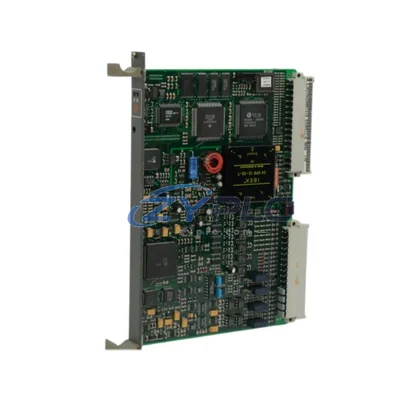
The Siemens 6AG1412-3HJ14-4AB0 is a high-performance PROFINET IO interface module engineered for the SIPLUS S7-400 series — Siemens’ ruggedized extended-range PLC platform designed for harsh industrial environments. As a core communication gateway within the S7-400 control architecture, this module enables seamless, real-time data exchange between field-level devices and upper-level automation systems, forming the backbone of a transparent, connected smart factory.
In modern industrial sites, data flows continuously from sensors and actuators on the shop floor through distributed I/O nodes, up through PLC controllers, and onward to SCADA platforms and MES systems. The 6AG1412-3HJ14-4AB0 sits at the heart of this data chain, providing the PROFINET IO communication backbone that ties together every layer of the automation pyramid — from signal acquisition to enterprise-level analytics.
Compatibility & Integration Notes
| Parameter |
Specification |
| SKU / Part Number |
6AG1412-3HJ14-4AB0 |
| Brand / Manufacturer |
Siemens |
| Series |
SIPLUS S7-400 |
| Communication Protocol |
PROFINET IO (IRT / RT) |
| Interface Type |
Industrial Ethernet (RJ45) |
| Transmission Rate |
10 / 100 Mbps |
| Network Compatibility |
PROFINET IO Controller / Device, STEP 7, TIA Portal |
| System Application |
SIMATIC S7-400, SIPLUS S7-400, SCADA, HMI, Remote I/O |
| Operating Temperature |
Extended range (SIPLUS ruggedized) |
| Product Type |
Communication Module / Gateway Interface |
| Origin |
Germany |
| Warranty |
|
Connected Automation Data Flow
The 6AG1412-3HJ14-4AB0 operates as the PROFINET IO communication hub within a multi-tier industrial network. At the field level, distributed sensors — including temperature transmitters, pressure transducers, and proximity switches — feed real-time process data into remote I/O stations such as the Siemens ET 200M and ET 200S distributed I/O systems. These remote I/O nodes communicate upstream via PROFINET IO, with the 6AG1412-3HJ14-4AB0 acting as the IO Controller interface on the SIPLUS S7-400 CPU rack.
Within the S7-400 backplane, the module works in concert with the SIMATIC S7-400 CPU 414 and CPU 416 processors, coordinating cyclic data exchange with IO Devices across the PROFINET network. Industrial Ethernet switches — such as the Siemens SCALANCE X208 managed switch — provide the physical network infrastructure, ensuring deterministic, low-latency communication across the plant floor. The SCALANCE X-series switches support PROFINET-specific features including topology detection and media redundancy protocol (MRP), which the 6AG1412-3HJ14-4AB0 leverages for high-availability network configurations.
At the drive and motion layer, variable frequency drives such as the Siemens SINAMICS G120 and SINAMICS S120 series connect to the PROFINET network as IO Devices, enabling the S7-400 controller to issue speed setpoints, read actual values, and monitor drive fault states in real time. This closed-loop data path — from the drive’s encoder feedback through the PROFINET IO interface module to the PLC logic — is essential for coordinated motion control in conveyor systems, pumping stations, and robotic assembly lines.
For HMI and SCADA integration, the 6AG1412-3HJ14-4AB0 supports S7 communication, allowing Siemens SIMATIC WinCC SCADA servers and SIMATIC HMI TP1200 Comfort panels to access process variables, alarms, and diagnostic data directly from the S7-400 CPU. This integration enables operators to visualize production KPIs, acknowledge alarms, and execute remote control commands from centralized control rooms or mobile HMI devices. Edge gateway devices — such as the Siemens SINEMA Remote Connect gateway — can further extend this data reach to cloud-based analytics platforms, enabling predictive maintenance and OEE monitoring across multiple production sites.
The module also supports integration with Siemens CP 443-1 communication processors for parallel Industrial Ethernet paths, providing redundant communication channels in mission-critical applications such as power generation, water treatment, and pharmaceutical manufacturing.
Solving Data Isolation in Industrial Sites
One of the most persistent challenges in industrial automation is data isolation — the condition where field devices, PLCs, and upper-level systems operate in communication silos, preventing plant-wide visibility and real-time decision-making. The Siemens 6AG1412-3HJ14-4AB0 directly addresses this challenge by providing a standardized PROFINET IO gateway interface that bridges the gap between legacy field devices and modern Ethernet-based control architectures.
In brownfield installations where older PROFIBUS DP devices coexist with newer PROFINET IO infrastructure, the S7-400 platform — equipped with this interface module — can serve as a protocol bridge, aggregating data from both network generations into a unified data model accessible by SCADA and MES systems. This eliminates the need for costly parallel wiring infrastructures and allows plant engineers to migrate to PROFINET IO incrementally, without disrupting ongoing production.
Remote monitoring and diagnostics are equally critical in large-scale industrial facilities. The 6AG1412-3HJ14-4AB0 supports PROFINET diagnostic functions including port statistics, topology mapping, and device identification, enabling maintenance teams to pinpoint network faults — such as cable breaks, switch port failures, or device dropouts — without physical inspection of the field. Combined with Siemens’ TIA Portal engineering software, engineers can perform online diagnostics, firmware updates, and configuration changes remotely, reducing mean time to repair (MTTR) and minimizing unplanned downtime.
For production line transparency, the module enables the S7-400 controller to publish real-time OPC UA data to MES and ERP systems, supporting digital twin applications and production scheduling optimization. System expansion is straightforward: additional PROFINET IO devices — remote I/O stations, drives, safety modules, or vision systems — can be added to the network without hardware changes to the CPU rack, simply by configuring new IO Device slots in TIA Portal or STEP 7.
All units are shipped after full functional testing, with RFQ-based availability for fast global delivery. Each 6AG1412-3HJ14-4AB0 module is covered by a , ensuring confidence in every deployment.
Industrial Connectivity FAQ
Q1: What is the communication latency of the 6AG1412-3HJ14-4AB0 in a PROFINET IRT configuration?
A: In PROFINET IRT (Isochronous Real-Time) mode, the 6AG1412-3HJ14-4AB0 supports cycle times as low as 250 microseconds, making it suitable for high-speed motion control and synchronized multi-axis applications within the SIPLUS S7-400 architecture.
Q2: Is the 6AG1412-3HJ14-4AB0 compatible with both STEP 7 and TIA Portal engineering environments?
A: Yes. The module is fully supported in both Siemens STEP 7 (v5.5 and above) and TIA Portal (v13 and above), allowing engineers to configure, diagnose, and maintain the PROFINET IO network using either platform without hardware changes.
Q3: Can this module maintain network stability in environments with electrical interference or extreme temperatures?
A: As part of the SIPLUS extended-range series, the 6AG1412-3HJ14-4AB0 is designed for operation in harsh industrial environments including elevated ambient temperatures, humidity, and electromagnetic interference. The SIPLUS coating and component selection ensure reliable PROFINET communication even under demanding conditions.
Q4: What warranty and pre-shipment testing does the 6AG1412-3HJ14-4AB0 include?
A: Every unit undergoes full functional testing prior to shipment, verifying PROFINET IO communication, interface integrity, and module identification. A is included with each unit, covering manufacturing defects and communication failures under normal operating conditions.