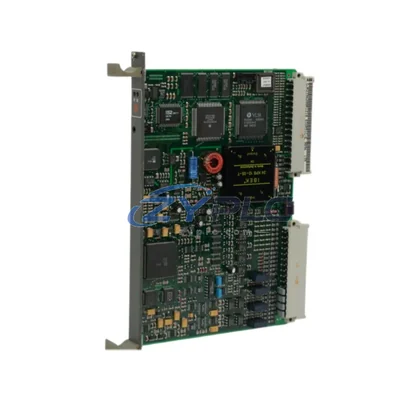
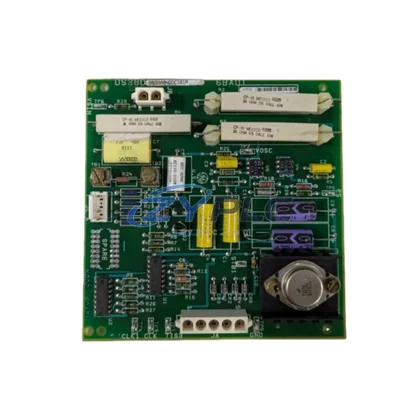
Siemens A-87.213.010 Fire Safety Board for Cerberus CS Automation
The Siemens A-87.213.010 (part number 5541367626) is a precision-engineered fire safety control board designed for the Cerberus CS building automation and fire detection platform. In industrial and commercial facilities where uptime, energy accountability, and system reliability are non-negotiable, this board serves as the central nerve of fire safety signal processing — enabling facilities to maintain continuous monitoring while minimizing unnecessary power draw from redundant or idle subsystems.
Unlike generic safety boards, the A-87.213.010 is engineered to integrate tightly within Siemens’ broader building automation ecosystem. It supports structured communication with Siemens Cerberus CS fire panels, enabling real-time event logging, zone-level fault isolation, and coordinated alarm response — all of which reduce the manual intervention burden on facility engineers and lower the operational energy cost of running a distributed safety network.
Product Specification Table
| Parameter |
Specification |
| SKU / Part Number |
A-87.213.010 / 5541367626 |
| Series |
Cerberus CS |
| Product Type |
Fire Safety Control Board |
| Brand |
Siemens (Cerberus / Building Technologies) |
| Origin |
Germany |
| Operating Voltage |
24 VDC (nominal, Cerberus CS bus-powered) |
| Power Consumption |
Low-standby design; active only during event processing |
| Running Efficiency |
Optimized for continuous 24/7 industrial monitoring cycles |
| Compatible Systems |
Siemens Cerberus CS Fire Detection Platform |
| Application Environment |
Industrial plants, commercial buildings, process facilities |
| Maintenance Value |
Zone-level isolation reduces idle subsystem power draw |
| Warranty |
warranty terms confirmed during quotation |
| Condition |
Tested & Verified Before Shipment |
System Compatibility and Application
In a well-optimized industrial facility, fire safety infrastructure must not operate in isolation — it must be part of a coordinated energy and control architecture. The Siemens A-87.213.010 fits naturally into this framework by acting as a reliable signal-processing node within the Cerberus CS network, reducing the need for redundant polling cycles that waste bus bandwidth and increase controller load.
When paired with a Siemens Cerberus CS FC722 fire control panel, the A-87.213.010 enables structured zone management, allowing the panel to selectively activate or suppress alarm zones based on real-time occupancy and production schedules — a key lever for reducing false-alarm-driven shutdowns that cost energy and production time. The board communicates over the Cerberus CS proprietary loop protocol, which is also compatible with Siemens FDnet detector networks, enabling seamless integration with addressable smoke detectors such as the Siemens OP720 optical detector and the Siemens DOP181 multi-sensor detector.
For facilities running Siemens SIMATIC S7-300 or S7-1500 PLCs as their primary process controllers, the fire safety layer managed by the A-87.213.010 can be logically linked via OPC UA or BACnet/IP gateways, allowing the PLC to receive fire zone status as process inputs — enabling automated production line pause sequences when a fire event is detected, rather than relying on manual operator response. This integration reduces both unplanned downtime from uncontrolled shutdowns and the risk of equipment damage from abrupt power cuts.
Power supply stability for the control board is typically provided by a Siemens SITOP PSU100S 24V regulated DC power supply, which maintains clean 24 VDC output even under fluctuating grid conditions — critical for ensuring the A-87.213.010 does not generate spurious fault signals during voltage transients. In larger installations, a Siemens Cerberus CS FT2010 loop controller may be used upstream to manage multiple boards across extended cable runs, further reducing the per-board power overhead by centralizing loop diagnostics.
For HMI-level visibility, the fire safety status managed by this board can be surfaced on a Siemens SIMATIC HMI TP700 Comfort panel, giving operators a unified view of both process automation status and fire zone health — eliminating the need for separate monitoring workstations and reducing the energy footprint of the control room infrastructure.
Maintenance and Replacement Notes
In practice, the Siemens A-87.213.010 delivers measurable energy and operational benefits across several production scenarios:
Reducing Unplanned Downtime Energy Costs: Unplanned shutdowns triggered by false fire alarms are one of the most underestimated sources of unplanned downtime in industrial facilities. Each emergency stop-and-restart cycle for motors, conveyors, and HVAC systems consumes significant inrush current. By providing accurate, zone-specific alarm data, the A-87.213.010 helps facilities distinguish genuine fire events from sensor faults — reducing unnecessary shutdowns and the associated energy spikes.
Optimizing Equipment Utilization: When fire safety data is integrated into the broader SCADA or BMS layer, production schedulers can use zone status information to optimize equipment run schedules. For example, if a specific zone is in maintenance mode and its fire detection is temporarily bypassed, the system can flag this to the production planner, who can then schedule energy-intensive processes in adjacent zones during off-peak tariff windows.
Predictive Maintenance and Reduced Service Costs: The board’s diagnostic output, when monitored continuously via the Cerberus CS panel, provides early warning of loop faults, detector degradation, and wiring issues. Addressing these proactively — rather than reactively after a failure — reduces the energy and labor cost of emergency maintenance callouts and extends the service life of connected detectors and field devices.
Inventory Availability and Supply Assurance: ZYPLC supports RFQ sourcing for the Siemens A-87.213.010 (5541367626) to support rapid replacement in facilities where fire safety board failure would trigger a mandatory production halt under local safety regulations. All units are tested prior to shipment and covered by a warranty terms confirmed during quotation, ensuring that replacement boards perform to specification from day one.
Product Sourcing FAQ
Q1: How does the A-87.213.010 contribute to energy efficiency in a fire safety system?
The board enables zone-level alarm management within the Cerberus CS platform, which means only affected zones trigger response actions. This prevents facility-wide shutdowns for localized events, reducing the energy cost of unnecessary equipment restarts and maintaining production line throughput.
Q2: Is the A-87.213.010 compatible with modern Siemens SIMATIC PLC and SCADA systems?
Direct native integration depends on the gateway configuration. The Cerberus CS platform supports BACnet/IP and OPC UA bridging, which allows fire zone status from the A-87.213.010 to be consumed by SIMATIC S7-series PLCs and SCADA platforms such as Siemens WinCC. Consult your system integrator for specific protocol mapping requirements.
Q3: What is the recommended replacement process and lead time?
ZYPLC stocks the A-87.213.010 for shipment arranged after confirmation. Each unit undergoes functional testing before shipment. For critical facilities, we recommend maintaining one spare board on-site. Typical order-to-delivery lead time is 3–7 business days depending on destination. All units are covered by a warranty terms confirmed during quotation from the date of shipment.
Q4: Can this board be used as a direct replacement for a failed unit without reconfiguration?
In most Cerberus CS installations, the A-87.213.010 is a drop-in replacement for the same board revision. However, zone address programming stored in the original board may need to be re-entered via the Cerberus CS panel after replacement. ZYPLC’s technical team can provide guidance on the re-commissioning procedure upon request.