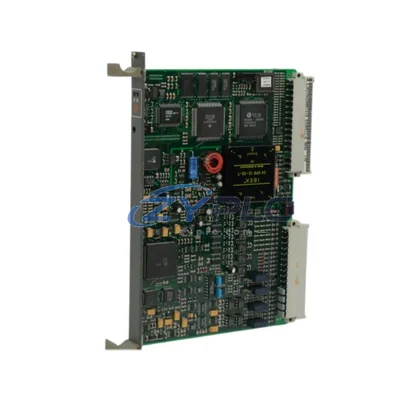
Siemens PSMBXNAN 16180-500: Industrial Data Link for Smart Factory Connectivity
The Siemens PSMBXNAN 16180-500 is a high-performance MBX Communication Gateway engineered for seamless industrial network integration across SINEC H1 architectures. Designed to bridge field-level devices with supervisory control systems, this gateway enables reliable, real-time data exchange between PLCs, remote I/O modules, HMI panels, SCADA platforms, and upper-level MES or ERP systems. In modern smart factory environments where data transparency and network stability are non-negotiable, the PSMBXNAN 16180-500 delivers the protocol conversion backbone that keeps production lines connected and visible.
Compatibility & Integration Notes
| Parameter |
Specification |
| SKU |
PSMBXNAN 16180-500 |
| Brand |
Siemens |
| Series |
SINEC H1 / MBX |
| Communication Protocol |
SINEC H1, MBX Modulbus |
| Interface Type |
Industrial Network Gateway / Protocol Converter |
| Transmission Capability |
Real-time cyclic and acyclic data exchange |
| Network Compatibility |
SINEC H1 Industrial Ethernet, Modulbus |
| System Application |
PLC Integration, SCADA, HMI, Remote I/O, MES |
| Origin |
Germany |
| Warranty |
warranty terms confirmed during quotation |
| Condition |
Tested & Verified Before Shipment |
Connected Automation Data Flow
In a typical SINEC H1 network topology, the PSMBXNAN 16180-500 acts as the central communication node connecting field instruments and controllers to the supervisory layer. Signal acquisition begins at the sensor and actuator level — temperature transmitters, pressure transducers, and proximity switches feed raw process data into Siemens S5 or S7 series PLCs such as the Siemens S5-115U or S7-400 CPU modules. The PSMBXNAN 16180-500 then translates Modulbus telegrams into SINEC H1 Ethernet frames, enabling upstream communication with Siemens WinCC SCADA servers and OP series HMI panels for real-time visualization and operator interaction.
Within the network backbone, managed industrial switches — such as the Siemens SCALANCE X200 series — provide the switching infrastructure that ensures deterministic packet delivery across the plant floor. Remote I/O racks connected via Siemens ET 200M or ET 200S distributed I/O systems extend the reach of the control network to geographically dispersed process zones, with the PSMBXNAN 16180-500 maintaining protocol coherence across all segments. For drive integration, Siemens SINAMICS G120 variable frequency drives communicate status and speed feedback through the same SINEC H1 network, enabling coordinated motion control and energy monitoring from a single SCADA dashboard.
At the edge, Siemens SIMATIC NET CP 1613 communication processors installed in engineering workstations provide the PC-side interface for network diagnostics and configuration. Data collected across the SINEC H1 backbone is aggregated by Siemens SIMATIC IT manufacturing execution modules, feeding production KPIs, OEE metrics, and alarm histories into plant-wide reporting systems. The PSMBXNAN 16180-500 ensures that every node in this chain — from field sensor to enterprise dashboard — communicates without data loss or protocol mismatch.
Solving Data Isolation in Industrial Sites
Legacy industrial sites frequently suffer from protocol fragmentation: Modulbus devices on the shop floor cannot natively communicate with SINEC H1 Ethernet networks, creating data silos that prevent real-time visibility and remote diagnostics. The Siemens PSMBXNAN 16180-500 directly resolves this by acting as a transparent protocol bridge, converting Modulbus telegrams to SINEC H1 frames without requiring PLC program modifications or additional middleware.
For facilities undergoing digital transformation, this gateway enables phased modernization — existing Modulbus field devices remain operational while the plant network is upgraded to SINEC H1 Ethernet standards. SCADA operators gain live process data from previously isolated equipment, enabling alarm management, trend analysis, and remote fault diagnosis without dispatching technicians to the field. Production line transparency improves immediately: cycle times, fault codes, and I/O states from legacy controllers become visible in WinCC dashboards and historian databases.
System expansion is equally straightforward. Additional MBX nodes can be integrated into the SINEC H1 network by adding further PSMBXNAN gateways, scaling the communication architecture without disrupting existing network segments. This modular approach protects capital investment in legacy automation hardware while enabling the data connectivity demanded by Industry 4.0 initiatives, predictive maintenance programs, and remote monitoring platforms.
Industrial Connectivity FAQ
Q1: What communication protocols does the Siemens PSMBXNAN 16180-500 support?
The PSMBXNAN 16180-500 supports SINEC H1 Industrial Ethernet and MBX Modulbus protocols, enabling bidirectional data exchange between Modulbus field devices and SINEC H1 network infrastructure. It is compatible with Siemens S5 and early S7 PLC platforms operating within SINEC H1 network architectures.
Q2: How does this gateway ensure network stability in continuous production environments?
The PSMBXNAN 16180-500 is designed for 24/7 industrial operation with deterministic communication timing. Its hardware architecture supports cyclic data polling and event-driven messaging, minimizing communication latency and ensuring consistent data delivery even under high network load conditions typical of SCADA-connected production lines.
Q3: Can the PSMBXNAN 16180-500 be integrated into existing SCADA and HMI systems without major reconfiguration?
Yes. The gateway presents standard SINEC H1 network interfaces to the supervisory layer, allowing WinCC, SIMATIC HMI, and third-party SCADA platforms to access Modulbus device data using native SINEC H1 communication drivers. No custom protocol adapters or OPC middleware are required for basic integration.
Q4: What quality assurance and warranty coverage is provided?
Every PSMBXNAN 16180-500 unit supplied by ZYPLC undergoes functional communication testing prior to shipment, verifying protocol conversion integrity, network interface operation, and hardware condition. All units are covered by a warranty terms confirmed during quotation against manufacturing defects and communication failures, with technical support available throughout the warranty period.