Siemens RMS-TSIG-TZ: Industrial Data Link for Smart Factory Connectivity
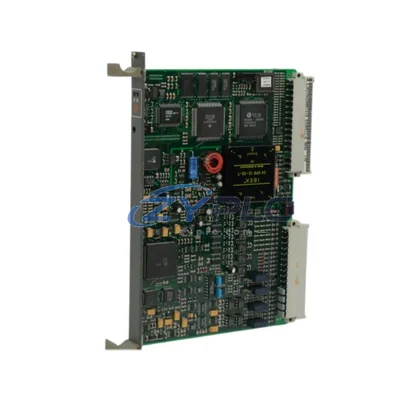
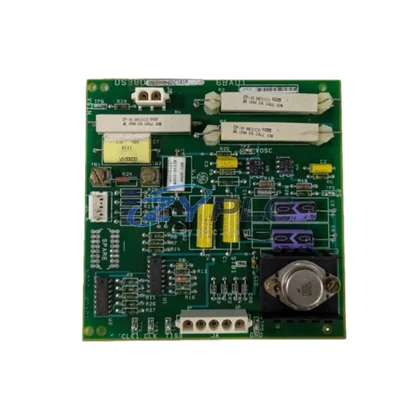
The Siemens RMS-TSIG-TZ is a high-performance Static Trip Module engineered for seamless integration within the Sentron series protection and communication ecosystem. Designed to operate at the intersection of field-level protection devices and upper-level control systems, the RMS-TSIG-TZ enables real-time data exchange across the full industrial automation chain — from low-voltage switchgear and circuit breakers through to PLC controllers, SCADA platforms, and enterprise MES systems. In smart factory environments where data continuity and network reliability are non-negotiable, this module delivers the protocol-level intelligence required to eliminate communication gaps and drive transparent production operations.
Compatibility & Integration Notes
| Parameter |
Specification |
| Communication Protocol |
Modbus RTU |
| Interface Type |
RS-485 Serial Interface |
| Transmission Capability |
Real-time protection data, trip event logging, fault diagnostics |
| Network Compatibility |
Sentron series switchgear, Modbus RTU master devices, industrial gateways |
| System Application |
SCADA, HMI, PLC-based control systems, energy management platforms |
| Product Series |
Siemens Sentron |
| Product Type |
Static Trip Module |
| SKU |
RMS-TSIG-TZ |
| Origin |
Germany |
| Warranty |
warranty terms confirmed during quotation |
| Stock Status |
Available — export shipping options available |
Connected Automation Data Flow
In a typical smart factory deployment, the RMS-TSIG-TZ sits at the heart of the low-voltage protection layer, bridging Sentron series circuit breakers and trip units with the broader automation network. Signal acquisition begins at the breaker level, where the module captures real-time current, voltage, and trip event data. This data is transmitted via Modbus RTU over RS-485 to upstream communication processors — such as the Siemens Sentron PAC3200 power monitoring device or a Siemens CP 341 communications processor mounted on an S7-300 or S7-400 PLC rack.
From the PLC layer, processed data flows upward through industrial Ethernet switches — for example, a Siemens SCALANCE X208 managed switch — into the plant-wide SCADA backbone. Operators monitoring a Siemens WinCC or WinCC OA SCADA platform receive live breaker status, load curves, and fault event logs without manual polling delays. In parallel, Siemens SIMATIC HMI TP1200 Comfort panels installed at local control stations display real-time trip status and alarm conditions, enabling rapid operator response.
For facilities integrating distributed I/O architectures, the RMS-TSIG-TZ data stream can be aggregated through a Siemens ET 200SP remote I/O station, which consolidates field signals before forwarding them to the central S7-1500 PLC via PROFINET. In drive-intensive production lines, the module’s trip event data can be cross-referenced with Siemens SINAMICS G120 variable frequency drive diagnostics, enabling coordinated fault isolation across motor protection and power distribution layers. Edge computing nodes — such as a Siemens SIMATIC IPC427E industrial PC — can further process and contextualize this data for predictive maintenance algorithms and OEE dashboards, completing the data chain from field device to enterprise analytics.
Solving Data Isolation in Industrial Sites
One of the most persistent challenges in industrial facilities is the fragmentation of protection and control data across incompatible systems. Legacy circuit breakers and trip units often operate as isolated devices, generating critical fault and load data that never reaches the SCADA or MES layer. The Siemens RMS-TSIG-TZ directly addresses this problem by providing a standardized Modbus RTU communication interface that integrates Sentron series protection devices into the plant-wide data network.
With the RMS-TSIG-TZ in place, engineers can achieve full production line transparency — monitoring breaker status, load trends, and trip histories from a centralized SCADA dashboard rather than relying on manual inspections or localized alarm panels. Remote diagnostics become practical: maintenance teams can identify the root cause of a trip event, review pre-fault current data, and plan corrective action without dispatching personnel to the switchgear room. This capability is especially valuable in multi-building industrial campuses or geographically distributed facilities where on-site response times are costly.
Protocol unification is another key benefit. In mixed-vendor environments where Modbus RTU devices coexist with PROFIBUS or PROFINET segments, the RMS-TSIG-TZ serves as the standardized data source for Sentron protection data, simplifying gateway configuration and reducing integration complexity. System expansion is equally straightforward — additional Sentron breakers equipped with RMS-TSIG-TZ modules can be added to the Modbus RTU network without architectural changes, supporting phased capacity upgrades and new production line rollouts. Every unit shipped undergoes pre-delivery functional testing to verify communication integrity, and is backed by a warranty terms confirmed during quotation covering manufacturing defects and communication module performance.
Industrial Connectivity FAQ
Q1: What is the communication latency of the RMS-TSIG-TZ over Modbus RTU?
The RMS-TSIG-TZ operates over RS-485 Modbus RTU, which typically delivers response times in the range of 10–50 milliseconds depending on baud rate configuration and network load. For most SCADA polling cycles and HMI refresh rates in power distribution monitoring applications, this latency is well within acceptable limits and does not impact operational decision-making.
Q2: Is the RMS-TSIG-TZ compatible with third-party Modbus RTU masters and SCADA platforms?
Yes. The module implements the standard Modbus RTU protocol over RS-485, making it compatible with any Modbus RTU master device or SCADA platform that supports this protocol — including Wonderware, Ignition, and other industrial SCADA systems — in addition to Siemens WinCC and SIMATIC environments. Protocol register mapping documentation is available to facilitate third-party integration.
Q3: Can the RMS-TSIG-TZ be added to an existing Sentron network without disrupting current operations?
The module is designed for integration into existing Sentron series installations. It connects to compatible Sentron circuit breakers and trip units via the defined communication interface, and can be added to an existing Modbus RTU RS-485 bus segment without requiring network reconfiguration, provided bus termination and address settings are correctly applied. System expansion is non-disruptive to other nodes on the network.
Q4: What does the warranty terms confirmed during quotation cover, and how is pre-shipment testing conducted?
Every RMS-TSIG-TZ unit undergoes functional communication testing prior to shipment, verifying Modbus RTU register read/write operations and RS-485 signal integrity. The warranty terms confirmed during quotation covers manufacturing defects and communication module performance failures under normal operating conditions. Warranty claims are processed directly through ZYPLC with dedicated after-sales support to minimize downtime impact.
© 2026 ZYPLC. All rights reserved. | Contact: +86 19859288691 | plc.sales@zyplc.com