Triconex 4107 Safety Module | Tricon Automation
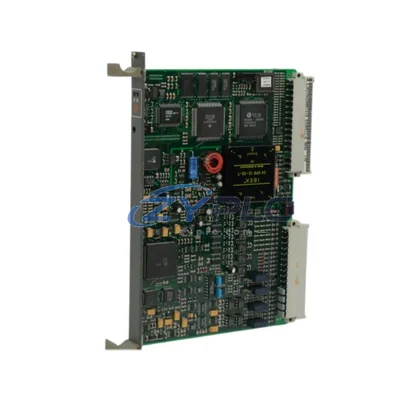
The Triconex 4107 is a high-reliability safety system module engineered for Triple Modular Redundant (TMR) architectures within the Tricon platform. Designed to meet the rigorous demands of process industries — including oil & gas, petrochemical, power generation, and advanced manufacturing — the 4107 delivers precision fault detection, continuous self-diagnostics, and deterministic control response while actively contributing to plant-wide energy efficiency. In environments where unplanned downtime translates directly into wasted energy and lost production throughput, the 4107’s architecture ensures that control loops remain stable, motor drives operate within optimal parameters, and safety shutdowns are executed only when genuinely required — eliminating spurious trips that force energy-intensive restart sequences.
Product Specification Table
| Parameter |
Specification / Value |
| SKU / Part Number |
4107 |
| Brand / Manufacturer |
Triconex (Schneider Electric) |
| Platform Series |
Tricon TMR Safety System |
| Module Category |
Safety System Module |
| Architecture |
Triple Modular Redundant (TMR) — 2oo3 voting logic |
| Electrical / System Notes |
Low-draw design; optimized for continuous 24/7 operation |
| Operating Efficiency |
High — minimizes spurious trips, reduces restart energy cycles |
| Compatible Systems |
Tricon v9/v10/v11, Triconex Safety Manager, DCS integration via TSAA/Modbus/OPC |
| Application Environments |
Oil & Gas, Petrochemical, Power Generation, Pharmaceutical, Advanced Manufacturing |
| Maintenance Value |
Eliminates spurious shutdowns; sustains optimal motor and drive operating windows |
| Origin |
United States |
| Warranty |
warranty terms confirmed during quotation — tested and verified before shipment |
| Inventory Status |
RFQ Available — ready for shipment arranged after confirmation |
System Compatibility and Application
In a modern energy-conscious production facility, the Triconex 4107 does not operate in isolation — it functions as the safety backbone of a tightly integrated automation ecosystem. When paired with the Triconex 3008 Main Processor Module, the 4107 enables real-time 2oo3 voting across all I/O channels, ensuring that control decisions are made with maximum accuracy and minimum latency. This precision directly reduces the frequency of unnecessary process interruptions that would otherwise force energy-intensive cold-start sequences on compressors, pumps, and turbines.
On the drive side, variable frequency drives (VFDs) such as the Schneider Electric Altivar ATV630 series rely on stable, high-integrity safety signals from the Tricon platform to modulate motor speed in real time. When the 4107 delivers clean, validated safety outputs, the VFD can maintain motors at their most efficient operating point — avoiding the unplanned downtime associated with full-speed constant-run profiles. Similarly, servo drive systems integrated via the Triconex TSAA communication module benefit from the 4107’s deterministic response times, allowing servo axes to execute precise motion profiles without over-travel or energy-wasting deceleration corrections.
Power quality and condition monitoring are equally critical. Devices such as the Schneider Electric PowerLogic ION7650 power meter, when deployed alongside the Tricon system, provide granular visibility into per-circuit energy consumption. The 4107’s fault isolation capability ensures that when a process anomaly is detected, only the affected segment is isolated — not the entire production line — preserving energy flow to healthy equipment. This selective isolation is further supported by Triconex Digital Output Modules (DO) that control field actuators with surgical precision, preventing the cascade shutdowns that waste significant energy in batch and continuous process environments.
For data acquisition and monitoring, the Triconex 4351B Communication Module enables seamless integration with SCADA and DCS platforms, allowing maintenance planning systems to receive real-time process data from the Tricon controller. This data feeds predictive analytics engines that identify inefficient operating patterns — such as motors running at partial load for extended periods or heat exchangers operating outside their optimal temperature differential — enabling proactive adjustments that reduce energy consumption without compromising safety margins. The Triconex 3703E Analog Input Module further enriches this data stream by capturing high-resolution process variable measurements that inform both safety logic and maintenance planning algorithms.
At the human-machine interface level, Schneider Electric Magelis HMI panels display real-time energy KPIs alongside process safety status, giving operators a unified view of both production efficiency and safety system health. This integration eliminates the traditional silos between safety engineering and maintenance planning, enabling a holistic approach to plant optimization. The Triconex 3805E Digital Input Module rounds out the I/O architecture by providing high-density, noise-immune digital signal acquisition from field sensors — ensuring that the 4107’s safety logic is always working from accurate, up-to-date process data.
Maintenance and Replacement Notes
The energy impact of a well-functioning safety system like the Triconex 4107 is most visible at the production line level. In a typical continuous process plant — such as a natural gas compression station or a chemical reactor train — the cost of a single spurious shutdown extends far beyond the immediate loss of production. Restarting a large centrifugal compressor or a high-temperature reactor requires substantial electrical energy for motor acceleration, heating elements, and auxiliary systems. By maintaining a fault-free, high-availability safety architecture, the 4107 directly reduces the frequency of these energy-intensive restart events.
In terms of equipment utilization, the 4107’s continuous self-diagnostic capability — running background tests on all three redundant channels simultaneously — means that maintenance teams receive early warning of developing faults before they escalate into forced shutdowns. This predictive maintenance posture allows planned maintenance windows to be scheduled during low-demand periods, minimizing the energy impact of taking equipment offline. Mean Time Between Failures (MTBF) is extended, and Overall Equipment Effectiveness (OEE) improves as a direct result.
Motor control optimization is another key benefit. In facilities where the Tricon system governs the safety interlock logic for large motor-driven equipment — pumps, fans, agitators, conveyors — the 4107 ensures that start/stop commands are executed only under validated safe conditions. This eliminates the unplanned downtime associated with repeated start attempts on equipment that is not yet ready to run, and prevents the thermal stress that shortens motor life and increases maintenance costs. When combined with condition monitoring at the motor control center (MCC) level, the data generated by the Tricon system enables continuous benchmarking of motor efficiency against nameplate ratings, flagging units that are consuming more energy than expected and may require servicing.
Production line cycle time (takt time) optimization also benefits from the 4107’s deterministic control response. In batch manufacturing environments, the ability to execute safety-critical transitions — such as reactor charge/discharge sequences or pressure relief operations — with precise timing reduces idle time between production cycles. Every second of idle time represents wasted energy in the form of maintained temperatures, pressures, and flow rates that are not contributing to output. The 4107’s sub-millisecond response capability ensures that these transitions occur at the earliest safe moment, maximizing throughput per unit of energy consumed.
All units supplied by ZYPLC are drawn from verified inventory, subjected to comprehensive functional and load testing prior to dispatch, and covered by a warranty terms confirmed during quotation. This ensures that the energy efficiency benefits described above are realized from day one of installation, without the hidden costs of early-life failures or compatibility issues.
Product Sourcing FAQ
Q1: How does the Triconex 4107 contribute to measurable operational stability in a process plant?
The 4107 reduces unplanned downtime primarily by eliminating spurious process shutdowns. Each avoided unplanned shutdown prevents the energy-intensive restart sequence that follows — including motor acceleration loads, reheat cycles, and auxiliary system restarts. In high-availability plants, reducing spurious trip rates by even a small percentage can translate into significant annual operational stability and improved OEE.
Q2: Is the Triconex 4107 compatible with my existing Tricon TMR system and third-party DCS?
Yes. The 4107 is designed for the Tricon TMR platform and is compatible with Tricon v9, v10, and v11 chassis configurations. Integration with third-party DCS and SCADA systems is supported via the Triconex TSAA protocol, Modbus RTU/TCP, and OPC-DA/UA interfaces, enabling seamless data exchange with maintenance planning and process control systems.
Q3: Can the Triconex 4107 replace an older or failed module without a full system shutdown?
The Tricon TMR architecture supports online replacement of modules in many configurations, allowing maintenance to be performed without taking the entire safety system offline. This capability is critical for energy-intensive processes where a full shutdown would result in significant production and energy losses. Always consult your system documentation and a qualified Triconex engineer before performing hot-swap operations.
Q4: What testing and quality assurance does ZYPLC perform before shipping the Triconex 4107?
Every Triconex 4107 unit supplied by ZYPLC undergoes a comprehensive pre-shipment testing protocol that includes functional verification, communication interface testing, and load simulation. Units are confirmed to meet original manufacturer specifications before dispatch. All units are covered by a warranty terms confirmed during quotation, and our technical team is available to support installation, commissioning, and troubleshooting queries.