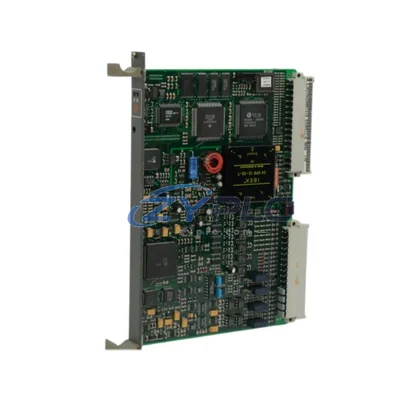
Vibro-Meter VM600 MPC4 200-510-041-021: Industrial Data Link for Smart Factory Machinery Protection
The Vibro-Meter VM600 MPC4 200-510-041-021 is a high-performance Machinery Protection Card engineered for continuous vibration monitoring and real-time condition assessment in critical rotating equipment. As a core module within the VM600 rack-based monitoring system, the MPC4 card serves as the industrial data backbone between field-level sensors, protection logic, and upper-level SCADA and HMI platforms — enabling seamless, uninterrupted data flow across the entire smart factory automation architecture.
Designed for deployment in power generation, oil & gas, petrochemical, and heavy manufacturing environments, the VM600 MPC4 200-510-041-021 processes analog vibration signals from proximity probes, velocity sensors, and accelerometers, converting raw field data into structured digital outputs compatible with plant-wide DCS and condition monitoring networks. Its integration capability spans from signal acquisition at the machine train level all the way to enterprise-level asset management systems, making it an indispensable node in any industrial connectivity strategy.
Compatibility & Integration Notes
| Parameter |
Specification |
| Product SKU |
VM600 MPC4 200-510-041-021 |
| Brand / Series |
Vibro-Meter / VM600 |
| Module Type |
Machinery Protection Card (MPC4) |
| Communication Protocol |
Analog signal input; digital output via VM600 rack backplane; compatible with Modbus RTU/TCP, PROFIBUS DP (via gateway modules) |
| Interface Type |
Rack-mount backplane interface; front-panel BNC / terminal block connectors |
| Transmission Capability |
Real-time vibration, phase, speed, and gap signal processing; multi-channel simultaneous acquisition |
| Network Compatibility |
Integrates with DCS, SCADA, HMI, and condition monitoring platforms via VM600 communication modules (e.g., VMC module) |
| System Application |
Rotating machinery protection, turbine monitoring, compressor health, pump condition assessment |
| Origin |
Switzerland (Meggitt / Vibro-Meter) |
| Warranty |
|
Connected Automation Data Flow
In a typical smart factory deployment, the VM600 MPC4 200-510-041-021 sits at the heart of a layered industrial network. At the field level, proximity probes and velocity transducers — such as those from the Vibro-Meter Series 200 sensor family — feed raw vibration and displacement signals directly into the MPC4 card’s analog input channels. The card performs real-time signal conditioning, gap measurement, and protection logic evaluation, generating trip and alarm relay outputs that interface with the plant’s safety instrumented system (SIS) or emergency shutdown (ESD) controller.
Moving up the data chain, the VM600 rack’s VMC Communication Module aggregates processed data from multiple MPC4 cards and transmits structured condition monitoring data to the plant DCS — typically a Siemens SIMATIC S7-400 PLC or ABB System 800xA — via Modbus TCP or PROFIBUS DP. This allows the DCS to incorporate machinery health data alongside process variables such as temperature, pressure, and flow, providing operators with a unified view on their Wonderware InTouch HMI or GE iFIX SCADA workstation.
For remote monitoring and predictive maintenance, the VM600 system connects to an OSIsoft PI historian or Aspentech Mtell edge analytics platform, where vibration trend data is stored, analyzed, and correlated with process upsets. Alarm events generated by the MPC4’s protection logic are forwarded in real time to the plant’s alarm management system, enabling maintenance teams to respond to bearing wear, rotor imbalance, or shaft misalignment before a catastrophic failure occurs.
In multi-train installations — such as gas turbine generator sets or large centrifugal compressor trains — multiple VM600 racks, each populated with MPC4 cards and complementary RLC Relay and Logic Cards, are networked together through the plant’s industrial Ethernet backbone. An industrial managed Ethernet switch (e.g., Hirschmann MACH series or Moxa EDS series) provides the Layer 2 network infrastructure, ensuring deterministic, low-latency data delivery between the VM600 system and the control room SCADA servers. The entire data path — from sensor to screen — is continuously monitored, with the VM600 system’s self-diagnostics reporting module health status to the Vibro-Meter VibroSight condition monitoring software for centralized asset oversight.
Solving Data Isolation in Industrial Sites
One of the most persistent challenges in industrial facilities is the fragmentation of machinery health data from the broader plant automation network. Legacy protection systems often operate as standalone islands, with vibration data locked inside proprietary monitoring platforms that cannot communicate with the plant DCS, SCADA, or ERP systems. The result is data isolation: maintenance engineers must manually retrieve trend data from local terminals, cross-reference it with process data from separate systems, and make decisions without a complete picture of machine health.
The Vibro-Meter VM600 MPC4 200-510-041-021 directly addresses this challenge. By integrating the MPC4 card within the VM600 rack alongside the VMC communication module, plants can bridge the gap between the protection layer and the process control layer. Vibration, speed, and gap data become live process variables accessible to the DCS and SCADA, enabling operators to correlate machinery behavior with process conditions in real time — without leaving the control room HMI.
For facilities undergoing digital transformation, the VM600 system supports integration with edge computing gateways and IIoT platforms, enabling remote diagnostics and condition-based maintenance scheduling from anywhere in the world. This eliminates the need for on-site manual data collection, reduces unplanned downtime, and supports the transition from time-based to predictive maintenance strategies. The VM600 MPC4’s open communication architecture also simplifies system expansion: additional monitoring points can be added by populating spare card slots in existing racks, without disrupting the running network or requiring a system shutdown.
Production line transparency is further enhanced by the VM600’s alarm and event logging capabilities. Every protection trip, alert threshold crossing, and system diagnostic event is time-stamped and logged, providing a complete audit trail for root cause analysis and regulatory compliance reporting. This level of data granularity transforms the VM600 MPC4 from a simple protection device into a strategic asset in the plant’s journey toward full production transparency and smart manufacturing.
Industrial Connectivity FAQ
Q1: What communication protocols does the VM600 MPC4 200-510-041-021 support for SCADA and DCS integration?
The VM600 MPC4 card itself processes analog vibration signals and outputs protection relay contacts. For digital network integration with SCADA, DCS, or HMI systems, the VM600 rack uses dedicated communication modules (such as the VMC module) that support Modbus RTU, Modbus TCP/IP, and PROFIBUS DP. This architecture allows the MPC4’s real-time machinery data to be transmitted to any compatible industrial control platform without protocol conversion issues.
Q2: How does the VM600 system ensure network stability and data integrity in harsh industrial environments?
The VM600 platform is designed for continuous 24/7 operation in demanding industrial environments. The rack-based architecture provides electrical isolation between cards, and the system includes built-in self-diagnostics that continuously monitor card health, power supply status, and signal integrity. In the event of a communication fault, the system maintains local protection functionality independently of the network, ensuring machinery safety is never compromised by a network disruption.
Q3: Can the VM600 MPC4 200-510-041-021 be integrated into an existing plant network without a full system shutdown?
Yes. The VM600 system is designed for hot-swap capability on supported configurations, and adding or replacing MPC4 cards in an existing rack can often be performed during scheduled maintenance windows with minimal disruption. Network integration via the VMC communication module can be configured and tested offline before going live, and the system supports incremental expansion — new monitoring points can be added to the network without reconfiguring existing channels or interrupting running protection loops.
Q4: What warranty and pre-shipment testing does the VM600 MPC4 200-510-041-021 include?
Every VM600 MPC4 200-510-041-021 unit supplied by ZYPLC is covered by a against manufacturing defects and functional failures. Prior to shipment, each unit undergoes functional verification testing to confirm signal processing performance, relay output operation, and communication interface integrity. Units are sourced from verified supply channels and shipped with full traceability documentation, supporting your incoming inspection and quality assurance processes.