Woodhead SST-PB3-VME-2-E Profibus Interface for VME: Compatibility and Replacement Notes
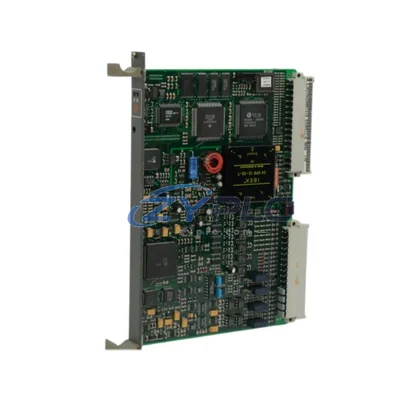
The Woodhead SST-PB3-VME-2-E is a dual-channel PROFIBUS DP/FMS interface module engineered for VME bus-based industrial control architectures. Designed to serve as the critical communication bridge between the VME backplane and PROFIBUS field networks, this module enables seamless system integration across control layers — from the CPU and I/O subsystems through to field devices, drives, and remote I/O stations. In modern distributed automation environments, the SST-PB3-VME-2-E is not simply a standalone communication card; it is a foundational element that defines the reliability, scalability, and long-term maintainability of the entire control system.
Industrial automation systems are built on layered architectures where every component must communicate with precision and consistency. The SST-PB3-VME-2-E occupies the network layer of this hierarchy, providing the VME host processor with direct, high-speed access to PROFIBUS DP and FMS networks operating at speeds up to 12 Mbps. This capability ensures that time-critical process data — from analog I/O modules, variable frequency drives, remote terminal units, and intelligent field instruments — is delivered to the control layer without latency or data loss. The result is a control system that responds accurately to process conditions, supports deterministic scan cycles, and maintains signal integrity across the full operational range.
Within a complete VME-based control platform, the SST-PB3-VME-2-E works in close coordination with the VME CPU board, the VME power supply module, and the VME backplane chassis. The dual-channel architecture of the SST-PB3-VME-2-E allows engineers to configure redundant PROFIBUS network paths, ensuring that a single cable fault or network segment failure does not interrupt process control. This redundancy capability is particularly valuable in continuous process industries — petrochemical plants, power generation facilities, water treatment systems, and metallurgical operations — where downtime carries significant operational and safety consequences.
From an engineering and commissioning perspective, the SST-PB3-VME-2-E simplifies system integration by supporting standard PROFIBUS GSD file-based device configuration. Field devices such as PROFIBUS-compatible remote I/O racks, intelligent motor control centers, pressure transmitters, and flow meters can be added to the network without requiring custom driver development. The module’s onboard diagnostic capabilities allow maintenance engineers to monitor network health, identify communication faults, and isolate problem segments — all from the host VME system — reducing mean time to repair and supporting long-term maintenance efficiency.
The SST-PB3-VME-2-E is backed by a , reflecting the quality standards and reliability expectations of industrial-grade communication hardware. For system integrators and plant engineers managing long-lifecycle automation platforms, this warranty provides assurance that the module will perform consistently across the demanding thermal, electrical, and mechanical environments typical of industrial control cabinets.
Product Specification Table
| Parameter |
Specification |
| Model / SKU |
SST-PB3-VME-2-E |
| Brand / Manufacturer |
Woodhead SST (Molex) |
| Series |
SST PROFIBUS Interface Series |
| System Role |
Dual-Channel PROFIBUS DP/FMS VME Interface Module |
| Bus Interface |
VME Bus (IEEE 1014) |
| Network Protocol |
PROFIBUS DP / PROFIBUS FMS |
| Number of Channels |
2 (Dual Independent PROFIBUS Ports) |
| Communication Speed |
9.6 Kbps – 12 Mbps (Auto-detect) |
| Operating Mode |
Master / Slave (Configurable per channel) |
| Max Slave Nodes per Channel |
Up to 125 PROFIBUS slave devices |
| Electrical Interface |
RS-485 (PROFIBUS standard) |
| Power Supply |
Supplied via VME backplane (+5V) |
| Operating Temperature |
0°C to +60°C |
| Storage Temperature |
-40°C to +85°C |
| Humidity |
5% to 95% RH (Non-condensing) |
| Installation Environment |
Industrial control cabinet, VME chassis |
| Country of Origin |
United States |
| Warranty |
|
| system integration |
Compatible with VME CPU boards, DCS platforms, SCADA systems via PROFIBUS DP/FMS |
System Compatibility Notes
The SST-PB3-VME-2-E achieves its full potential when deployed as part of a coordinated VME-based control architecture. At the control layer, the module interfaces directly with the VME host CPU — such as a Motorola MVME series processor board or equivalent VME single-board computer — through the VME backplane, enabling the CPU to manage PROFIBUS network communications with minimal software overhead. The VME backplane chassis, typically a 6U or 9U form factor, provides the physical and electrical foundation for this integration, housing the CPU, the SST-PB3-VME-2-E, and additional I/O or communication modules in a unified, high-reliability enclosure.
At the I/O layer, the SST-PB3-VME-2-E connects to PROFIBUS DP remote I/O stations — such as Siemens ET 200M or ET 200S distributed I/O racks — allowing the VME controller to read analog and digital process signals from field instruments distributed across the plant. Variable frequency drives supporting PROFIBUS DP, such as those in the Siemens SINAMICS or ABB ACS series, can be integrated directly into the PROFIBUS network managed by the SST-PB3-VME-2-E, enabling coordinated motor speed control and status monitoring from the VME host.
For network layer redundancy, the dual-channel design of the SST-PB3-VME-2-E allows engineers to configure one channel as the primary PROFIBUS master and the second channel as a hot-standby or secondary network segment. This architecture mirrors the redundancy strategies used in safety-critical applications, where network continuity is as important as controller redundancy. PROFIBUS repeaters and optical fiber converters can be added to extend network reach in large plant environments, maintaining signal integrity over distances exceeding standard RS-485 cable length limits.
At the power layer, the VME system’s power supply module — typically a dedicated VME power supply providing regulated +5V, ±12V rails — ensures stable operation of the SST-PB3-VME-2-E and all co-resident VME modules. Proper power sequencing and grounding within the control cabinet are essential for maintaining PROFIBUS signal quality and preventing ground loop interference on the RS-485 network. At the human-machine interface layer, SCADA workstations and HMI panels connect to the VME host via Ethernet or serial communication, receiving process data aggregated from PROFIBUS field devices through the SST-PB3-VME-2-E, providing operators with real-time visibility into the control system.
Industrial Application Notes
The SST-PB3-VME-2-E is deployed across a wide range of industrial automation sectors where VME-based control platforms and PROFIBUS field networks coexist. In power generation and electrical utilities, VME controllers equipped with the SST-PB3-VME-2-E manage protection relay networks, substation automation systems, and turbine control I/O — where deterministic communication and network redundancy are non-negotiable requirements. The module’s dual-channel architecture supports ring or redundant bus topologies that maintain control continuity even during network maintenance activities.
In petrochemical and refinery process control, the SST-PB3-VME-2-E enables VME-based DCS platforms to communicate with PROFIBUS-compatible field instruments — including pressure transmitters, flow meters, control valves, and gas analyzers — across hazardous area installations. The module’s robust RS-485 electrical interface and wide operating temperature range make it suitable for control room environments adjacent to process areas with demanding thermal and electromagnetic conditions.
In water and wastewater treatment facilities, VME controllers using the SST-PB3-VME-2-E coordinate pump motor drives, valve actuators, and remote I/O stations distributed across large treatment plant sites. The PROFIBUS network managed by the module provides the communication backbone for SCADA-supervised process control, enabling centralized monitoring and remote operation of distributed field equipment. In mining and metallurgical operations, the module supports VME-based control systems managing conveyor drives, crusher motor controls, and process instrumentation networks, where long cable runs and electrically noisy environments demand the signal robustness of RS-485 PROFIBUS communication.
For packaging and discrete manufacturing production lines, the SST-PB3-VME-2-E integrates VME motion controllers with PROFIBUS-networked servo drives, pneumatic valve terminals, and vision system interfaces, enabling coordinated multi-axis control and high-speed I/O response across the production line architecture.
Product Compatibility FAQ
Q1: Is the SST-PB3-VME-2-E compatible with both PROFIBUS DP and PROFIBUS FMS protocols, and can both channels operate simultaneously in different modes?
Yes. The SST-PB3-VME-2-E supports both PROFIBUS DP (Decentralized Periphery) and PROFIBUS FMS (Fieldbus Message Specification) protocols. Each of the two independent channels can be configured separately — one as a PROFIBUS DP master managing remote I/O and drives, and the other as a PROFIBUS FMS channel for peer-to-peer communication between controllers. Both channels operate simultaneously and independently, allowing the VME host to manage two separate PROFIBUS network segments from a single module slot, maximizing backplane space efficiency in the VME chassis.
Q2: How does the SST-PB3-VME-2-E support long-term maintenance and spare parts availability for legacy VME control systems?
The SST-PB3-VME-2-E is a well-established module within the SST PROFIBUS interface product family, and ZYPLC maintains verified inventory of this module to support long-lifecycle VME control system maintenance programs. Each unit supplied by ZYPLC is covered by a, providing assurance of functional integrity from the date of delivery. For plant engineers managing aging VME platforms, maintaining a qualified spare of the SST-PB3-VME-2-E in the control room inventory is a recommended practice to minimize downtime risk. ZYPLC’s global logistics capability supports export shipping options after RFQ confirmation to minimize the impact of unplanned module failures on production continuity.
Q3: What commissioning steps are required to integrate the SST-PB3-VME-2-E into an existing PROFIBUS network, and what diagnostic tools are available?
Commissioning the SST-PB3-VME-2-E involves installing the module into the VME chassis, loading the SST-supplied device driver and configuration software on the VME host, and configuring each PROFIBUS channel using the GSD files of the connected slave devices. The SST configuration utility allows engineers to define the PROFIBUS master parameters — baud rate, bus cycle time, slave address assignments — and verify network topology before going live. Onboard diagnostic LEDs provide real-time status indication for each PROFIBUS channel, and the host software API exposes detailed diagnostic registers for monitoring bus error rates, slave communication status, and network health. For complex multi-segment PROFIBUS networks, a dedicated PROFIBUS network analyzer can be connected to the RS-485 bus to capture and decode network traffic during commissioning and fault diagnosis.