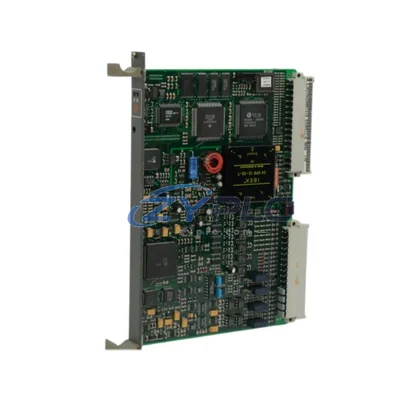
Yokogawa ALF111-S00 FF-H1 Module for CENTUM VP
The Yokogawa ALF111-S00 is a Foundation Fieldbus H1 (FF-H1) communication module engineered for seamless integration within the CENTUM VP Distributed Control System (DCS) architecture. Rather than functioning as a standalone component, the ALF111-S00 occupies a critical position in the control system hierarchy — bridging the field device layer and the process control layer with deterministic, high-integrity digital communication. In complex industrial environments where signal fidelity, system uptime, and long-term maintainability are non-negotiable, this module delivers the architectural consistency that modern automation engineers demand.
Understanding the ALF111-S00 requires viewing it through the lens of the complete CENTUM VP control system. From the controller layer down through I/O, fieldbus, and into the field instrument layer, every component must operate in coordinated synchrony. The ALF111-S00 serves as the communication gateway that enables this synchrony across the FF-H1 segment, supporting up to 16 field devices per segment and providing the backbone for distributed function block execution at the field level.
Product Specification Table
| Parameter |
Specification |
| System Role |
FF-H1 Communication Module (Field Control Station I/O) |
| Compatible Platform |
Yokogawa CENTUM VP DCS |
| Communication Protocol |
Foundation Fieldbus H1 (FF-H1), IEC 61158 |
| Fieldbus Segment Support |
1 FF-H1 segment per module |
| Max Field Devices per Segment |
Up to 16 devices |
| Transmission Speed |
31.25 kbps (FF-H1 standard) |
| Bus Power Supply |
External fieldbus power conditioner required |
| Electrical Isolation |
Galvanic isolation between fieldbus and backplane |
| Installation Environment |
Control cabinet / field control station (FCS) rack |
| Operating Temperature |
0°C to 60°C |
| Mounting |
CENTUM VP FCS I/O rack (backplane-mounted) |
| Origin |
Japan |
| Warranty |
warranty terms confirmed during quotation — Functional guarantee covering communication integrity and hardware reliability |
System Compatibility Notes
The ALF111-S00 does not operate in isolation. Its value is fully realized when considered within the broader CENTUM VP system architecture, where it interfaces with multiple layers of hardware and software to form a cohesive, redundant, and scalable control environment.
At the controller layer, the Yokogawa AFV10D Field Control Unit or AFV30D serves as the primary processing node, executing control strategies and managing communication with I/O modules including the ALF111-S00. The module slots into the ANB10S or ANB11S I/O nest (backplane), which provides the physical and electrical interface between the controller and the fieldbus communication layer. Proper backplane selection is essential to ensure bus timing and power distribution integrity across all installed modules.
On the fieldbus segment itself, the ALF111-S00 communicates with FF-H1 compliant field instruments such as the Yokogawa EJX110A differential pressure transmitter and EJX430A gauge pressure transmitter — both of which support native FF-H1 communication and distributed function block execution. This allows PID control loops to be executed at the field device level, reducing controller load and improving response determinism.
For power conditioning on the FF-H1 segment, a dedicated fieldbus power conditioner (e.g., Pepperl+Fuchs KFD2-BR-1.PA or equivalent) is required to supply stable 9–32 VDC bus power while filtering noise from the control cabinet power rail. The ALF111-S00 relies on clean, conditioned bus power to maintain communication stability across all connected field devices.
In redundant system designs, the ALF111-S00 can be paired with a redundant controller module configuration using Yokogawa AFV10DR or AFV30DR redundant field control units, ensuring that a single module or controller failure does not interrupt process control. The CENTUM VP platform supports bumpless switchover, maintaining fieldbus communication continuity during redundancy events.
At the human-machine interface layer, the Yokogawa CENTUM VP HIS (Human Interface Station) — typically running on a Windows-based engineering workstation — provides real-time visualization of all FF-H1 device parameters, alarm management, and trend logging. The ALF111-S00’s communication data flows transparently from the field device through the fieldbus segment, through the FCS, and up to the HIS without protocol conversion overhead.
For system-wide asset management and device diagnostics, the Yokogawa PRM (Plant Resource Manager) integrates with FF-H1 devices via the ALF111-S00 segment, enabling online device health monitoring, calibration management, and predictive maintenance scheduling — all without interrupting live process control.
Terminal modules and Yokogawa ATD series terminal boards provide the physical wiring interface between field cables and the I/O rack, completing the signal chain from field instrument to controller. Proper terminal board selection ensures correct signal conditioning and cable management within the control cabinet.
Industrial Application Notes
The ALF111-S00 is deployed across a wide range of process industries where Foundation Fieldbus H1 has been adopted as the standard field communication protocol.
In oil refinery and petrochemical plants, the module manages FF-H1 segments connecting pressure, temperature, and flow transmitters across distillation columns, heat exchangers, and reactor vessels. The ability to execute function blocks at the field device level reduces scan cycle load on the central FCS and improves loop response in fast-changing process conditions.
In power generation facilities — including thermal, combined-cycle, and hydroelectric plants — the ALF111-S00 supports boiler control, turbine protection, and auxiliary system monitoring. Its galvanic isolation and robust electrical design ensure reliable communication in environments with significant electromagnetic interference from high-voltage switchgear and motor drives.
In water and wastewater treatment systems, the module connects FF-H1 analytical instruments including pH sensors, dissolved oxygen analyzers, and turbidity meters to the CENTUM VP control system. The digital communication eliminates analog signal degradation over long cable runs common in large treatment facilities.
In pharmaceutical and fine chemical manufacturing, where process validation and data integrity are regulatory requirements, the ALF111-S00’s deterministic FF-H1 communication supports 21 CFR Part 11 compliant data logging and audit trail generation through the CENTUM VP historian and PRM systems.
In mining and mineral processing applications, the module operates reliably in dusty, high-vibration environments when installed in appropriately rated control enclosures, managing communication with field instruments on grinding, flotation, and thickening circuits.
Across all these applications, the ALF111-S00 contributes to reduced commissioning time through online device configuration, reduced maintenance cost through remote diagnostics, and improved system availability through its integration with CENTUM VP’s redundancy and alarm management architecture. Every unit supplied by ZYPLC is covered by a warranty terms confirmed during quotation, ensuring operational confidence from installation through the critical early production phase.
Product Compatibility FAQ
Q1: Is the ALF111-S00 compatible with all CENTUM VP field control station configurations, and can it be used in a redundant FCS setup?
The ALF111-S00 is designed for use within CENTUM VP Field Control Stations (FCS) and is compatible with both standard and redundant FCS configurations. In redundant setups using AFV10DR or AFV30DR redundant controller pairs, the ALF111-S00 operates on the I/O nest shared by both controller modules. Redundancy is managed at the controller level, and the fieldbus segment managed by the ALF111-S00 remains active during controller switchover events, ensuring uninterrupted communication with connected FF-H1 field devices. Always verify the specific FCS model and firmware revision compatibility with Yokogawa’s CENTUM VP hardware compatibility matrix before system design finalization.
Q2: What fieldbus power conditioning and segment topology requirements must be met when deploying the ALF111-S00 in a multi-device FF-H1 segment?
Each FF-H1 segment managed by the ALF111-S00 requires an external fieldbus power conditioner to supply stable bus power (typically 24 VDC conditioned to FF-H1 specification) and to provide impedance matching and noise filtering. The segment must be terminated at both physical ends with 100Ω termination resistors. Cable length, device count (up to 16 per segment), and spur lengths must comply with IEC 61158-2 physical layer specifications to ensure signal integrity. In intrinsically safe (IS) applications, segment design must additionally comply with entity or FISCO model parameters, and IS-rated fieldbus barriers or isolators must be incorporated into the segment design.
Q3: What does the warranty terms confirmed during quotation cover for the ALF111-S00, and what support is available for installation and commissioning?
The warranty terms confirmed during quotation provided by ZYPLC covers hardware defects and communication functionality of the ALF111-S00 module from the date of shipment. Units are tested prior to dispatch to verify FF-H1 communication integrity and backplane interface functionality. In the event of a warranty claim, ZYPLC provides replacement or repair support with minimal lead time to reduce system downtime. For installation and commissioning support, ZYPLC’s technical team is available to assist with segment design review, module configuration guidance, and CENTUM VP integration questions. Contact us at plc.sales@zyplc.com or +86 19859288691 for pre-sales technical consultation and post-sales support.