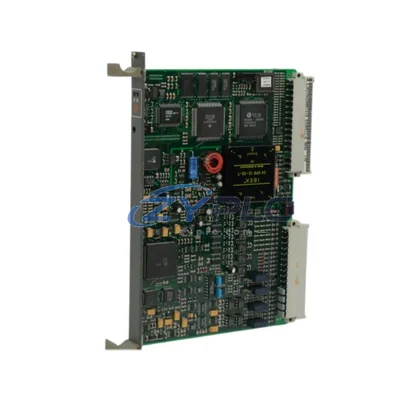
Yokogawa AMM21-S3 DCS Module for CENTUM Automation
In modern process manufacturing, every watt consumed by a control system represents a measurable cost. The Yokogawa AMM21-S3 is a high-density analog input module engineered for the CENTUM VP and CENTUM CS 3000 distributed control systems, delivering precision signal acquisition with a power profile optimized for continuous industrial operation. For plant engineers focused on reducing energy overhead across instrumentation layers, the AMM21-S3 represents a direct lever on operational efficiency — not through abstract green initiatives, but through tightly controlled power draw, reduced heat dissipation, and reliable uptime that eliminates energy-wasting restart cycles.
The AMM21-S3 integrates seamlessly into Yokogawa’s field control station architecture, where it works alongside the CP451-10 field control unit and the PW482-10 power supply module to form a low-loss signal processing backbone. Its analog input channels support 4–20 mA and voltage signals from field transmitters, enabling real-time energy and process data acquisition without signal conditioning overhead. When paired with the AAI143-S00 analog input module and the AAI543-S00 analog output module within the same nest, the AMM21-S3 contributes to a fully balanced I/O architecture that minimizes cross-channel interference and reduces the need for redundant signal repeaters — each of which adds to the facility’s total power budget.
Product Specification Table
| Parameter |
Specification / Value |
| Module Type |
Analog Input Module (AMM21-S3) |
| Compatible Systems |
Yokogawa CENTUM VP, CENTUM CS 3000 |
| Input Channels |
16 channels (4–20 mA / voltage) |
| Power Consumption |
Low-power design, optimized for continuous 24/7 operation |
| Operating Efficiency |
High signal accuracy with minimal thermal output |
| Application Environment |
Process manufacturing, oil & gas, chemical, power generation |
| Energy Saving Value |
Reduces redundant signal conditioning hardware; lowers total I/O power draw |
| Communication Protocol |
Yokogawa proprietary V-net / ER bus (internal DCS backplane) |
| Warranty |
warranty terms confirmed during quotation — tested and verified before shipment |
| Stock Status |
RFQ Available — shipment arranged after confirmation |
System Compatibility and Application
Achieving genuine energy efficiency in a DCS environment requires more than selecting low-power modules in isolation — it demands a coherent architecture where every component contributes to reduced system overhead. The AMM21-S3 is designed to operate within Yokogawa’s CENTUM platform as part of a coordinated control and monitoring ecosystem.
At the field control level, the CP451-10 field control processor manages scan cycles and I/O polling intervals. By optimizing scan rates in coordination with the AMM21-S3’s input channels, engineers can reduce unnecessary CPU load and lower the aggregate power demand of the control station. The PW482-10 power supply module provides stable, regulated DC power to the I/O nest, and its efficiency rating directly affects the heat load of the entire cabinet — a critical factor in facilities where cooling systems represent a significant share of auxiliary operating load.
For analog output control — closing the loop between measurement and actuation — the AAI543-S00 analog output module works in tandem with the AMM21-S3 to deliver precise 4–20 mA signals to control valves and variable-speed drives. In motor-driven applications, this closed-loop precision allows the ADV151-P00 digital input module to capture motor status feedback and feed it back to the control logic, enabling the system to detect inefficient operating states — such as motors running at full load during low-demand periods — and trigger corrective action through the drive controller.
Variable frequency drives connected to the DCS via the ADV551-P00 digital output module receive start/stop and speed reference commands derived from the AMM21-S3’s process measurements. This integration allows the control system to modulate pump and fan speeds in real time based on actual process demand rather than fixed setpoints, which is one of the most impactful operational-efficiency strategies available in continuous process plants. A 10–15% reduction in motor speed typically yields a 25–35% reduction in power consumption due to the affinity laws governing centrifugal machinery.
At the human-machine interface layer, operators monitoring the CENTUM VP system through the HIS (Human Interface Station) can visualize operating load trends derived from the AMM21-S3’s analog inputs — particularly when those inputs are connected to power transducers or flow transmitters used in energy balance calculations. The AIP827 I/O port module supports communication between field devices and the control network, ensuring that energy data flows without latency to the historian and reporting layer. Meanwhile, the AAM10 communication module enables integration with higher-level maintenance planning systems, allowing plant-wide power consumption data to be aggregated and analyzed across multiple control domains.
Maintenance and Replacement Notes
In a typical continuous process plant — a refinery, a chemical reactor train, or a power generation facility — the DCS I/O layer is active 24 hours a day, 365 days a year. Every module in the I/O nest contributes to the facility’s base electrical load. The AMM21-S3’s low-power design means that across a large installation with dozens of I/O nests, the cumulative energy saving compared to older-generation modules is measurable in operating-hours per day.
Beyond static power consumption, the AMM21-S3 contributes to dynamic maintenance planning through its role in process control. Accurate, low-drift analog input readings allow control loops to operate with tighter tolerances, reducing the overshoot and hunting behavior that causes actuators — valves, dampers, and drives — to work harder than necessary. A control loop that oscillates wastes energy on unnecessary actuator movement and accelerates mechanical wear, increasing maintenance frequency and unplanned downtime. The AMM21-S3’s signal integrity directly supports stable loop performance, which translates to reduced actuator duty cycles and lower maintenance costs.
Predictive maintenance is another dimension where the AMM21-S3 delivers energy-related value. By continuously monitoring analog signals from vibration transmitters, temperature sensors, and flow meters, the module provides the data foundation for condition-based maintenance strategies. Detecting a pump operating outside its efficiency curve — indicated by abnormal flow-to-power ratios — allows maintenance teams to intervene before the equipment degrades further, avoiding the energy penalty of running deteriorated machinery and the production loss of an unplanned shutdown.
For facilities managing spare parts inventory, ZYPLC supports RFQ sourcing for the AMM21-S3 and compatible CENTUM VP modules, with each unit undergoing functional testing prior to shipment. The warranty terms confirmed during quotation covers operational defects and provides procurement teams with the confidence to plan maintenance windows without holding excessive safety stock — reducing the capital tied up in spare parts inventory while ensuring rapid replacement availability when needed.
Product Sourcing FAQ
Q1: How does the AMM21-S3 contribute to measurable operational stability in a CENTUM VP system?
The AMM21-S3 reduces operating load through two mechanisms: its own low-power design lowers the I/O nest’s base load, and its high-accuracy signal acquisition enables tighter process control, which reduces actuator unplanned downtime and prevents inefficient operating conditions from persisting undetected.
Q2: Is the AMM21-S3 compatible with both CENTUM VP and CENTUM CS 3000 systems?
Yes. The AMM21-S3 is designed for use in Yokogawa CENTUM VP and CENTUM CS 3000 distributed control systems. Before installation, verify the firmware version of your field control station and consult the Yokogawa hardware compatibility matrix to confirm nest and bus compatibility.
Q3: What is the recommended replacement procedure, and how does ZYPLC support it?
Module replacement in a CENTUM system typically follows a hot-swap or scheduled maintenance window procedure. ZYPLC supplies tested AMM21-S3 units with a warranty terms confirmed during quotation, and our technical team can advise on configuration backup, module substitution steps, and post-replacement loop verification to minimize downtime and ensure the replacement does not introduce control disruptions.
Q4: What testing does each AMM21-S3 unit undergo before shipment?
Every AMM21-S3 unit supplied by ZYPLC is functionally tested to verify channel integrity, signal accuracy, and communication with the CENTUM backplane before dispatch. Units are inspected for physical condition and packed to prevent transit damage. The warranty terms confirmed during quotation covers defects arising from normal operational use within a correctly configured CENTUM system.