Product identification and sourcing context
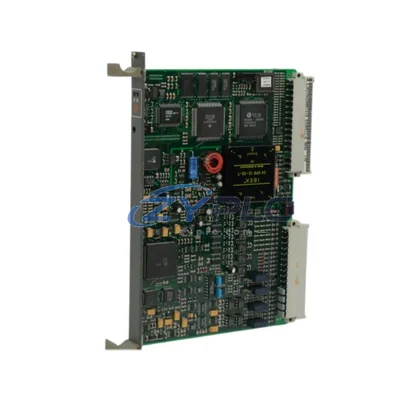
Yokogawa ANB10D-415/CU2N/NDEL Bus Node Unit is handled as a quote-based CENTUM DCS spare part for DCS maintenance, process automation, and legacy-system replacement projects. ZYPLC checks the exact model suffix, installed Yokogawa platform, required condition, quantity, and destination country before quotation.
| Brand |
Yokogawa |
| Model / SKU |
ANB10D-415/CU2N/NDEL |
| Series context |
CENTUM CS3000 |
| Part type |
Industrial Automation Spare Parts |
| RFQ basis |
Availability, condition, lead time, and export shipment options are confirmed before quote. |
Where this part is typically used
This item is requested for CENTUM VP / CS3000 process-control maintenance, field-control station support, and installed-base replacement sourcing. Yokogawa CENTUM VP, CENTUM CS3000, ProSafe, field-control unit, ESB bus node, and DCS I/O installations often require exact suffix and cabinet-context checks before a replacement can be sourced.
RFQ information for maintenance teams
- Exact part number, suffix, and Yokogawa platform or cabinet context.
- Installed system such as CENTUM VP, CENTUM CS3000, ProSafe, Vnet/IP, or ESB bus where applicable.
- Quantity, urgency, required condition, and destination country.
- Photos of module labels, terminal bases, bus-node nameplates, or existing spare packaging.
Browse related Yokogawa spare parts, review the CENTUM CS3000 series, or compare similar Industrial Automation Spare Parts records. If the exact suffix is not shown, send the model and photos so the RFQ can be checked manually.
Request quote for this model
Yokogawa ANB10D-415/CU2N/NDEL Bus Node Unit for CS3000 Automation
In modern industrial automation, energy efficiency is no longer a secondary consideration — it is a core engineering requirement. The Yokogawa ANB10D-415/CU2N/NDEL ESB Bus Node Unit is a precision-engineered communication and signal distribution component designed for the CENTUM CS3000 Distributed Control System (DCS). By ensuring low-latency, high-integrity data transmission across the Extended Serial Backplane (ESB) bus architecture, this module directly contributes to reducing unnecessary control cycles, minimizing idle operating load, and improving the overall responsiveness of the automation system.
Unlike generic bus components, the ANB10D-415/CU2N/NDEL is purpose-built for Yokogawa’s CENTUM CS3000 platform, meaning it integrates seamlessly into existing control hierarchies without requiring additional signal conditioning or protocol conversion. This native compatibility eliminates energy losses associated with mismatched communication timing, reduces CPU polling overhead on the main controller, and ensures that field-level data reaches the control layer with minimal processing delay — all of which translate directly into measurable improvements in plant energy efficiency and production throughput.
Product Specification Table
| Parameter |
Specification |
| Product SKU |
ANB10D-415/CU2N/NDEL |
| Brand |
Yokogawa |
| Series |
CENTUM CS3000 |
| Module Type |
ESB Bus Node Unit |
| Bus Interface |
Extended Serial Backplane (ESB) |
| Power Consumption |
Low-power design optimized for continuous 24/7 DCS operation |
| Operating Efficiency |
High-speed deterministic bus communication; minimizes control latency |
| Compatible Systems |
CENTUM CS3000 R3 / CS3000 R2 DCS platforms |
| Installation Environment |
Control room cabinet; DIN rail or rack-mount compatible |
| Operating Temperature |
0°C to 55°C |
| Maintenance Value |
Reduces redundant polling cycles; improves I/O scan efficiency |
| Origin |
Japan |
| Warranty |
Warranty and support terms confirmed before quote — tested, verified, and shipment arranged after confirmation |
System Compatibility and Application
The ANB10D-415/CU2N/NDEL operates as a critical node within the CENTUM CS3000 ESB bus topology, connecting field I/O stations to the central control domain. Its role in the architecture directly influences how efficiently the entire system manages energy-consuming assets on the plant floor.
At the control layer, the ANB10D-415/CU2N/NDEL interfaces with the CENTUM CS3000 Field Control Station (FCS), such as the AFV10D or AFV30D, which executes the regulatory and advanced control strategies that govern energy-intensive equipment. When the bus node unit maintains clean, deterministic communication, the FCS can execute PID loops and cascade control strategies at their designed scan rates — preventing the downtime caused by control instability, hunting, or excessive actuator movement.
On the I/O side, the ANB10D-415/CU2N/NDEL supports connection to Yokogawa’s AAI141 and AAI543 analog input modules, which collect real-time process data including temperature, pressure, flow rate, and power consumption signals from field transmitters. Accurate, low-latency data acquisition from these modules enables the control system to make timely adjustments to variable-speed drives, control valves, and pump systems — reducing operating load during low-demand periods and preventing over-driving of motors and compressors.
For motor and drive control applications, the bus node unit’s reliable communication backbone supports integration with variable frequency drives (VFDs) and servo drive systems connected via Yokogawa’s communication gateway modules, such as the ALF111 FOUNDATION Fieldbus H1 interface or the ALE111 PROFIBUS DP communication module. These gateways allow the CS3000 system to issue precise speed and torque commands to drives, enabling soft-start sequences, energy-optimized speed profiles, and regenerative braking coordination — all of which significantly reduce peak power demand and overall operating load on motor-driven production lines.
At the human-machine interface layer, operators monitoring the system through Yokogawa’s CENTUM CS3000 HIS (Human Interface Station) rely on the ANB10D-415/CU2N/NDEL to deliver real-time process data without communication gaps or delays. Accurate, up-to-date displays of operating load trends, equipment utilization rates, and alarm states allow operators to make informed decisions about load scheduling, equipment sequencing, and operational-efficiency setpoint adjustments — turning the HMI from a passive display into an active maintenance planning tool.
Power supply integrity is maintained through Yokogawa’s dedicated DCS power supply units, which provide stable, regulated DC power to the ESB bus and all connected I/O modules. The ANB10D-415/CU2N/NDEL’s low-power design ensures that the power budget of the control cabinet remains within safe operating margins even in fully populated I/O configurations, reducing the risk of thermal stress on power supply components and extending the service life of the entire control system.
Maintenance and Replacement Notes
In continuous process industries such as petrochemical refining, power generation, water treatment, and metallurgical processing, the CENTUM CS3000 DCS with the ANB10D-415/CU2N/NDEL bus node unit delivers measurable operational stability through improved control precision and system responsiveness.
In a typical chemical plant application, the ANB10D-415/CU2N/NDEL enables the CS3000 FCS to maintain tight control over reactor temperature and pressure loops, reducing the frequency and magnitude of control corrections applied to steam control valves and cooling water pumps. Fewer and smaller control corrections mean less actuator wear, lower auxiliary power consumption, and more stable product quality — all of which contribute to a lower overall energy cost per unit of production.
In water and wastewater treatment facilities, the bus node unit supports the integration of flow measurement, level sensing, and pump control I/O within a single coherent DCS architecture. By enabling coordinated pump sequencing and variable-speed drive control through the CS3000 platform, the ANB10D-415/CU2N/NDEL helps plant operators reduce peak power demand charges, extend pump service intervals, and eliminate the unplanned downtime associated with throttling fixed-speed pumps against partially closed discharge valves.
In discrete manufacturing and packaging line applications, the reliable ESB bus communication provided by the ANB10D-415/CU2N/NDEL ensures that production line pacing signals, conveyor speed references, and reject gate commands are transmitted without delay. Consistent, jitter-free communication reduces the need for conservative timing margins in line control logic, allowing production lines to run at their designed throughput rates with minimal idle time and unplanned downtime between production cycles.
Predictive maintenance strategies also benefit from the ANB10D-415/CU2N/NDEL’s role in the system. By maintaining continuous, high-integrity data collection from vibration transmitters, motor current analyzers, and process analyzers connected to the CS3000 I/O network, maintenance teams can detect early signs of equipment degradation — such as increasing motor current draw, rising bearing temperatures, or declining pump efficiency — before they result in unexpected shutdowns. Preventing unplanned stops not only avoids the energy cost of emergency restarts and production recovery but also eliminates the significant unplanned downtime associated with off-spec production during equipment degradation periods.
Every ANB10D-415/CU2N/NDEL unit supplied by ZYPLC is fully tested prior to shipment, with functional verification of ESB bus communication, power supply compatibility, and signal integrity. RFQ-based availability ensures rapid deployment for both planned system expansions and emergency replacement scenarios, minimizing the duration of any control system downtime and the associated production energy losses.
Product Sourcing FAQ
Q1: How does the ANB10D-415/CU2N/NDEL contribute to operational stability in a CENTUM CS3000 system?
The ANB10D-415/CU2N/NDEL improves energy efficiency by ensuring low-latency, deterministic communication between the CS3000 Field Control Station and field I/O modules. Reliable bus communication reduces control loop instability, minimizes unnecessary actuator corrections, and enables precise coordination of variable-speed drives and control valves — all of which reduce operating load in motor-driven and process control applications.
Q2: Is the ANB10D-415/CU2N/NDEL compatible with both CS3000 R2 and R3 system versions?
Yes. The ANB10D-415/CU2N/NDEL is designed for use within the CENTUM CS3000 ESB bus architecture and is compatible with both R2 and R3 system configurations. For specific firmware revision compatibility or mixed-generation system integration, our technical team can provide detailed compatibility verification based on your existing system configuration.
Q3: What testing is performed before shipment, and what does the Warranty and support terms confirmed before quote cover?
Each ANB10D-415/CU2N/NDEL unit undergoes functional testing prior to shipment, including ESB bus communication verification, power supply input testing, and signal integrity checks. The Warranty and support terms confirmed before quote covers manufacturing defects and functional failures under normal operating conditions. Warranty support includes technical diagnosis, unit replacement, and application guidance for system re-integration.
Q4: Can this module be used as a direct replacement for a failed bus node unit in an existing CS3000 system without system reconfiguration?
In most cases, yes. The ANB10D-415/CU2N/NDEL is a standard replacement-compatible bus node unit for the CENTUM CS3000 ESB bus. Replacement typically requires only physical installation and power-up, with the CS3000 system automatically recognizing the module within the existing bus configuration. For systems with customized node addressing or redundant bus configurations, our engineering team can provide step-by-step replacement guidance to ensure zero-disruption installation.