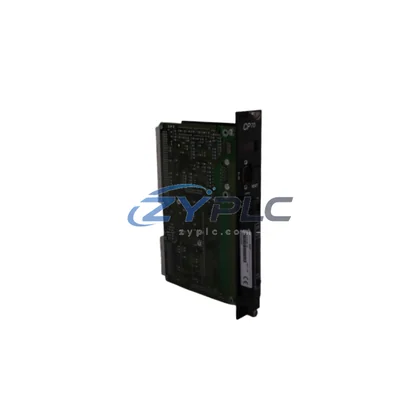
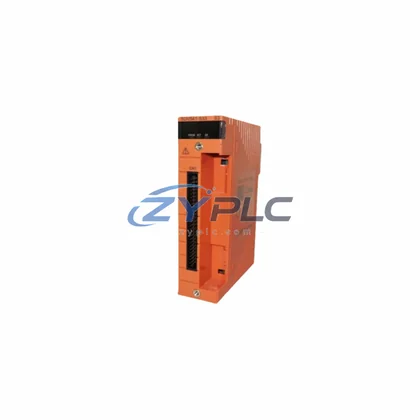
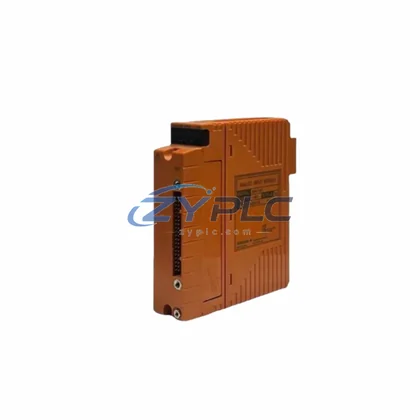
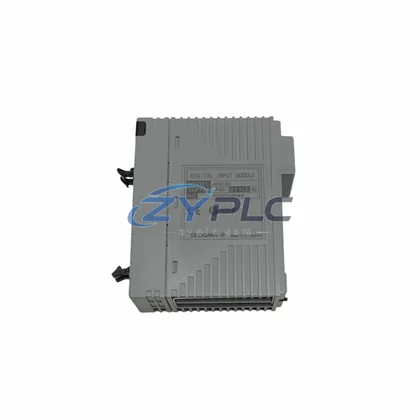
The Yokogawa NFAI143-H50 is a high-density analog input module engineered for seamless integration within the STARDOM FCN/FCJ distributed control system architecture. Designed to operate as a precision signal acquisition layer within multi-tier industrial automation environments, this module plays a critical role in bridging field instrumentation with the supervisory control and data acquisition layer. Its deployment is not limited to standalone signal conditioning — it functions as a structural component within a coordinated control hierarchy that spans from field sensors through to enterprise-level data management systems.
In modern process automation, the reliability of analog signal acquisition directly determines the quality of control decisions made at the CPU level. The NFAI143-H50 addresses this requirement by providing stable, high-resolution input channels that feed real-time process values into the FCN autonomous controller. This ensures that the control logic executed by the FCN CPU module operates on accurate, low-latency data — a prerequisite for tight loop control in applications such as flow regulation, pressure management, temperature profiling, and level monitoring across continuous process industries.
The module’s architecture is optimized for system integration within the STARDOM platform. Rather than functioning as an isolated I/O component, the NFAI143-H50 is designed to participate in a fully coordinated signal chain. Field transmitters delivering 4–20 mA or 1–5 V signals connect directly to the module’s input terminals, where signal conditioning, isolation, and analog-to-digital conversion are performed before the digitized values are passed to the FCN backplane bus. This tight coupling between the I/O layer and the control layer eliminates the latency and signal degradation risks associated with external signal converters or intermediate gateways.
From a system architecture perspective, the NFAI143-H50 contributes to both horizontal and vertical scalability of the STARDOM platform. Horizontally, multiple analog input modules can be populated across the FCN node’s I/O slots to expand channel capacity without requiring additional controller hardware. Vertically, the module’s data feeds into the FCN’s Ethernet-based communication infrastructure, enabling seamless data exchange with SCADA systems, historian servers, and OPC-UA clients operating at the supervisory layer. This architecture supports the layered automation model required in industries such as oil and gas, water treatment, power generation, and chemical processing.
Long-term maintainability is a core design consideration for the NFAI143-H50. The module supports hot-swap capability within the FCN chassis, allowing field engineers to replace or inspect individual I/O modules without interrupting the control system’s operation. This feature is particularly valuable in continuous process environments where planned shutdowns are costly and unplanned downtime is unacceptable. Combined with ZYPLC’s warranty terms confirmed during quotation coverage, end users benefit from both hardware reliability assurance and supply chain continuity for critical spare parts management.
Product Specification Table
| Parameter |
Specification |
| System Role |
Analog Input Module — I/O Layer, STARDOM FCN/FCJ Architecture |
| Compatible Platform |
Yokogawa STARDOM FCN / FCJ Autonomous Controller |
| Input Channel Count |
16 Channels (H50 configuration) |
| Input Signal Types |
4–20 mA, 1–5 V DC (field transmitter compatible) |
| Signal Isolation |
Channel-to-channel and channel-to-bus isolation |
| A/D Resolution |
16-bit analog-to-digital conversion |
| Communication Interface |
FCN internal backplane bus (proprietary high-speed) |
| Power Supply |
Supplied via FCN base unit / power module |
| Operating Temperature |
0°C to +55°C (standard industrial environment) |
| Mounting |
FCN I/O slot — DIN rail chassis installation |
| Ingress Protection |
IP20 (panel-mounted enclosure recommended) |
| Country of Origin |
Japan |
| Warranty |
warranty terms confirmed during quotation (ZYPLC verified supply) |
| system integration |
Full STARDOM FCN/FCJ platform system integration supported |
System Compatibility Notes
The NFAI143-H50 achieves its full performance potential when deployed as part of a coordinated STARDOM system architecture rather than as a standalone component. In a typical FCN-based control node, the module occupies one or more I/O slots within the FCN base unit alongside complementary modules that together form a complete signal processing and control execution environment.
At the control layer, the FCN CPU module (such as the FCN-100 or FCN-500 series processor) serves as the central execution engine, running IEC 61131-3 compliant control logic that processes the analog values delivered by the NFAI143-H50. The CPU module communicates with all installed I/O modules via the FCN backplane bus, ensuring deterministic scan cycle performance even under high I/O channel loads. For applications requiring output actuation, the NFAI143-H50 works in tandem with analog output modules such as the NFAO141 or NFAO143 series, which translate control decisions back into 4–20 mA signals for valve positioners, variable frequency drives, and other final control elements.
At the power layer, the FCN power supply module provides regulated DC power to all installed I/O modules including the NFAI143-H50. In redundant system configurations, dual power supply modules can be installed to eliminate single points of failure at the power distribution level — a common requirement in safety-critical applications within the petrochemical and power generation sectors. The NFAI143-H50’s low power consumption profile makes it compatible with both standard and redundant power configurations without requiring additional power budget calculations in most standard FCN chassis deployments.
At the network and communication layer, the FCN controller’s built-in Ethernet ports support Modbus TCP, OPC-DA, and OPC-UA protocols, enabling the analog data acquired by the NFAI143-H50 to be transmitted upstream to SCADA platforms, DCS integration gateways, or Yokogawa’s FAST/TOOLS supervisory software. For installations requiring field-level communication, the FCN platform also supports FOUNDATION Fieldbus and HART pass-through capabilities through dedicated communication modules, allowing the NFAI143-H50 to coexist with intelligent field devices in hybrid wiring architectures.
At the human-machine interface layer, operator workstations running Yokogawa’s FAST/TOOLS or third-party SCADA software display the real-time process values sourced from the NFAI143-H50 channels. Alarm management, trend logging, and historical data archiving are all driven by the continuous analog data stream that originates at this module’s input terminals. For local panel display, FCJ-compatible HMI terminals can be integrated into the same control network, providing operators with direct access to process values without requiring a full SCADA infrastructure.
At the field wiring and termination layer, the NFAI143-H50 connects to field instruments via terminal modules or marshalling panels. Proper cable shielding, grounding practices, and terminal block selection are essential to maintaining signal integrity across long cable runs in electrically noisy industrial environments. ZYPLC recommends pairing the NFAI143-H50 with appropriate surge protection devices and shielded twisted-pair cabling to ensure long-term measurement accuracy in high-interference installations such as motor control centers and high-voltage switchgear rooms.
Industrial Application Notes
The Yokogawa NFAI143-H50 is deployed across a wide range of process industries where reliable analog signal acquisition is fundamental to safe and efficient operations. In oil and gas upstream and midstream facilities, the module monitors wellhead pressure transmitters, flow meters, and temperature sensors across geographically distributed production sites, with data aggregated at central control rooms via the FCN’s Ethernet communication infrastructure. The module’s channel isolation and high-resolution conversion ensure that small signal variations — indicative of early equipment degradation or process upsets — are captured accurately before they escalate into operational incidents.
In water and wastewater treatment plants, the NFAI143-H50 acquires signals from level transmitters, turbidity sensors, pH analyzers, and dissolved oxygen probes distributed across treatment basins and pumping stations. The FCN controller processes these inputs to execute automated dosing sequences, pump speed adjustments, and alarm generation — all dependent on the accuracy and reliability of the analog data provided by this module. The module’s compatibility with the FCN’s redundant communication architecture ensures that treatment process data remains available to operators even during partial network failures.
In power generation and electrical substation automation, the NFAI143-H50 monitors generator output parameters, transformer temperatures, and auxiliary system pressures. Its integration within the STARDOM FCN platform allows power plant operators to implement coordinated control strategies that span multiple generation units, with analog data from each unit’s I/O layer feeding into a unified supervisory control framework. The module’s warranty terms confirmed during quotation and ZYPLC’s verified spare parts inventory support the long maintenance cycles typical of power generation assets.
In pharmaceutical and food processing facilities, the NFAI143-H50 supports GMP-compliant process monitoring by providing traceable, high-accuracy analog measurements for temperature, pressure, and flow parameters in critical process steps. The module’s deterministic data delivery to the FCN CPU ensures that batch control sequences execute with the timing precision required by regulatory validation frameworks such as FDA 21 CFR Part 11 and EU GMP Annex 11.
Product Compatibility FAQ
Q1: Is the NFAI143-H50 compatible with both FCN and FCJ controller platforms, and can it be mixed with digital I/O modules in the same chassis?
A1: Yes, the NFAI143-H50 is designed for use within the STARDOM FCN and FCJ autonomous controller families. It can be installed in any available I/O slot within the FCN base unit alongside digital input modules (such as the NFDI141 series), digital output modules, and other analog I/O modules. The FCN backplane bus manages communication with all installed modules transparently, and the FCN CPU’s I/O configuration tool handles mixed module type assignments without requiring hardware jumper changes. Always verify slot compatibility against the specific FCN base unit model’s I/O slot specifications before finalizing the system BOM.
Q2: What are the recommended engineering practices for maintaining signal accuracy when deploying the NFAI143-H50 in high-EMI industrial environments such as motor control centers or variable frequency drive installations?
A2: In high-EMI environments, signal integrity for the NFAI143-H50 depends on proper cable routing, shielding, and grounding practices. Use shielded twisted-pair cables for all 4–20 mA signal wiring, with shields grounded at a single point (typically at the marshalling panel or control cabinet entry point) to prevent ground loop interference. Maintain physical separation between analog signal cables and power cables, particularly those associated with VFDs and motor starters. Install surge protection devices at the field terminal entry points of the control cabinet. The FCN chassis itself should be bonded to the facility’s instrument earth bus using a low-impedance connection. These practices, combined with the NFAI143-H50’s built-in channel isolation, ensure measurement accuracy within specification across the module’s full operating temperature range.
Q3: What does ZYPLC’s warranty terms confirmed during quotation cover for the NFAI143-H50, and how does ZYPLC support long-term spare parts availability for installed STARDOM systems?
A3: ZYPLC’s warranty terms confirmed during quotation for the NFAI143-H50 covers hardware defects in materials and workmanship under normal operating conditions. In the event of a warranty claim, ZYPLC provides replacement unit dispatch or repair service coordination to minimize system downtime. Beyond the warranty period, ZYPLC maintains verified inventory of STARDOM FCN/FCJ platform components — including CPU modules, power supplies, analog and digital I/O modules, and communication modules — to support the long operational lifecycles typical of process industry control systems. Customers managing installed STARDOM systems can contact ZYPLC to establish long-term supply agreements that ensure critical spare parts availability aligned with their plant maintenance schedules.