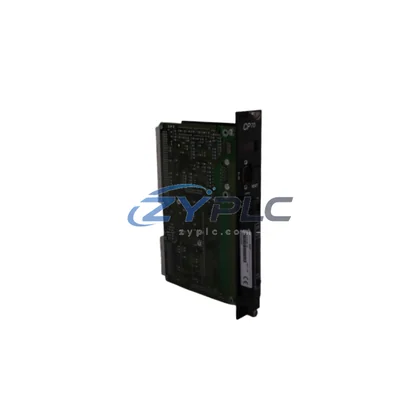
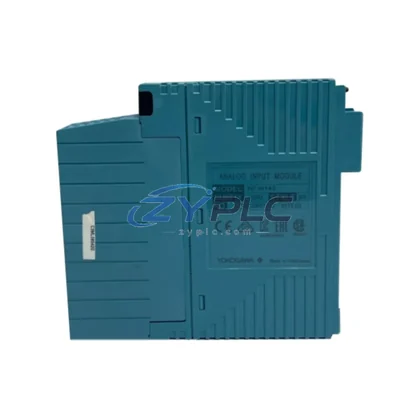
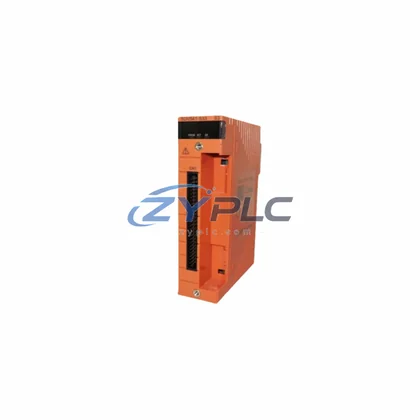
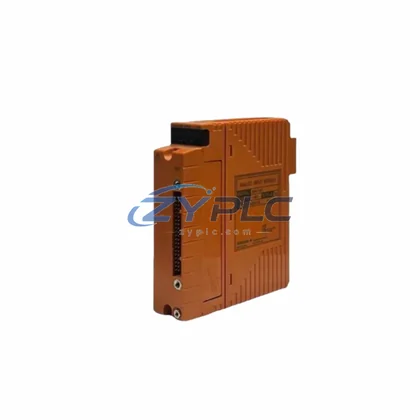
Yokogawa NFDV161-P51/S2 Digital Output Module: Compatibility and Replacement Notes
In modern safety instrumented systems and distributed control environments, every module must be evaluated not as a standalone component but as a functional node within a layered automation architecture. The Yokogawa NFDV161-P51/S2 is a digital output module engineered for the ProSafe-RS Safety Instrumented System platform, designed to deliver deterministic signal execution at the field interface layer while maintaining full coherence with the control, communication, and power layers above it. Its role in the system is not simply to switch outputs — it is to serve as the final execution point of a safety logic chain that begins at the engineering workstation and terminates at the field actuator.
The NFDV161-P51/S2 operates within the ProSafe-RS rack architecture, where it interfaces directly with the safety CPU module such as the NFCP100-S21, which handles SIL 2/3 logic execution and communicates safety-rated commands downstream to the I/O layer. The output module receives these commands through the internal backplane bus, converting logic-level instructions into 24 VDC digital output signals capable of driving solenoid valves, motor starters, relay coils, and other field actuators. This signal path is tightly controlled, with each channel independently monitored for open-circuit and short-circuit faults, ensuring that any deviation from expected electrical behavior is immediately reported back to the safety controller for diagnostic action.
Within the rack, the NFDV161-P51/S2 is supported by the NFBU200-S00 base unit, which provides the mechanical mounting interface and backplane connectivity for all I/O modules in the ProSafe-RS chassis. The base unit ensures that module insertion and removal can be performed without interrupting adjacent modules, a critical feature in live process environments where partial maintenance windows are the norm. Power distribution to the output module is managed through the system power supply architecture, where redundant power supply modules maintain continuous voltage regulation across the rack, protecting the output channels from transient disturbances that could cause spurious actuations in safety-critical loops.
On the input side of the same control architecture, the NFAI135-S00 analog input module and NFDI441-S00 digital input module collect process signals from field transmitters and discrete sensors, feeding real-time data to the NFCP100-S21 CPU for safety logic evaluation. The NFDV161-P51/S2 then acts on the results of that evaluation, closing the control loop between field sensing and field actuation. This tight integration between input modules, the safety CPU, and output modules like the NFDV161-P51/S2 is what defines the ProSafe-RS platform’s ability to achieve and maintain SIL 2 and SIL 3 certification across the entire safety function — not just at individual component level, but at the system level as required by IEC 61508 and IEC 61511.
For applications requiring expanded output capacity, the NFDV241-P51 provides an alternative 24-channel digital output configuration within the same ProSafe-RS family, allowing engineers to scale the output layer without changing the CPU or communication architecture. Both modules share the same diagnostic philosophy and backplane protocol, ensuring that system-level fault detection and response times remain consistent regardless of which output module variant is deployed. This architectural consistency is a key advantage in large-scale safety systems where multiple racks and cabinets must be maintained by the same engineering team over a multi-decade operational lifecycle.
Communication between the ProSafe-RS safety controller and the plant-wide CENTUM VP distributed control system is handled through the NFCM100-S00 communication module and NFPB100-S00 ProSafe Bus interface, enabling integrated safety and process control within a unified operator environment. This integration allows the NFDV161-P51/S2’s output status — including channel diagnostics, forced states, and bypass conditions — to be visible at the CENTUM VP operator station, supporting informed decision-making during abnormal situations without requiring separate safety system HMI infrastructure. The AAR181-S00 relay output module may also be deployed in adjacent racks where voltage isolation or dry-contact output is required, complementing the NFDV161-P51/S2 in mixed-output cabinet designs.
Product Specification Table
| Parameter |
Specification |
| System Role |
Digital Output Module — Safety I/O Layer (ProSafe-RS) |
| Model / SKU |
NFDV161-P51/S2 |
| Brand / Platform |
Yokogawa / ProSafe-RS SIS |
| Output Channels |
16 channels, digital (discrete) output |
| Output Voltage |
24 VDC nominal |
| Output Type |
Transistor (sourcing), individually fused per channel |
| Safety Integrity Level |
SIL 2 / SIL 3 capable (IEC 61508 / IEC 61511) |
| Diagnostic Coverage |
Open-circuit, short-circuit, and internal fault detection per channel |
| Communication Interface |
ProSafe-RS internal backplane bus |
| Compatible CPU |
NFCP100-S21 and ProSafe-RS safety controller family |
| Mounting |
NFBU200-S00 base unit / ProSafe-RS rack chassis |
| Operating Temperature |
0°C to 60°C (standard industrial environment) |
| Ingress Protection |
IP20 (panel-mount installation) |
| Country of Origin |
Japan |
| Warranty |
warranty terms confirmed during quotation — covered by ZYPLC supply guarantee |
System Compatibility Notes
A complete ProSafe-RS safety system deployment integrating the NFDV161-P51/S2 typically includes the following coordinated components across the control, I/O, power, and communication layers:
The NFCP100-S21 safety CPU executes the SIL-rated logic and issues output commands to the NFDV161-P51/S2 via the backplane. The NFBU200-S00 base unit provides the physical rack interface and hot-swap capability for all I/O modules. The NFAI135-S00 analog input module and NFDI441-S00 digital input module supply process and discrete field data to the CPU for real-time safety evaluation. The NFDV241-P51 extended digital output module scales output capacity in larger cabinet configurations. The NFPB100-S00 ProSafe Bus module and NFCM100-S00 communication module bridge the safety controller to the CENTUM VP DCS environment. The NFAI143-S00 analog input module handles high-density analog signal acquisition in process-intensive applications. The AAR181-S00 relay output module provides isolated dry-contact outputs where voltage separation is required. Together, these modules form a coherent, diagnostically transparent safety architecture in which the NFDV161-P51/S2 serves as the final, field-facing execution element.
Industrial Application Notes
The NFDV161-P51/S2 is deployed across a wide range of process industries where safety instrumented functions require reliable, certified digital output execution. In oil and gas processing and petrochemical plants, the module drives emergency shutdown valves and blowdown actuators within SIL 2 and SIL 3 safety loops, where spurious trip avoidance and diagnostic transparency are equally critical. In power generation facilities — including thermal, nuclear, and combined-cycle plants — it controls turbine trip solenoids and auxiliary protection relays, operating within architectures where the ProSafe-RS system is integrated with plant-wide CENTUM VP supervisory control.
In water and wastewater treatment infrastructure, the module manages pump motor starters and valve actuators within automated dosing and flow control systems, where the 16-channel output density allows a single module to serve multiple independent safety functions within one rack slot. In mining and metallurgical operations, it controls conveyor interlocks, crusher protection systems, and ventilation safety shutoffs, where the module’s robust diagnostic coverage reduces unplanned downtime by enabling predictive maintenance before channel degradation reaches a fault threshold. In pharmaceutical and fine chemical manufacturing, the NFDV161-P51/S2 supports batch reactor safety systems, where precise output timing and channel-level fault isolation are essential for process integrity and regulatory compliance.
Product Compatibility FAQ
Q1: Is the NFDV161-P51/S2 compatible with both ProSafe-RS and CENTUM VP integrated architectures?
The NFDV161-P51/S2 is a ProSafe-RS I/O module and operates within the ProSafe-RS safety controller rack. It does not mount directly in CENTUM VP FCS racks. However, when the ProSafe-RS system is integrated with CENTUM VP via the NFCM100-S00 or NFPB100-S00 communication modules, the output module’s channel status, diagnostic data, and bypass states are accessible from the CENTUM VP operator station, enabling unified process and safety monitoring without duplicating HMI infrastructure.
Q2: Can the NFDV161-P51/S2 be replaced during live system operation, and what is the recommended maintenance procedure?
The NFDV161-P51/S2 is designed for installation in the NFBU200-S00 base unit, which supports module replacement without requiring full rack power-down, subject to the safety system’s maintenance bypass and inhibit procedures. Before any module replacement, the affected safety function must be placed in bypass mode through the ProSafe-RS engineering environment, the replacement module must be verified for firmware compatibility with the installed CPU version, and post-replacement proof testing must be completed in accordance with the site’s safety management system. ZYPLC supplies replacement modules with a warranty terms confirmed during quotation, and our technical team can advise on compatible firmware revisions prior to dispatch.
Q3: What does the warranty terms confirmed during quotation cover, and how does ZYPLC support long-term architectural continuity for ProSafe-RS systems?
The warranty terms confirmed during quotation provided by ZYPLC covers manufacturing defects and functional failures under normal operating conditions for the NFDV161-P51/S2 from the date of shipment. ZYPLC supports RFQ sourcing for ProSafe-RS I/O modules, CPU units, base units, and communication modules to support both immediate replacement needs and long-term spare parts planning for installed safety systems. For customers managing aging ProSafe-RS architectures where OEM supply lead times are extended, ZYPLC provides sourcing continuity across the full module range, ensuring that safety system integrity is maintained without forced architecture changes driven by component unavailability.