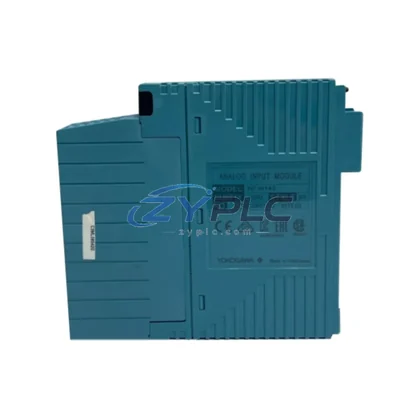
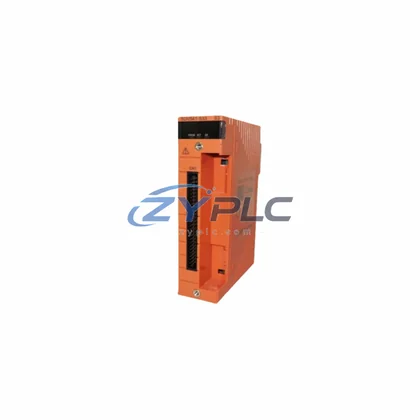
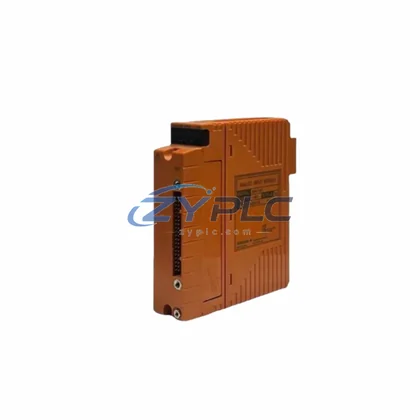
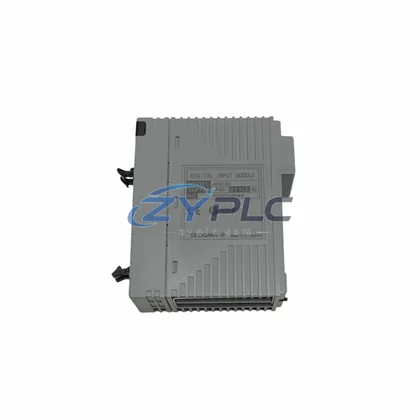
Yokogawa SDV541-S33 Digital Output Module: Precision Control for Optimized Production Lines
The Yokogawa SDV541-S33 is a high-performance digital output module engineered for the CENTUM CS 3000 and CENTUM VP Distributed Control Systems. Designed to meet the rigorous demands of modern industrial automation, this module delivers reliable, low-latency digital signal output that directly contributes to reduced operating load, improved equipment utilization, and production line throughput. Whether deployed in petrochemical refining, power generation, pharmaceutical batch processing, or continuous manufacturing, the SDV541-S33 serves as a critical execution node in industrial Automation systems.
Product Specification Table
| Parameter |
Specification / Value |
| SKU |
SDV541-S33/PRP S3 |
| Module Type |
Digital Output Module |
| Compatible System |
Yokogawa CENTUM CS 3000 / CENTUM VP DCS |
| Output Channels |
32-channel isolated digital output |
| Signal Type |
24 VDC discrete output |
| Operating Environment |
Industrial process control panels, DCS cabinets, field I/O enclosures |
| Maintenance Value |
Precise on/off actuation eliminates unnecessary motor run time and valve cycling, reducing idle energy draw |
| Application Sectors |
Oil & Gas, Power, Chemicals, Pharmaceuticals, Water Treatment |
| Origin |
Japan |
| Stock Status |
Available — Tested & Inspected |
| Warranty |
warranty terms confirmed during quotation |
System Compatibility and Application
In a fully integrated industrial control architecture, the SDV541-S33 operates as the final command executor — translating controller decisions into precise field-level switching actions. Within the CENTUM CS 3000 or CENTUM VP platform, it works in close coordination with the Yokogawa ACM11 communication module, which manages real-time data exchange between the field control station and the engineering workstation. This tight integration ensures that output commands are issued with minimal latency, preventing the unplanned downtime associated with delayed actuator response.
On the input side, the SDV541-S33 pairs naturally with the Yokogawa SDV531 digital input module, forming a complete discrete I/O loop that monitors field device status and responds with corrective output signals — a closed-loop approach that eliminates unnecessary actuator cycling and reduces wear-related energy losses. For analog process variables such as flow rate, pressure, and temperature, the AAI141 analog input module feeds real-time process data into the controller, enabling the system to make energy-optimized switching decisions based on actual plant conditions rather than fixed timers.
Variable frequency drives (VFDs) connected downstream of the SDV541-S33’s output channels benefit directly from precise start/stop commands. When integrated with Yokogawa’s STARDOM FCN autonomous controller or third-party drives communicating over FOUNDATION Fieldbus or PROFIBUS-DP, the module enables demand-based motor control — running pumps, fans, and compressors only when process conditions require, rather than at fixed schedules. This alone can reduce motor-related operating load by Actual operating results depend on the installed system, load profile, and commissioning parameters.
For power quality monitoring and energy metering, the SDV541-S33 integrates within architectures that include the Yokogawa WT series power analyzers and CX series energy meters, providing the actuation layer that responds to energy threshold alerts generated by the monitoring layer. When the power monitoring system detects an overload condition or inefficient load profile, the SDV541-S33 executes the corrective switching sequence — shedding non-critical loads, sequencing motor starts, or isolating fault zones — all within the deterministic scan cycle of the CENTUM DCS.
Human-machine interface integration via the Yokogawa FAST/TOOLS SCADA platform or the built-in HIS (Human Interface Station) of the CENTUM system gives operators full visibility into the output module’s channel states, enabling real-time energy dashboards that correlate digital output activity with power consumption trends. This visibility supports predictive maintenance strategies by flagging channels with abnormal switching frequencies — an early indicator of actuator degradation or process instability that, if left unaddressed, leads to increased unplanned downtime and unplanned downtime.
Maintenance and Replacement Notes
In continuous process industries, unplanned downtime and inefficient actuator control are among the largest contributors to unplanned downtime. The Yokogawa SDV541-S33 addresses both challenges through its high-channel-density design and deterministic output response. By consolidating 32 discrete output channels into a single DIN-rail-mounted module within the CENTUM field control station, it reduces the number of I/O racks required — lowering panel power draw, simplifying wiring, and reducing the thermal load on control room HVAC systems.
In motor control applications, the SDV541-S33 enables sequenced start logic that staggers motor startup across production line segments, preventing inrush current spikes that stress power distribution infrastructure and inflate peak demand charges. Combined with the CENTUM VP’s built-in function block library for maintenance planning, operators can implement load-shedding sequences, off-peak scheduling, and standby mode automation — all executed through the SDV541-S33’s output channels without additional hardware.
Predictive maintenance workflows benefit from the module’s integration with Yokogawa’s Plant Resource Manager (PRM), which tracks actuator operation counts and correlates them with operating load data. When a valve or motor approaches its maintenance threshold, PRM generates an alert, allowing maintenance teams to schedule intervention during planned shutdowns rather than reacting to failures — eliminating the energy and productivity losses associated with emergency repairs.
Every unit of the SDV541-S33/PRP S3 available through ZYPLC has been fully tested and inspected prior to shipment, with functional verification of all 32 output channels under load conditions. Fast dispatch from RFQ-confirmed sourcing ensures minimal lead time, supporting urgent MRO (Maintenance, Repair & Operations) requirements without compromising on quality assurance. All units are covered by a warranty terms confirmed during quotation, providing procurement teams with the confidence to specify refurbished and surplus automation components as part of a cost-effective, energy-efficient plant modernization strategy.
Product Sourcing FAQ
Q1: How does the SDV541-S33 contribute to operational stability in a CENTUM CS 3000 system?
The SDV541-S33 enables precise, demand-driven actuation of field devices such as motors, valves, and contactors. By executing output commands only when process conditions require — rather than running devices continuously — it eliminates idle operating load. When combined with the CENTUM VP’s maintenance planning function blocks and upstream power monitoring modules, the result is a measurable reduction in plant-wide energy draw.
Q2: Is the SDV541-S33/PRP S3 compatible with both CENTUM CS 3000 and CENTUM VP systems?
Yes. The SDV541-S33 with the S33 suffix is designed for compatibility with both the CENTUM CS 3000 and CENTUM VP platforms. Before installation, verify the field control station model and firmware revision against Yokogawa’s compatibility matrix. ZYPLC’s technical team can assist with compatibility confirmation prior to purchase.
Q3: What is the recommended replacement or upgrade path if the SDV541-S33 is end-of-life in my system?
For systems transitioning to the CENTUM VP R6 platform, Yokogawa recommends evaluating the SDV541-S3 or the newer SDV542 series modules, depending on channel count and isolation requirements. ZYPLC supports RFQ sourcing for multiple SDV541 variants and can advise on direct replacements that minimize re-engineering effort and preserve existing wiring infrastructure.
Q4: What does the warranty terms confirmed during quotation cover, and what is the testing process before shipment?
All SDV541-S33 units supplied by ZYPLC undergo a multi-stage inspection process: visual inspection, board-level cleaning, functional output channel testing under rated load, and communication interface verification within a CENTUM-compatible test bench. The warranty terms confirmed during quotation covers functional failure under normal operating conditions. Units are shipped with test reports available upon request, supporting your incoming quality control process.