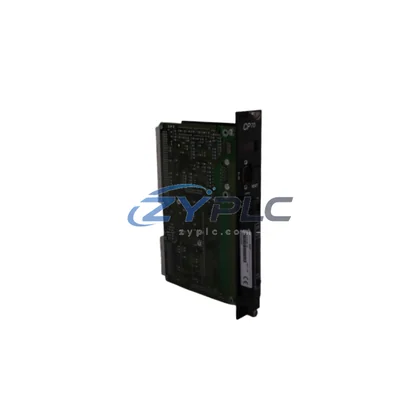
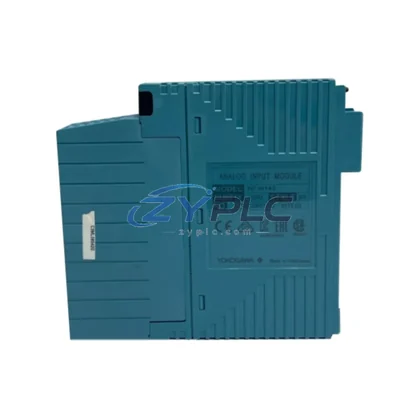
The Yokogawa SAI143-H63/PRP is a high-performance analog input module engineered for the CENTUM VP and CENTUM CS 3000 distributed control systems. Designed to meet the rigorous demands of process industries — including oil and gas, petrochemical, power generation, and pharmaceutical manufacturing — this module delivers accurate, low-latency signal acquisition that forms the backbone of industrial automation systems. By enabling precise real-time measurement of process variables such as temperature, pressure, flow, and level, the SAI143-H63/PRP empowers plant engineers to make data-driven decisions that directly reduce unplanned downtime, minimize unplanned downtime, and optimize overall equipment effectiveness (OEE).
In modern industrial facilities, operating load is one of the largest controllable cost centers. Inefficient signal processing, delayed feedback loops, and poor sensor integration can result in motors running at unnecessary loads, heat exchangers operating outside optimal ranges, and compressors cycling more frequently than required. The SAI143-H63/PRP addresses these challenges at the source — by providing clean, high-resolution analog input data that feeds directly into the CENTUM control strategy, enabling tighter PID loops, smarter setpoint management, and more responsive energy control across the entire production line.
Product Specification Table
| Parameter |
Specification / Value |
| SKU / Part Number |
SAI143-H63/PRP S4 |
| Module Type |
Analog Input Module (16-channel) |
| Compatible System |
Yokogawa CENTUM VP / CENTUM CS 3000 |
| Signal Input Range |
4–20 mA DC / 1–5 V DC (configurable per channel) |
| Resolution |
16-bit A/D conversion |
| Isolation |
Channel-to-channel and channel-to-bus isolation |
| Power Consumption |
Low-power design, optimized for continuous 24/7 operation |
| Operating Environment |
0°C to 60°C, 5–95% RH non-condensing |
| Application Sectors |
Oil & Gas, Petrochemical, Power, Pharmaceutical, Pulp & Paper |
| Maintenance Value |
Enables tighter control loops, reducing motor and actuator unplanned downtime by supporting real-time process feedback |
| Redundancy Support |
Yes (PRP — Parallel Redundancy Protocol) |
| Warranty |
warranty terms confirmed during quotation — Tested & Verified Before Shipment |
System Compatibility and Application
The SAI143-H63/PRP does not operate in isolation — it is a critical node within a broader maintenance-focused automation ecosystem. In a typical CENTUM VP installation, this analog input module works in concert with the Yokogawa AAI143-H00 analog input module to expand channel capacity across multi-loop process units, ensuring that every sensor signal is captured with the fidelity required for energy-efficient control. The field control station (FCS), such as the Yokogawa CP451-10 field control unit, processes the incoming analog data and executes the control algorithms that govern actuator response and energy dispatch.
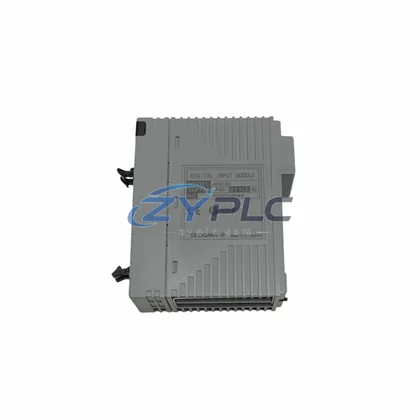
On the output side, the Yokogawa AAO145-S00 analog output module translates control decisions into precise 4–20 mA signals that drive control valves, variable frequency drives (VFDs), and other final control elements. When integrated with a Yokogawa ADV151-P00 digital input module, the system gains the ability to monitor discrete equipment states — motor run/stop status, valve open/close feedback, and interlock conditions — creating a closed-loop maintenance planning architecture that responds dynamically to real production conditions.
For drive-level maintenance planning, the SAI143-H63/PRP pairs effectively with Yokogawa’s power monitoring instruments, including the Yokogawa WT series power analyzers, which provide granular visibility into motor and drive operating load. This data, fed back through the analog input channels, enables the CENTUM control strategy to implement demand-response logic — automatically reducing motor speed references during low-load periods and ramping up only when process demand requires it. The result is a measurable reduction in kWh consumption per unit of production output.
Communication integrity is maintained through the Yokogawa ESB bus and Vnet/IP network infrastructure, which connects the SAI143-H63/PRP to the human-machine interface layer. Operators monitoring the system through a Yokogawa HIS (Human Interface Station) running CENTUM VP’s integrated SCADA environment can visualize real-time energy trends, set operating load alarms, and initiate corrective actions without leaving the control room. The Yokogawa PW482 power supply module ensures stable, conditioned power delivery to the I/O subsystem, preventing voltage fluctuations from introducing measurement errors that could destabilize control loops.
For facilities implementing predictive maintenance strategies, the SAI143-H63/PRP’s high-resolution signal acquisition supports integration with the Yokogawa Plant Resource Manager (PRM), enabling condition monitoring of field instruments and early detection of sensor drift, valve stiction, and pump cavitation — all of which contribute to hidden energy losses when left unaddressed. The Yokogawa ALR121 alarm management module further enhances operational awareness by prioritizing energy-critical alarms and suppressing nuisance alerts that distract operators from genuine efficiency opportunities.
Maintenance and Replacement Notes
Consider a continuous process plant operating a series of heat exchangers, centrifugal pumps, and compressors across multiple production trains. Without accurate, real-time analog input data, the control system must rely on conservative setpoints and wide control bands to avoid process upsets — a strategy that inherently wastes energy. The SAI143-H63/PRP changes this dynamic by delivering 16-bit resolution measurements at scan rates fast enough to support tight PID control, allowing engineers to narrow control bands, reduce setpoint offsets, and operate closer to the thermodynamic optimum.
In pump and compressor applications, even a 2–3% reduction in average motor load — achieved through tighter flow control enabled by accurate analog input — can translate to tens of thousands of dollars in annual operational stability at a mid-sized facility. The PRP (Parallel Redundancy Protocol) capability of the SAI143-H63/PRP ensures that this control precision is maintained without interruption, even in the event of a network path failure, eliminating the energy spikes and process disturbances that typically accompany control system switchovers.
Line throughput optimization is another key benefit. By providing the CENTUM control strategy with accurate, low-noise process measurements, the SAI143-H63/PRP enables production schedulers to push line rates closer to design capacity without sacrificing product quality or triggering safety shutdowns. Fewer unplanned stops mean less energy consumed in restart sequences — a significant factor in energy-intensive industries where startup transients can represent a disproportionate share of total operating load.
Maintenance cost reduction is equally significant. Modules sourced from ZYPLC undergo full functional testing prior to shipment, including analog channel verification, isolation resistance testing, and communication bus validation. Each SAI143-H63/PRP is backed by a warranty terms confirmed during quotation, providing procurement teams with the confidence to plan maintenance budgets accurately and avoid the hidden costs of premature module failure. export shipping options available from verified inventory means that replacement modules reach the plant floor quickly, minimizing the duration of any degraded-mode operation that could compromise energy efficiency.
Product Sourcing FAQ
Q1: How does the SAI143-H63/PRP contribute to measurable operational stability in a CENTUM DCS environment?
The module’s 16-bit analog input resolution enables tighter PID control loops, which reduces the control error band around energy-critical setpoints such as flow rates, temperatures, and pressures. Tighter control means actuators and drives operate closer to their optimal efficiency points, directly reducing operating load per unit of output. When combined with Yokogawa’s power monitoring instruments, the energy impact of control improvements can be quantified in real time.
Q2: Is the SAI143-H63/PRP compatible with both CENTUM VP and CENTUM CS 3000 systems?
Yes. The SAI143-H63/PRP is designed for use within the Yokogawa CENTUM platform and is compatible with CENTUM VP and CENTUM CS 3000 field control stations. Before installation, we recommend verifying the specific FCS model and firmware revision with your system documentation or contacting ZYPLC’s technical team for compatibility confirmation.
Q3: What is the recommended replacement or upgrade path if the SAI143-H63/PRP is end-of-life in my system?
For systems where the SAI143-H63/PRP is being replaced on a like-for-like basis, ZYPLC maintains verified inventory of this module to support direct swap-out without requiring control strategy modifications. For facilities considering a broader I/O modernization, the Yokogawa AAI143 series and the CENTUM VP R6 I/O subsystem offer enhanced diagnostics and condition monitoring capabilities that can further improve efficiency outcomes.
Q4: What testing and quality assurance processes does ZYPLC apply before shipping the SAI143-H63/PRP?
Every SAI143-H63/PRP unit shipped by ZYPLC undergoes a multi-stage inspection process that includes visual inspection, analog channel functional testing across the full 4–20 mA range, isolation resistance verification, and communication bus validation. Units that pass all test criteria are issued a test report and covered by ZYPLC’s warranty terms confirmed during quotation. Expedited shipping options are available to minimize plant downtime for urgent replacement requirements.