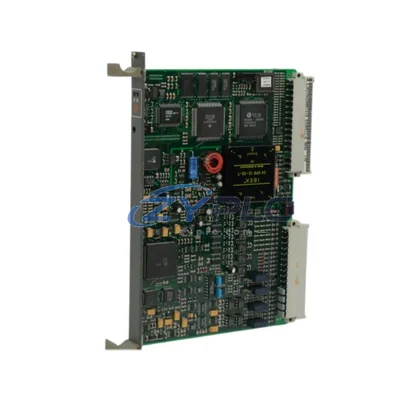
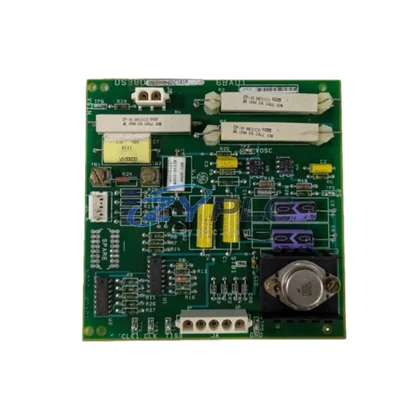
Yokogawa NFBU200-S01 Base Module CENTUM VP: Control System and system integration
The Yokogawa NFBU200-S01 is a field-proven base module engineered for deployment within the CENTUM VP distributed control system (DCS) platform. As a structural backbone of the I/O subsystem, the NFBU200-S01 provides the physical and electrical foundation upon which field signal modules, communication interfaces, and power distribution components are mounted and interconnected. Its role within the control architecture is not peripheral — it is central to the mechanical integrity, signal routing, and bus communication that define the reliability of the entire control node.
In modern industrial automation, the base module occupies a critical position between the field wiring layer and the controller processing layer. The NFBU200-S01 accepts plug-in I/O modules such as the AAI143-S00 analog input module and the AAI543-S00 analog output module, providing standardized slot interfaces that ensure consistent signal conditioning and bus arbitration across the node. When paired with the CP451-10 field control station processor, the base module enables deterministic scan cycles and high-availability process control across continuous and batch manufacturing environments.
System architects designing redundant control topologies rely on the NFBU200-S01 to maintain structural symmetry between primary and standby control paths. The module’s backplane bus is compatible with the ANB10D-S41 node interface unit, which manages communication between the field control station and the Vnet/IP control network. This integration ensures that process data flows without latency from field instruments through the I/O layer, across the control bus, and into the supervisory SCADA or historian layer — a signal path that must remain uninterrupted in power generation, petrochemical refining, and water treatment applications.
Power distribution within the control cabinet is equally dependent on the base module’s architecture. The PW482-10 power supply unit feeds regulated DC voltage to the backplane, and the NFBU200-S01 distributes this power uniformly across all installed I/O modules. In redundant power configurations, dual PW482-10 units operate in parallel, with automatic switchover managed at the backplane level. This design eliminates single points of failure in the power layer and supports continuous operation during scheduled maintenance windows.
For digital signal applications, the ADV551-P00 digital input module and the ADV151-P00 digital output module mount directly into the NFBU200-S01 base, sharing the same backplane bus as analog modules. This mixed-signal architecture allows a single base module to serve as the integration point for both process measurement and discrete control functions — reducing cabinet footprint, simplifying cable management, and lowering the total installed cost of the control node.
The AIP827 intrinsic safety barrier module extends the NFBU200-S01’s applicability into hazardous area installations, where field instruments in Zone 1 or Zone 0 environments must be galvanically isolated from the control system. By incorporating intrinsic safety barriers within the same base module framework, engineers can maintain a unified wiring and documentation standard across safe-area and hazardous-area I/O without introducing separate marshalling panels or junction boxes.
From a maintenance and lifecycle perspective, the NFBU200-S01 supports hot-swap replacement of individual I/O modules without interrupting the control loop. This capability is essential in continuous process industries — including oil refining, chemical production, and pulp and paper manufacturing — where planned shutdowns are infrequent and unplanned downtime carries significant financial and safety consequences. Maintenance technicians can replace a faulty AAI143-S00 or ADV551-P00 module while the base module remains energized and the remaining I/O channels continue to operate normally.
The AFV30D fieldbus communication module can also be installed within the NFBU200-S01 framework, extending the control node’s connectivity to FOUNDATION Fieldbus H1 segments. This allows the same base module infrastructure to support both traditional 4–20 mA field wiring and digital fieldbus instruments, providing a migration path for plants transitioning from conventional to intelligent field device architectures.
All NFBU200-S01 units supplied by ZYPLC are tested prior to shipment, verified for backplane bus integrity, slot connector condition, and mechanical alignment. Each unit is covered by a warranty terms confirmed during quotation, with technical support available throughout the warranty period. Inventory is maintained RFQ Available to support urgent project timelines and emergency replacement requirements across global industrial facilities.
Product Specification Table
| Parameter |
Specification |
| Model |
NFBU200-S01 |
| Brand |
Yokogawa |
| Series |
CENTUM VP |
| System Role |
I/O Base Module / Backplane Unit |
| Product Type |
DCS Module |
| Compatible Processor |
CP451-10 Field Control Station |
| Compatible I/O Modules |
AAI143-S00, AAI543-S00, ADV551-P00, ADV151-P00, AFV30D, AIP827 |
| Node Interface |
ANB10D-S41 (Vnet/IP) |
| Power Supply Compatibility |
PW482-10 (24 VDC Backplane Bus) |
| Communication Protocol |
Vnet/IP, FOUNDATION Fieldbus H1 (via AFV30D) |
| Installation Environment |
Control Cabinet, DIN Rail or Panel Mount |
| Origin |
Japan |
| Hot-Swap Support |
Yes (I/O module level) |
| Redundancy Support |
Yes (dual power, dual control path) |
| Warranty |
warranty terms confirmed during quotation |
System Compatibility Notes
The NFBU200-S01 achieves its full value when integrated within a coordinated CENTUM VP control node. A typical node configuration begins with the CP451-10 field control station processor, which executes the control strategy and manages I/O scanning. The processor communicates with the plant-wide control network via the ANB10D-S41 node interface unit, which connects to the Vnet/IP Ethernet-based control bus. Field signals enter the system through the AAI143-S00 analog input module for 4–20 mA measurements and the ADV551-P00 digital input module for discrete status signals. Process outputs are delivered through the AAI543-S00 analog output module and the ADV151-P00 digital output module, which drive control valves, variable frequency drives, and relay actuators in the field.
Power to the entire node is supplied by the PW482-10 power supply unit, with a second PW482-10 operating in standby for redundant configurations. The AIP827 intrinsic safety barrier module extends the node’s reach into hazardous process areas, while the AFV30D fieldbus communication module connects FOUNDATION Fieldbus H1 instruments — including smart transmitters and positioners — directly to the CENTUM VP control strategy. All of these components mount into or connect through the NFBU200-S01 base module, making it the structural and electrical hub of the control node.
Industrial Application Notes
The NFBU200-S01 is deployed across a wide range of process industries where the CENTUM VP platform is the standard control architecture. In petroleum refining, the base module supports continuous distillation column control, where analog input modules monitor temperature and pressure profiles and analog output modules regulate control valve positions in real time. In power generation, the module integrates with turbine control and boiler management systems, where deterministic scan cycles and redundant I/O paths are mandatory for grid stability compliance.
Water and wastewater treatment facilities use the NFBU200-S01 in pump station automation and chemical dosing control, where the mixed analog and digital I/O capability of a single base module reduces the number of control cabinets required per installation. In mining and mineral processing, the module supports conveyor drive control, crusher monitoring, and flotation cell management — applications characterized by high vibration, wide temperature ranges, and demanding maintenance schedules. Pharmaceutical and food processing plants rely on the NFBU200-S01 for batch recipe execution and clean-in-place (CIP) sequence control, where regulatory compliance requires complete audit trails of all I/O transactions and control actions.
Across all of these applications, the NFBU200-S01’s compatibility with the broader CENTUM VP ecosystem — including the CP451-10 processor, the Vnet/IP network, and the full range of Yokogawa I/O modules — ensures that system expansions, control strategy modifications, and hardware replacements can be executed without architectural redesign.
Product Compatibility FAQ
Q1: Is the NFBU200-S01 compatible with both the CENTUM VP R5 and R6 software revisions?
The NFBU200-S01 base module is designed for the CENTUM VP hardware platform and is compatible with multiple software revisions of the CENTUM VP engineering environment. For specific revision compatibility, engineers should verify the hardware revision of the base module against the Yokogawa CENTUM VP hardware compatibility matrix. ZYPLC technical support can assist with revision verification prior to order placement.
Q2: Can the NFBU200-S01 be used in a redundant I/O architecture, and what additional components are required?
Yes. Redundant I/O configurations using the NFBU200-S01 typically require paired base modules, redundant I/O modules (where supported by the module type), and dual PW482-10 power supply units. The CP451-10 processor manages redundancy switchover logic, and the ANB10D-S41 node interface unit maintains communication continuity during switchover events. ZYPLC can supply complete redundant node kits based on project specifications.
Q3: What does the warranty terms confirmed during quotation cover, and what is the process for warranty claims?
The warranty terms confirmed during quotation covers manufacturing defects, backplane bus failures, and connector integrity issues identified under normal operating conditions. Warranty claims are initiated by contacting ZYPLC at plc.sales@zyplc.com or +86 19859288691. Upon receipt of the defective unit, ZYPLC will provide a replacement or repair within the agreed service timeline. The warranty period begins from the date of shipment.