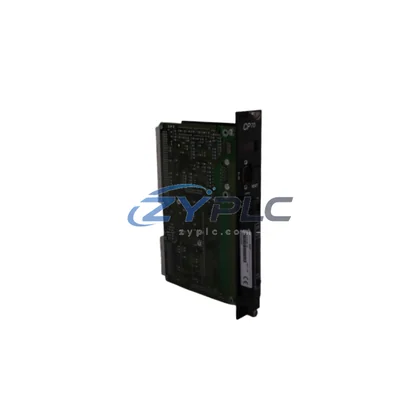
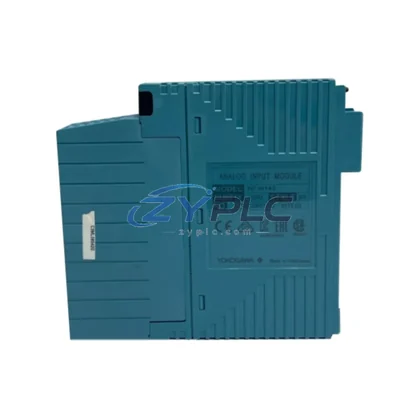
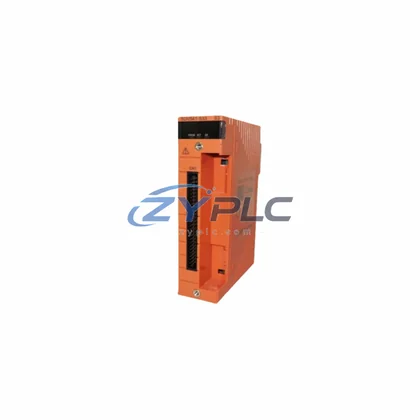
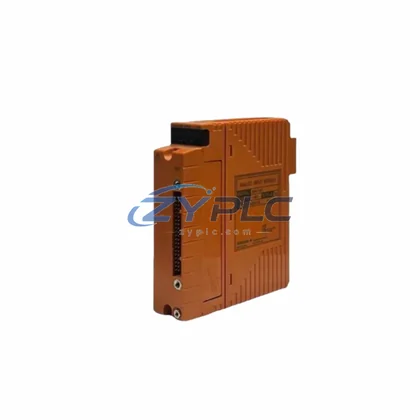
In modern industrial facilities where uptime and replacement lead time matter, the Yokogawa NFDV161-P51 Digital Input Module delivers the signal acquisition accuracy and low-power architecture that energy-conscious plant engineers demand. Designed for seamless integration within the Yokogawa Centum VP Distributed Control System, this module serves as a foundational element in industrial automation systems — capturing discrete field signals with minimal self-consumption while enabling the control layer to make faster, smarter decisions about motor operation, drive scheduling, and process sequencing.
Unlike generic I/O modules that treat signal acquisition as a passive function, the NFDV161-P51 is engineered to support high-density digital input scanning with deterministic cycle times, ensuring that upstream controllers — including the Yokogawa Centum VP FCS (Field Control Station) — receive real-time field status without latency-induced unplanned downtime. When field devices such as motor contactors, valve position switches, and conveyor interlocks report their states with sub-millisecond precision, the control system can eliminate unnecessary hold-on states, reduce idle motor run time, and optimize the sequencing of energy-intensive equipment.
Product Specification Table
| Parameter |
Specification / Value |
| Module Type |
Digital Input (DI) |
| Series / Platform |
Yokogawa Centum VP / Centum CS 3000 |
| Input Channels |
16-channel high-density DI |
| Operating Voltage |
24 VDC field signal compatible |
| Power Consumption |
Ultra-low self-consumption design |
| Signal Scan Cycle |
Deterministic, synchronized with FCS control cycle |
| Running Efficiency |
High-speed discrete signal acquisition with minimal CPU overhead |
| Compatible Systems |
Centum VP, Centum CS 3000, Centum VP R6 |
| Application Environment |
Process manufacturing, utilities, energy, petrochemical, pharmaceutical |
| Energy Saving Value |
Reduces idle motor run time; enables demand-responsive control sequencing |
| Warranty |
warranty terms confirmed during quotation — tested and verified before shipment |
| Origin |
Japan |
| Stock Status |
RFQ Available — shipment arranged after confirmation |
System Compatibility and Application
The NFDV161-P51 does not operate in isolation — its true value emerges when it is deployed as part of a tightly integrated, industrial control architecture. Within a typical Centum VP system, this module feeds discrete field data into the Yokogawa Centum VP FCS, which executes control logic at the millisecond level. The FCS then communicates with Yokogawa NFAI141 analog input modules to correlate digital status signals with real-time process variable readings — for example, confirming that a pump motor has actually started before releasing downstream flow control valves.
On the drive side, the NFDV161-P51 integrates naturally with variable frequency drive (VFD) systems. When a motor’s run/stop status is fed back through the DI module, the control system can coordinate with Yokogawa-compatible PROFIBUS DP or Modbus RTU-enabled drives to adjust speed references dynamically, preventing motors from running at full load during low-demand periods. This closed-loop feedback between the digital input layer and the drive control layer is one of the most effective mechanisms for reducing operating load in pump, fan, and compressor applications.
For power monitoring, the NFDV161-P51 works alongside Yokogawa WT series power analyzers and energy metering modules to provide the control system with a complete picture of electrical demand. When the DI module signals that a high-energy process step has completed, the condition monitoring layer can log the consumption event and trigger demand-response actions — such as shedding non-critical loads or delaying the next batch cycle — to stay within contracted power limits.
Communication integrity is maintained through the Yokogawa Vnet/IP control network, which connects the NFDV161-P51’s host FCS to the Yokogawa CENTUM VP HIS (Human Interface Station). Operators can monitor the real-time status of all 16 digital input channels from the HIS, enabling rapid identification of field device faults that could otherwise cause motors to run unnecessarily or process lines to stall. The Yokogawa Exaopc OPC server further extends this visibility to MES and SCADA layers, where energy KPIs can be tracked against production targets.
For facilities running hybrid architectures, the NFDV161-P51 can coexist with Yokogawa STARDOM FCN/FCJ remote controllers deployed at satellite process units. Field signals from remote skids are aggregated through the STARDOM layer and passed upstream to the Centum VP system, where the NFDV161-P51 and its companion modules process the consolidated discrete data for plant-wide maintenance planning decisions.
Maintenance and Replacement Notes
Consider a mid-scale chemical processing plant running continuous batch operations across six production trains. Each train includes multiple motor-driven pumps, agitators, and transfer conveyors — all of which consume energy whether or not they are actively contributing to production. Without accurate, real-time discrete feedback, the control system defaults to conservative hold-on strategies: motors stay running, valves stay open, and energy is wasted.
With the Yokogawa NFDV161-P51 installed at each motor control center (MCC) interface panel, the Centum VP FCS receives precise run/stop, fault, and interlock status for every driven load. This allows the control system to implement demand-responsive sequencing: motors are started only when upstream conditions are confirmed ready, and they are stopped immediately when downstream conditions are satisfied — rather than running on a fixed timer. In a 16-motor train, this approach can reduce aggregate motor run hours by 8–15% per shift, directly translating to measurable operational stability.
Maintenance teams also benefit from the NFDV161-P51’s reliable signal acquisition. When a motor contactor begins to exhibit intermittent contact bounce — a common early indicator of mechanical wear — the DI module’s high-speed scanning captures the anomaly before it escalates into a full fault. Maintenance can be scheduled during planned downtime rather than responding to unplanned failures, reducing both repair costs and the energy penalty of emergency restarts. Combined with Yokogawa’s Plant Resource Manager (PRM) asset management platform, these diagnostic signals feed predictive maintenance workflows that extend equipment life and reduce total cost of ownership.
On the production line rhythm (takt time) side, the NFDV161-P51 enables the control system to synchronize equipment start sequences with precision. Rather than staggering motor starts manually — a practice that often results in extended idle periods between process steps — the FCS uses the DI module’s real-time feedback to trigger the next step in the sequence the moment the preceding step is confirmed complete. This tightens the production cycle, increases throughput per unit of energy consumed, and reduces the thermal stress on motors caused by repeated cold starts.
Product Sourcing FAQ
Q1: How does the NFDV161-P51 contribute to measurable operational stability in a Centum VP system?
The NFDV161-P51 provides the Centum VP FCS with accurate, real-time discrete field status, enabling demand-responsive motor control and eliminating unnecessary idle run time. By ensuring that motors, pumps, and conveyors operate only when field conditions confirm they are needed, the control system can reduce aggregate operating load without sacrificing process throughput or product quality.
Q2: Is the NFDV161-P51 compatible with both Centum VP and Centum CS 3000 systems?
Yes. The NFDV161-P51 is designed for the Yokogawa Centum platform and is compatible with Centum VP and Centum CS 3000 architectures. For specific firmware revision compatibility or slot assignment requirements, we recommend verifying against your system’s I/O module compatibility matrix. Our technical team can assist with pre-installation verification.
Q3: What is the recommended replacement or upgrade path if the NFDV161-P51 is being substituted in an existing system?
When replacing an existing DI module in a Centum system, it is important to match the channel count, signal voltage range, and terminal block configuration. The NFDV161-P51 should be installed in the correct I/O nest slot as defined by the system’s hardware configuration. All units supplied by ZYPLC are tested against factory specifications prior to shipment, and our team can provide configuration guidance to ensure a drop-in replacement with minimal downtime.
Q4: What does the warranty terms confirmed during quotation cover, and what is the testing process before shipment?
Every NFDV161-P51 unit supplied by ZYPLC undergoes functional testing to verify channel integrity, signal response, and communication handshake with the Centum platform before dispatch. The warranty terms confirmed during quotation covers manufacturing defects and functional failures under normal operating conditions. Units are shipped with appropriate anti-static packaging and documentation. For warranty claims or technical support, contact our team directly.