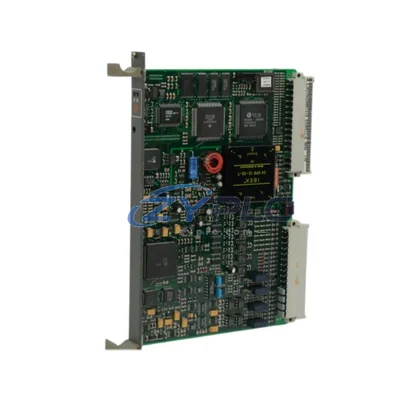
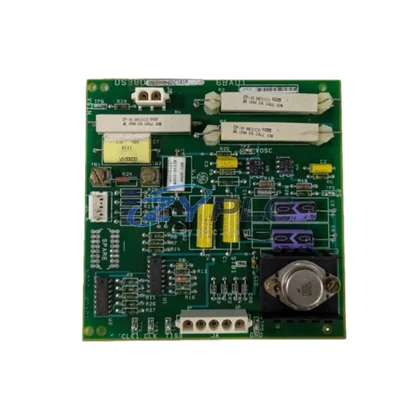
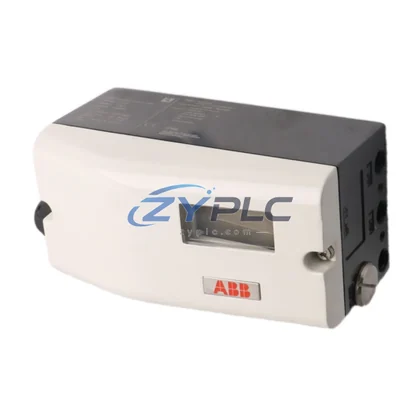
Yokogawa NFSB100-S50 Fieldbus Module for CENTUM VP
The Yokogawa NFSB100-S50 is a Foundation Fieldbus H1 communication module engineered for seamless system integration within the CENTUM VP distributed control system architecture. Designed to bridge the field device layer with the control domain, this module enables deterministic, high-integrity signal transmission across multi-segment process networks. In modern industrial automation environments — spanning petrochemical refining, power generation, water treatment, and advanced manufacturing — the NFSB100-S50 serves as a critical communication backbone that connects intelligent field instruments to the supervisory control layer with minimal latency and maximum reliability.
Unlike standalone communication adapters, the NFSB100-S50 is purpose-built for system-level deployment. Its value is realized not in isolation, but as part of a coherent control architecture where every layer — from the field instrument to the operator console — operates in coordinated synchrony. When integrated with Yokogawa’s CENTUM VP platform, this module contributes directly to system consistency, loop redundancy, and long-term maintainability, making it an indispensable component for engineers designing or expanding process automation infrastructure.
Product Specification Table
| Parameter |
Specification |
| Model / SKU |
NFSB100-S50 |
| Brand |
Yokogawa |
| Series / Platform |
CENTUM VP Distributed Control System |
| System Role |
Foundation Fieldbus H1 Communication Module |
| Communication Protocol |
Foundation Fieldbus H1 (FF-H1), 31. 25 kbps |
| Segment Support |
Up to 2 FF-H1 segments per module (inferred) |
| Device Capacity per Segment |
Up to 16 field devices (standard FF topology) |
| Electrical Interface |
IEC 61158-2 compliant, polarity-insensitive wiring |
| Power Supply |
Supplied via CENTUM VP system bus / backplane |
| Installation Environment |
Control room / marshalling cabinet; DIN rail or rack-mount via CENTUM VP node unit |
| Operating Temperature |
0°C to +60°C (standard industrial range) |
| Redundancy Support |
Compatible with CENTUM VP redundant controller configurations |
| Country of Origin |
Japan |
| Warranty |
warranty terms confirmed during quotation — covers manufacturing defects and functional failures under normal operating conditions |
System Compatibility Notes
The NFSB100-S50 achieves its full potential when deployed as part of a layered CENTUM VP control architecture. At the controller level, the CENTUM VP FCU (Field Control Unit) — such as the AFV10D or AFV30D — serves as the primary processing node, executing control strategies and managing I/O communication. The NFSB100-S50 connects directly to the FCU via the V net or ESB bus, enabling the controller to communicate with Foundation Fieldbus-enabled field instruments without protocol conversion overhead.
On the power layer, the Yokogawa PW482 or equivalent system power supply modules provide stable DC bus voltage to the node units and communication cards, ensuring that fieldbus segment integrity is maintained even during load fluctuations. Proper power conditioning at this layer is essential for preventing signal degradation across long fieldbus cable runs in large-scale plant environments.
For I/O expansion, the NFSB100-S50 works alongside conventional I/O modules such as the AAI141-S (analog input) and AAI543-H (analog output) cards installed in the same or adjacent node units. This hybrid architecture — combining traditional 4–20 mA I/O with Foundation Fieldbus segments — allows engineers to migrate legacy instrumentation incrementally while maintaining a unified control namespace within CENTUM VP.
At the network layer, the Yokogawa ESB Bus Coupler and ER Bus infrastructure interconnect multiple node units across the plant, enabling the NFSB100-S50’s fieldbus data to be aggregated at the domain station level. For plants requiring high-availability communication, the Vnet/IP redundant Ethernet backbone ensures that controller-to-supervisory communication remains uninterrupted even during single-link failures.
Human-machine interface integration is achieved through the CENTUM VP HIS (Human Interface Station), which presents real-time process data from fieldbus-connected instruments — including HART-capable transmitters and positioners — in a unified operator display. The NFSB100-S50 ensures that device diagnostics, process variables, and alarm states are transmitted with the determinism required for safe and efficient plant operation.
For safety-instrumented systems operating in parallel, the Yokogawa ProSafe-RS safety controller can be integrated into the same control cabinet, sharing the marshalling infrastructure while maintaining SIL-rated independence. Terminal modules such as the TB820V and relay output cards further complete the cabinet-level wiring architecture, providing clean signal termination for both conventional and fieldbus instrument loops.
Industrial Application Notes
Petrochemical and Refining: In continuous process plants, the NFSB100-S50 enables multi-drop fieldbus topologies connecting pressure transmitters, flow meters, and control valves across reactor and distillation unit loops. The module’s support for function block execution at the field device level reduces controller scan load and improves loop response time for critical regulatory control applications.
Power Generation: Boiler management and turbine control systems benefit from the NFSB100-S50’s deterministic communication, which ensures that temperature, pressure, and flow signals from distributed measurement points are delivered to the FCU within defined cycle times. Integration with the CENTUM VP alarm management system enables operators to respond rapidly to process deviations.
Water and Wastewater Treatment: Municipal and industrial water treatment facilities use Foundation Fieldbus to connect intelligent actuators and analyzers across geographically distributed pump stations and treatment stages. The NFSB100-S50 supports this topology by providing reliable segment communication over extended cable distances, reducing the need for intermediate signal repeaters.
Mining and Metallurgy: In ore processing and smelting operations, the NFSB100-S50 facilitates communication between the CENTUM VP control system and fieldbus-enabled instruments monitoring conveyor loads, furnace temperatures, and slurry flow rates. Its robust electrical interface tolerates the electromagnetic interference common in heavy industrial environments.
Packaging and Discrete Manufacturing: For hybrid automation architectures combining batch process control with discrete machine sequences, the NFSB100-S50 provides the fieldbus communication layer that connects process instruments to the CENTUM VP domain, while motion and discrete I/O are handled by dedicated modules within the same node unit framework.
Product Compatibility FAQ
Q1: Is the NFSB100-S50 compatible with both redundant and non-redundant CENTUM VP controller configurations?
Yes. The NFSB100-S50 is designed for deployment within the CENTUM VP node unit framework, which supports both simplex and redundant FCU configurations. In redundant architectures, the active FCU manages fieldbus segment communication while the standby FCU maintains a synchronized state, enabling bumpless switchover in the event of a controller fault. Engineers should verify node unit slot assignments and ESB bus loading when planning redundant deployments to ensure adequate bandwidth allocation for all installed communication modules.
Q2: Can the NFSB100-S50 coexist with conventional 4–20 mA I/O modules in the same CENTUM VP node unit?
Yes. CENTUM VP node units support mixed-module configurations, allowing the NFSB100-S50 to occupy designated communication card slots while analog and digital I/O modules — such as the AAI141-S or ADV151-P — occupy adjacent I/O slots. This flexibility enables phased migration from conventional instrumentation to Foundation Fieldbus without requiring separate hardware infrastructure. System engineers should consult the CENTUM VP hardware configuration guide to confirm slot compatibility and power budget constraints for the specific node unit model in use.
Q3: What does the warranty terms confirmed during quotation cover, and what support is available for installation and commissioning?
The warranty terms confirmed during quotation covers manufacturing defects and functional failures arising under normal operating conditions from the date of shipment. It does not cover damage resulting from improper installation, electrical overstress, or unauthorized modification. For installation and commissioning support, our technical team provides pre-sales architecture consultation, wiring diagram review, and post-delivery configuration guidance. Replacement units are dispatched promptly upon warranty claim verification to minimize plant downtime. Contact our sales team at plc. sales@zyplc. com or +86 19859288691 for warranty registration and technical assistance.