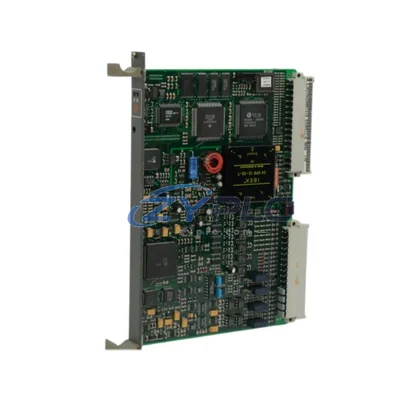
Yokogawa RB301-S2 DCS Module for Centum Automation
The Yokogawa RB301-S2 is a high-performance Remote I/O (RIO) bus master interface module designed for integration within the Centum VP Distributed Control System architecture. As industrial facilities face mounting pressure to reduce operating load, improve equipment utilization, and minimize downtime, the RB301-S2 plays a pivotal role in enabling real-time data acquisition, deterministic control execution, and efficient communication between field devices and the central control platform. By ensuring low-latency, high-integrity signal transmission across the RIO bus, this module directly supports the maintenance-focused automation strategies that modern production lines demand.
In energy-intensive industries such as petrochemicals, power generation, pulp and paper, and pharmaceutical manufacturing, every millisecond of control delay and every watt of unnecessary power draw translates into measurable cost. The RB301-S2 addresses this by maintaining synchronous, high-speed communication between the Centum VP controller — such as the CP451-10 or CP461-50 — and distributed field I/O nodes. This tight integration eliminates polling inefficiencies and reduces the CPU overhead that would otherwise inflate power consumption at the controller level.
Product Specification Table
| Parameter |
Specification / Value |
| Product SKU |
RB301-S2 |
| Brand |
Yokogawa |
| Series |
Centum VP / CENTUM CS 3000 |
| Module Type |
RIO Bus Master Interface Module |
| Product Category |
DCS Interface Module |
| Communication Protocol |
Yokogawa RIO Bus (proprietary high-speed fieldbus) |
| Compatible Systems |
Centum VP, CENTUM CS 3000, Centum XL (legacy) |
| Application Environment |
Process automation, maintenance planning, continuous manufacturing |
| Operating Temperature |
0°C to 60°C (standard industrial range) |
| Power Consumption |
Low-power design; optimized for 24 VDC field bus operation |
| Running Efficiency |
Deterministic scan cycle; supports high-density I/O with minimal latency |
| Maintenance Value |
Reduces redundant polling cycles; enables demand-based control response |
| Origin |
Japan |
| Warranty |
Warranty and support terms confirmed before quote |
System Compatibility and Application
The RB301-S2 functions as the communication backbone between the Centum VP engineering station and remote I/O cabinets distributed across the plant floor. When paired with analog input modules such as the AAI143-H00, the system gains the ability to continuously monitor process variables — including motor current draw, valve position feedback, and temperature differentials — that are essential inputs for maintenance planning algorithms running at the controller level.
On the output side, analog output modules like the AAO145-S00 translate controller decisions into precise 4–20 mA signals that drive control valves, variable frequency drives (VFDs), and other actuators. When the Centum VP controller determines that a pump or compressor is operating outside its optimal efficiency curve, it issues corrective commands through the RB301-S2 to the relevant output channel — reducing downtime in real time without operator intervention.
For digital I/O coordination, the ADV151-P00 digital input module and ADO155-P00 digital output module work in tandem with the RB301-S2 to manage motor start/stop sequences, interlock logic, and equipment status monitoring. Proper sequencing of motor starts — staggered to avoid simultaneous inrush current peaks — is a well-established maintenance planning technique, and the RB301-S2 enables the deterministic timing required to implement it reliably.
Power quality and energy metering at the field level are handled by dedicated instruments that feed data back through the RIO bus. Yokogawa’s AIP827 power monitor, for example, can be integrated into the same control network to provide real-time kWh consumption data for individual production units. This data, aggregated at the Centum VP historian via the Exaquantum maintenance planning platform, enables plant engineers to identify energy hotspots, benchmark equipment performance, and validate the impact of efficiency improvements over time.
The RB301-S2 also supports redundant bus configurations, ensuring that a single cable fault or module failure does not interrupt the condition monitoring and control loop. In combination with the PW482 power supply module, which provides stable, regulated DC power to the I/O bus, the overall system achieves the high availability required for continuous process operations where unexpected shutdowns carry significant energy and production penalties.
For facilities implementing advanced process control (APC) or model predictive control (MPC) strategies, the RB301-S2’s low-latency data path is critical. The ProSafe-RS safety instrumented system can also interface with the Centum VP architecture, sharing process data through the Vnet/IP communication network to enable coordinated safety and maintenance planning responses — for instance, automatically reducing drive speeds during a partial load condition flagged by the safety layer.
Maintenance and Replacement Notes
In a typical continuous chemical plant, the RB301-S2 enables the Centum VP system to monitor and control dozens of motor-driven pumps, agitators, and compressors from a centralized control room. By providing real-time feedback on equipment operating status and process variables, the module allows the control system to implement load-shedding strategies during peak demand periods — automatically reducing the setpoints of non-critical drives to stay within contracted power limits and avoid demand charge penalties.
In batch manufacturing environments, the RB301-S2 supports recipe-driven control sequences that optimize energy use at each stage of the production cycle. Rather than running heating, cooling, and agitation systems at fixed power levels throughout a batch, the Centum VP controller — informed by real-time data flowing through the RB301-S2 — can modulate each system according to the actual thermal and mechanical requirements of the current recipe step. This approach typically reduces batch operating load by 10–20% compared to fixed-setpoint operation.
Predictive maintenance is another area where the RB301-S2 delivers measurable energy benefits. By continuously streaming vibration, temperature, and current signature data from field instruments to the Centum VP historian, the module enables condition monitoring algorithms to detect early signs of bearing wear, pump cavitation, or motor insulation degradation. Addressing these issues before they cause failures prevents the unplanned downtime associated with degraded equipment operating at reduced efficiency — and eliminates the production losses and restart energy costs associated with unexpected shutdowns.
Shipping and pre-delivery testing are integral to ZYPLC’s quality assurance process. Every RB301-S2 unit undergoes functional verification prior to dispatch, including communication integrity testing on a live RIO bus segment, power consumption measurement, and I/O channel validation. Units are shipped with protective packaging appropriate for sensitive electronic modules, and all inventory is maintained in climate-controlled storage to preserve component integrity.
Product Sourcing FAQ
Q1: How does the RB301-S2 contribute to reducing plant operating load?
The RB301-S2 enables high-speed, deterministic communication between the Centum VP controller and field I/O devices, allowing the control system to respond rapidly to changes in process conditions. This responsiveness is the foundation of demand-based control strategies — such as variable speed drive modulation and load shedding — that directly reduce operating load compared to fixed-setpoint operation.
Q2: Is the RB301-S2 compatible with both Centum VP and CENTUM CS 3000 systems?
Yes. The RB301-S2 is designed for use within the Yokogawa Centum platform and is compatible with both the current Centum VP generation and the legacy CENTUM CS 3000 architecture. Customers migrating from CS 3000 to Centum VP can often reuse existing RIO bus wiring infrastructure, reducing migration costs and downtime.
Q3: What is the recommended replacement or upgrade path for aging RB301-series modules?
For facilities operating older RB301 variants, the RB301-S2 represents the current production revision with improved signal integrity and enhanced EMC performance. ZYPLC recommends a like-for-like replacement to maintain system compatibility. For larger modernization projects, our technical team can advise on migration to the latest Centum VP I/O architecture, including the FFCS-based field control station platform.
Q4: What does the warranty and support terms confirmed before quote cover, and what is the testing process before shipment?
All RB301-S2 units supplied by ZYPLC carry a warranty and support terms confirmed before quote covering manufacturing defects and functional failures under normal operating conditions. Prior to shipment, each unit is tested for RIO bus communication integrity, power rail stability, and I/O channel functionality. A test report is available upon request. Warranty claims are processed promptly, with replacement units dispatched from Availability confirmed by RFQ inventory to minimize customer downtime.