Yokogawa RB401-S2 Industrial Network Interface for Centum VP: Bridging the Smart Factory Data Link
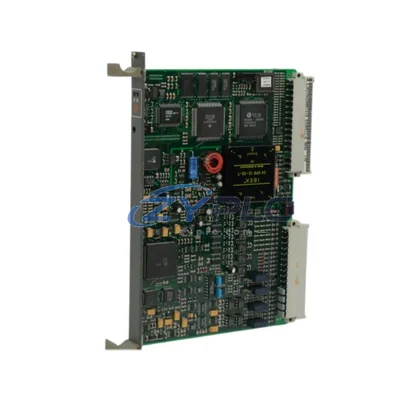
The Yokogawa RB401-S2 is a high-performance RIO (Remote I/O) Bus Communication Gateway engineered for seamless integration within the Centum VP Distributed Control System architecture. Designed to serve as the critical data bridge between field instrumentation and the upper-level control network, the RB401-S2 enables reliable, low-latency communication across complex industrial environments — from petrochemical refineries and power generation facilities to pharmaceutical manufacturing lines and advanced smart factory deployments.
In modern industrial automation, the ability to move process data accurately and in real time from field devices to supervisory systems is not optional — it is the foundation of operational efficiency. The RB401-S2 fulfills this role by providing a robust RIO bus interface that connects remote I/O nodes to the Centum VP controller domain, ensuring that every signal — whether analog, digital, or pulse — is transmitted with the integrity and timing precision that mission-critical processes demand.
Compatibility & Integration Notes
| Specification |
Details |
| SKU / Part Number |
RB401-S2 |
| Brand |
Yokogawa |
| Product Type |
RIO Bus Communication Gateway |
| Compatible System |
Centum VP DCS |
| Communication Protocol |
Yokogawa RIO Bus (Remote I/O Bus) |
| Interface Type |
RIO Bus Interface Module |
| Transmission Capability |
High-speed, deterministic real-time data transfer |
| Network Compatibility |
Centum VP V-net/IP, RIO Bus topology |
| System Application |
DCS Remote I/O, SCADA Integration, PLC Gateway, Smart Factory Automation |
| Origin |
Japan |
| Warranty |
warranty terms confirmed during quotation |
| Availability |
RFQ Available — Global DHL/FedEx Shipping |
Connected Automation Data Flow
Understanding the RB401-S2 requires tracing the full data path it enables within a live industrial site. At the field level, process variables — temperature, pressure, flow, and level — are captured by instruments such as the Yokogawa EJA110E differential pressure transmitter or the EJX910A multivariable transmitter. These signals are wired into remote I/O nodes equipped with analog input modules like the AAI143-S00, which digitize and condition the raw signals before passing them upstream.
The RB401-S2 acts as the communication backbone at this junction. It receives the digitized process data from the remote I/O nodes and transmits it over the RIO bus to the Centum VP field control station — typically a unit such as the CP451-10 or SCP451-10 field control processor. These controllers execute the process logic, PID loops, and interlock sequences that govern plant operations. Without a reliable gateway like the RB401-S2, the data link between field I/O and the controller would be broken, rendering the entire control loop inoperable.
From the field control station, processed data travels over the V-net/IP control network — Yokogawa’s high-speed, redundant Ethernet-based backbone — to the engineering workstation and the SCADA/HMI layer. Operators monitoring the plant through Centum VP HIS (Human Interface Station) consoles receive real-time process graphics, trend data, and alarm notifications derived from the signals that the RB401-S2 helped transport. Simultaneously, the Exaquantum plant information management system (PIMS) archives historical process data for performance analysis, regulatory compliance, and predictive maintenance workflows.
In sites where legacy field devices communicate over HART or Foundation Fieldbus, the RB401-S2 works in conjunction with protocol-aware I/O modules such as the AAI841-S00 HART-enabled analog input card, allowing the Centum VP system to read device diagnostics and secondary variables alongside primary process values. This multi-variable data stream enriches the SCADA dataset and supports condition-based maintenance strategies without requiring additional field wiring.
For drive and motor control integration, variable frequency drives connected to the process — such as those in pump, compressor, or fan applications — report speed, current, and fault status back through the I/O network. The RB401-S2 ensures this drive data reaches the Centum VP controller in time for closed-loop speed regulation and maintenance planning routines. Power monitoring modules like the PW482-50S further extend the data chain by feeding electrical parameters into the same control network, giving operators a unified view of both process and utility performance.
Solving Data Isolation in Industrial Sites
One of the most persistent challenges in industrial automation is data isolation — the condition where field devices, controllers, and supervisory systems operate in silos, unable to share information efficiently. The RB401-S2 directly addresses this problem by providing a standardized, high-integrity communication path within the Centum VP architecture.
Protocol Fragmentation: Many industrial sites operate a mix of legacy and modern devices, each speaking different communication dialects. The RB401-S2, as part of the Centum VP I/O subsystem, supports integration with HART-enabled field instruments and Fieldbus devices through compatible I/O modules, consolidating diverse signal types into a single, unified data stream that the controller can process without custom middleware.
Remote Monitoring Gaps: In geographically distributed plants — offshore platforms, pipeline stations, or multi-building manufacturing campuses — remote I/O nodes must communicate reliably over extended cable runs. The RB401-S2 supports the RIO bus topology that Yokogawa has optimized for noise immunity and long-distance signal integrity, ensuring that remote process data reaches the control room without degradation or packet loss.
Production Line Transparency: Modern smart factory initiatives demand that every process variable be visible, logged, and actionable in real time. By anchoring the remote I/O communication chain, the RB401-S2 ensures that no field signal is lost in transit. Operators gain full production line transparency — from raw material intake to finished product output — through the Centum VP HIS and connected SCADA dashboards.
System Scalability: As production capacity grows, new remote I/O nodes can be added to the RIO bus network without redesigning the control architecture. The RB401-S2 supports this incremental expansion, allowing engineering teams to scale the automation system in parallel with plant growth, protecting the original capital investment while accommodating new process requirements.
Outgoing Inspection and Stock Availability: Every RB401-S2 unit supplied by ZYPLC undergoes pre-shipment functional testing to verify communication integrity, bus addressing, and module health. Units are shipped with a warranty terms confirmed during quotation and are available from RFQ-confirmed sourcing for rapid global dispatch via DHL or FedEx, minimizing plant downtime during emergency replacement scenarios.
Industrial Connectivity FAQ
Q1: What communication protocol does the Yokogawa RB401-S2 use, and is it compatible with third-party DCS systems?
The RB401-S2 uses Yokogawa’s proprietary RIO (Remote I/O) Bus protocol, which is specifically designed for the Centum VP DCS architecture. It is not natively compatible with third-party DCS platforms such as Honeywell Experion or ABB 800xA. For cross-platform integration, a protocol gateway or OPC server solution would be required at the supervisory layer.
Q2: What is the typical communication latency of the RB401-S2 in a live Centum VP system?
The RIO bus architecture employed by the RB401-S2 is designed for deterministic, low-latency data transfer, with scan cycle times typically in the range of milliseconds. Actual latency depends on the number of nodes on the bus, the I/O scan rate configured in the Centum VP engineering environment, and network load. For time-critical control loops, Yokogawa recommends configuring dedicated bus segments to minimize contention.
Q3: Can the RB401-S2 be used in a redundant configuration to ensure network stability?
Yes. The Centum VP architecture supports redundant field control stations and redundant I/O bus configurations. The RB401-S2 can be deployed in a redundant pair, where the standby module automatically takes over communication in the event of a primary module failure, ensuring continuous data flow and eliminating single points of failure in the control network.
Q4: Does the RB401-S2 supplied by ZYPLC come with a warranty, and what does pre-shipment testing cover?
Yes. All RB401-S2 units supplied by ZYPLC are covered by a warranty terms confirmed during quotation from the date of shipment. Pre-shipment testing includes power-on verification, RIO bus communication handshake testing, module self-diagnostic checks, and visual inspection for physical integrity. A test report is available upon request. Units are shipped in anti-static packaging via DHL or FedEx with full tracking.