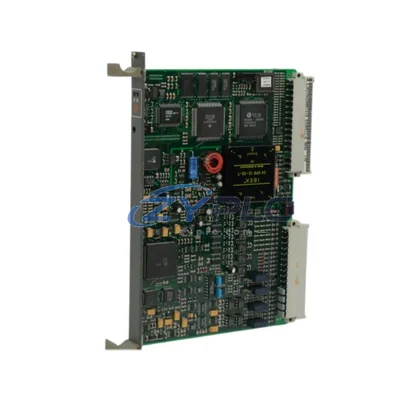
Product identification and sourcing context
Yokogawa S9344FA ESB Bus Module for Centum CS3000 is handled as a quote-based CENTUM DCS spare part for DCS maintenance, process automation, and legacy-system replacement projects. ZYPLC checks the exact model suffix, installed Yokogawa platform, required condition, quantity, and destination country before quotation.
| Brand |
Yokogawa |
| Model / SKU |
S9344FA |
| Series context |
CENTUM CS3000 |
| Part type |
Industrial Automation Spare Parts |
| RFQ basis |
Availability, condition, lead time, and export shipment options are confirmed before quote. |
Where this part is typically used
This item is requested for CENTUM VP / CS3000 process-control maintenance, field-control station support, and installed-base replacement sourcing. Yokogawa CENTUM VP, CENTUM CS3000, ProSafe, field-control unit, ESB bus node, and DCS I/O installations often require exact suffix and cabinet-context checks before a replacement can be sourced.
RFQ information for maintenance teams
- Exact part number, suffix, and Yokogawa platform or cabinet context.
- Installed system such as CENTUM VP, CENTUM CS3000, ProSafe, Vnet/IP, or ESB bus where applicable.
- Quantity, urgency, required condition, and destination country.
- Photos of module labels, terminal bases, bus-node nameplates, or existing spare packaging.
Browse related Yokogawa spare parts, review the CENTUM CS3000 series, or compare similar Industrial Automation Spare Parts records. If the exact suffix is not shown, send the model and photos so the RFQ can be checked manually.
Request quote for this model
Yokogawa S9344FA ESB Bus Module for Centum CS3000
The Yokogawa S9344FA is an ESB (Enhanced Signal Bus) Bus Repeater Slave Module engineered for seamless integration within the Centum CS3000 Distributed Control System architecture. As a critical node in the field bus communication layer, the S9344FA extends the physical reach of the ESB network, enabling reliable signal transmission between field control stations (FCS), remote I/O units, and the engineering workstation environment. Its role is not merely that of a passive repeater — it actively sustains bus integrity, maintains synchronization across distributed nodes, and ensures that the entire control loop from sensor input to actuator command remains uninterrupted under demanding industrial conditions.
In a fully layered Centum CS3000 architecture, the S9344FA occupies the network communication tier, working in close coordination with the CP451-10 or CP461-50 Field Control Station processors. These FCS units serve as the computational core of the control layer, executing PID loops, sequence logic, and batch control algorithms. The S9344FA ensures that the ESB backbone connecting these processors to distributed I/O nodes — such as the AAI143-H00 analog input module, the ADV151-P00 digital input module, and the ADA161-S00 analog output module — remains stable and latency-free across extended cable runs and electrically noisy plant environments.
The power distribution layer, typically anchored by the Yokogawa PW481 or PW482 power supply modules, feeds both the FCS and the bus communication hardware. The S9344FA is designed to operate within the standard Centum CS3000 power envelope, drawing minimal current while maintaining full bus drive capability. This low-power characteristic is particularly valuable in compact control cabinets where thermal management is a design constraint.
At the I/O layer, the S9344FA enables the connection of remote node units housing modules such as the AAI841-H analog I/O module and the ADV551-P digital output module. These remote nodes can be physically separated from the main FCS cabinet by hundreds of meters, a configuration common in large-scale process plants in petrochemical, power generation, and water treatment facilities. The S9344FA’s repeater function regenerates the ESB signal at each segment boundary, preserving signal quality and preventing data corruption that could otherwise trigger false alarms or control deviations.
From a system redundancy perspective, the S9344FA supports dual-redundant bus configurations when paired with a corresponding master module. In redundant architectures, the active and standby bus paths are continuously monitored, and switchover occurs within milliseconds in the event of a bus fault. This capability is essential for SIL-rated applications and for processes where unplanned shutdowns carry significant safety or financial consequences. The module’s compatibility with the Centum CS3000 redundancy framework means that engineering teams can implement N+1 or fully redundant topologies without requiring additional hardware platforms.
For human-machine interface integration, the S9344FA’s stable bus communication directly supports the performance of Yokogawa’s CENTUM VP HIS (Human Interface Station) and legacy CS3000 operator stations. Consistent bus throughput ensures that process graphics, trend displays, and alarm management screens refresh at the expected scan rates, giving operators accurate real-time visibility into plant conditions. Any degradation in bus performance would manifest as delayed screen updates or missed alarms — risks that the S9344FA is specifically designed to eliminate.
Installation of the S9344FA follows standard Centum CS3000 field bus wiring practices. The module mounts on the standard Yokogawa SB401 or SB411 node unit backplane, using the same rail and connector system as other Centum I/O and communication modules. This mechanical consistency simplifies cabinet layout, reduces installation time, and allows maintenance technicians to swap modules without specialized tooling. Termination resistors and bus cable shielding requirements are consistent with Yokogawa’s ESB wiring guidelines, ensuring that newly installed segments meet the same electrical specifications as factory-tested configurations.
Long-term maintenance planning is straightforward with the S9344FA. Because it shares the Centum CS3000 module form factor, spare parts management is simplified — a single shelf stock of compatible modules can serve multiple node types across the plant. ZYPLC maintains verified inventory of the S9344FA with full functional testing prior to shipment, and every unit is covered by a Warranty and support terms confirmed before quote. This warranty covers manufacturing defects and functional failures under normal operating conditions, providing procurement teams and plant engineers with the confidence to specify the S9344FA as both a primary installation component and a critical spare.
system integration is a core design principle of the S9344FA’s deployment model. Rather than treating the module as an isolated component, ZYPLC’s technical team supports customers in mapping the S9344FA’s role within their specific control architecture — identifying upstream FCS dependencies, downstream I/O node configurations, and bus segment lengths — to ensure that the module is specified, installed, and commissioned correctly for the target application.
Product Specification Table
| Parameter |
Specification |
| Model |
S9344FA |
| Manufacturer |
Yokogawa Electric Corporation |
| Series |
Centum CS3000 / Centum VP |
| Module Type |
ESB Bus Repeater Slave Module |
| System Role |
ESB network segment extension and signal regeneration |
| Compatible FCS |
CP451-10, CP461-50 Field Control Stations |
| Backplane Compatibility |
SB401, SB411 Node Unit |
| Communication Protocol |
Yokogawa ESB (Enhanced Signal Bus) |
| Power Supply |
Compatible with PW481 / PW482 power modules |
| Operating Temperature |
0°C to 60°C |
| Relative Humidity |
10% to 90% RH (non-condensing) |
| Installation Environment |
Control cabinet, DIN rail or backplane mount |
| Country of Origin |
Japan |
| Warranty |
Warranty and support terms confirmed before quote (ZYPLC) |
| system integration |
Supported — architecture mapping available on request |
System Compatibility Notes
The S9344FA achieves its full value when considered as part of a coordinated Centum CS3000 system design. A typical architecture begins with the CP451-10 Field Control Station as the processing core, supported by the PW481 redundant power supply module. The ESB backbone, extended by the S9344FA, connects to remote node units populated with AAI143-H00 analog input modules for temperature and pressure signals, ADV151-P00 digital input modules for discrete status inputs, and ADA161-S00 analog output modules for control valve positioning. Digital output functions are handled by ADV551-P modules, while the AAI841-H serves mixed analog I/O requirements in compact node configurations.
At the network layer, Yokogawa’s Vnet/IP communication infrastructure connects the FCS tier to the HIS operator stations and the EWS engineering workstation, with the ESB bus managed by the S9344FA operating as the field-level communication backbone beneath this supervisory network. This layered architecture — Vnet/IP at the supervisory level, ESB at the field level — provides clear separation of control and monitoring traffic, improving overall system determinism and simplifying network troubleshooting.
For redundancy-critical applications, the S9344FA is deployed in pairs alongside a corresponding master module, creating a dual-bus topology that mirrors the redundant FCS and power supply architecture. This approach ensures that no single point of failure in the communication layer can interrupt process control, a requirement commonly specified in power plant distributed control systems and refinery automation projects.
Industrial Application Notes
The S9344FA is deployed across a wide range of process industries where the Centum CS3000 platform is the established control standard. In petroleum refining and petrochemical plants, the module supports the ESB networks connecting FCS units to field I/O nodes monitoring reactor temperatures, column pressures, and flow rates. The module’s ability to maintain bus integrity in electrically noisy environments — common near variable frequency drives and high-voltage switchgear — makes it well suited to these demanding applications.
In thermal and combined-cycle power generation facilities, the S9344FA extends ESB segments to remote I/O nodes located in turbine halls and boiler areas, where cable runs frequently exceed the standard bus segment length. Water and wastewater treatment plants benefit from the module’s low maintenance requirements and long service life, which align with the extended replacement cycles typical of municipal infrastructure projects. In mining and metallurgical processing, the S9344FA’s robust operating temperature range supports deployment in control rooms adjacent to smelting and ore processing equipment. Packaging and food processing lines using Centum CS3000 for batch control also rely on the S9344FA to maintain communication consistency across multi-zone production architectures.
Product Compatibility FAQ
Q1: Is the S9344FA compatible with both Centum CS3000 and Centum VP systems?
The S9344FA is designed for the Centum CS3000 ESB bus architecture. Centum VP systems that maintain backward compatibility with CS3000 field bus hardware can typically accommodate the S9344FA within existing node unit configurations. Customers migrating from CS3000 to Centum VP should verify backplane and FCS compatibility with their system documentation or contact ZYPLC’s technical team for architecture-specific guidance.
Q2: Can the S9344FA be installed in a redundant bus configuration, and what additional components are required?
Yes. Redundant ESB bus configurations require the S9344FA to be paired with a corresponding ESB Bus Repeater Master module and a compatible dual-bus node unit backplane such as the SB411. The FCS must also be configured for dual-bus operation. ZYPLC can supply matched pairs of master and slave repeater modules and advise on the complete bill of materials for redundant segment design.
Q3: What does the Warranty and support terms confirmed before quote cover, and how does ZYPLC support long-term spare parts availability?
Every S9344FA supplied by ZYPLC is Warranty terms are confirmed during quotation. Prior to shipment, each unit undergoes functional testing to verify bus communication performance. ZYPLC maintains ongoing inventory of Centum CS3000 compatible modules to support both replacement sourcing after RFQ confirmation needs and long-term maintenance contracts. For plants with extended spare parts planning horizons, ZYPLC offers bulk procurement options and can provide documentation supporting asset management and lifecycle planning requirements.