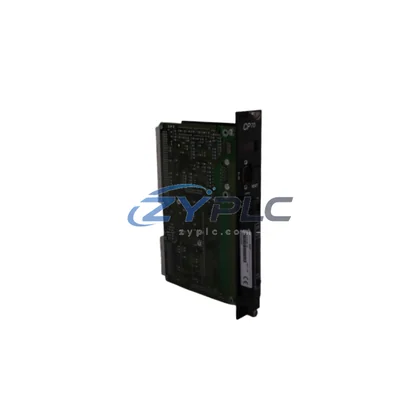
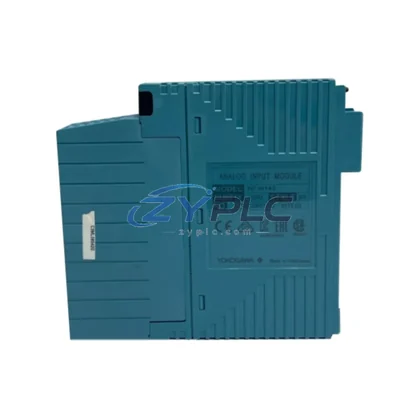
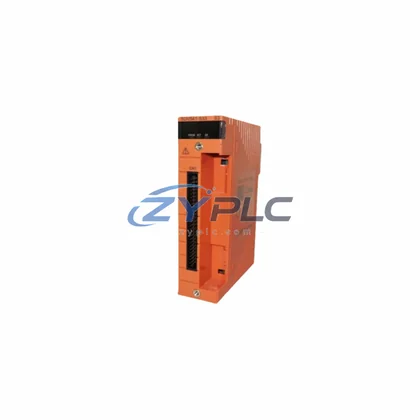
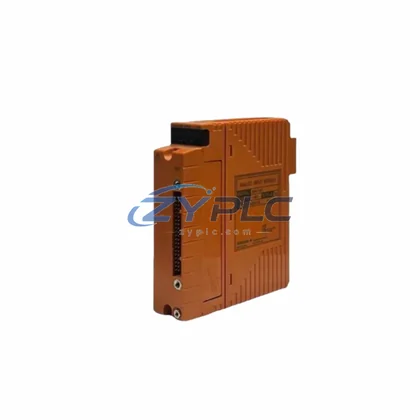
The Yokogawa SAI143-H63 S4 is a high-performance analog input module engineered for the Centum VP / Centum CS 3000 Distributed Control System (DCS) platform. Designed to meet the rigorous demands of process industries — including oil & gas, petrochemical, power generation, and advanced manufacturing — this module delivers exceptional signal acquisition accuracy, low-latency data transmission, and robust compatibility with industrial automation systems. With a warranty terms confirmed during quotation, pre-shipment functional testing, and ready inventory at ZYPLC, the SAI143-H63 S4 is a reliable choice for both new installations and system upgrades.
Product Specification Table
| Parameter |
Specification / Value |
| Model / SKU |
SAI143-H63 S4 |
| Brand |
Yokogawa |
| Series / Platform |
Centum VP / Centum CS 3000 DCS |
| Module Type |
Analog Input Module |
| Input Channels |
16-channel (multi-point analog signal acquisition) |
| Signal Type |
4–20 mA / 1–5 V DC (configurable per channel) |
| Power Consumption |
Low-power design; optimized for continuous 24/7 operation |
| Operating Efficiency |
High-resolution A/D conversion; minimizes signal loss and re-sampling overhead |
| Compatible Systems |
Centum VP R6, Centum CS 3000 R3, FAST/TOOLS SCADA |
| Application Environment |
Process plants, power stations, chemical facilities, discrete manufacturing |
| Value |
Reduces unnecessary polling cycles; supports predictive maintenance to cut unplanned downtime unplanned downtime |
| Origin |
Japan |
| Warranty |
warranty terms confirmed during quotation — all units tested before shipment |
| Stock Status |
RFQ Available — shipment arranged after confirmation |
System Compatibility and Application
In a modern industrial maintenance planning architecture, the SAI143-H63 S4 serves as the critical data acquisition front-end, feeding real-time process variables — temperature, pressure, flow rate, and current draw — into the Centum VP controller for closed-loop maintenance planning. When paired with the Yokogawa ACM12 Communication Module, field signals are transmitted over the Vnet/IP control network with minimal latency, ensuring that the Yokogawa AFV10D Field Control Station can execute energy-optimized control strategies without delay.
On the drive side, integrating the SAI143-H63 S4 analog feedback loop with a Yaskawa A1000 Series Variable Frequency Drive (VFD) allows the DCS to dynamically adjust motor speed based on actual process demand rather than fixed setpoints. This eliminates the unplanned downtime associated with constant-speed motor operation — a common source of Actual operating results depend on the installed system, load profile, and commissioning parameters. The analog input data captured by the SAI143-H63 S4 directly informs the VFD’s torque and frequency output, creating a tightly coupled, energy-responsive drive control loop.
For power quality monitoring, the SAI143-H63 S4 can be configured to receive 4–20 mA signals from a Yokogawa WT500 Power Analyzer or compatible power transducer, enabling the Centum DCS to log real-time kWh consumption per production unit. This data feeds into the Yokogawa Exaquantum Plant Information Management System (PIMS), where energy KPIs — such as specific operating load (SEC) per ton of output — are trended and benchmarked against production targets.
At the I/O layer, the SAI143-H63 S4 works in concert with the Yokogawa SDV144 Digital Input Module and SAO141 Analog Output Module to form a complete signal conditioning and control execution chain. Digital status signals from motor starters, valve position switches, and circuit breakers are captured by the SDV144, while the SAO141 issues 4–20 mA control signals to positioners and actuators — all coordinated through the same Centum VP Field Control Station. This tight integration reduces inter-module communication overhead and lowers the overall system power budget.
For human-machine interface and operator energy dashboards, the SAI143-H63 S4 data streams are visualized on the Yokogawa Exaopc OPC Server and displayed on Centum VP HIS (Human Interface Station) workstations, giving operators real-time visibility into operating load trends, alarm states, and efficiency deviations — enabling faster corrective action before unplanned downtime escalates into production loss.
Maintenance and Replacement Notes
In a typical continuous process plant — such as a refinery or chemical complex — energy costs account for 30–50% of total operating expenditure. The Yokogawa SAI143-H63 S4 contributes to energy reduction at multiple points in the production workflow.
Reducing Idle Energy Consumption: By providing high-accuracy analog feedback on process variables such as tank levels, heat exchanger outlet temperatures, and compressor suction pressures, the SAI143-H63 S4 enables the Centum VP controller to implement demand-responsive control strategies. Pumps and compressors are throttled down during low-demand periods rather than running at full load, directly reducing idle operating load.
Minimizing Unplanned Downtime: Signal drift and sensor degradation are leading causes of unexpected shutdowns, which carry significant energy penalties — both from the shutdown event itself and from the energy-intensive restart sequence. The SAI143-H63 S4’s high-resolution A/D conversion and self-diagnostic capabilities allow the Centum DCS to detect early-stage sensor anomalies and schedule predictive maintenance during planned downtime windows, avoiding costly emergency stops.
Optimizing Production Line Takt Time: In batch and semi-continuous manufacturing, the accuracy of analog input data directly affects recipe execution timing. Inaccurate or delayed analog signals cause extended hold times, over-processing, and unplanned downtime. The SAI143-H63 S4’s fast scan cycle and low signal latency ensure that the DCS receives accurate process data at the right moment, enabling tighter takt time control and reducing per-unit operating load.
Lowering Maintenance Costs: The module’s robust design — rated for industrial temperature ranges and EMI-rich environments — reduces the frequency of field replacements. Combined with ZYPLC’s pre-shipment functional testing and warranty terms confirmed during quotation, customers benefit from a lower total cost of ownership (TCO) and reduced maintenance-related energy disruptions over the module’s service life.
Supporting Inventory Readiness: ZYPLC maintains ready stock of the SAI143-H63 S4 to support urgent replacement needs and planned system expansions. All units undergo functional verification testing prior to shipment, ensuring that replacement modules integrate seamlessly into existing Centum VP or Centum CS 3000 systems without additional commissioning delays.
Product Sourcing FAQ
Q1: How does the SAI143-H63 S4 contribute to measurable operational stability in a Centum DCS environment?
The SAI143-H63 S4 provides high-accuracy, low-latency analog signal acquisition that enables the Centum VP controller to implement demand-responsive and model-predictive control strategies. By delivering precise real-time data on process variables such as flow, temperature, and pressure, the module allows the DCS to optimize setpoints dynamically — reducing over-processing, minimizing pump and compressor idle losses, and cutting overall plant operating load by supporting tighter closed-loop control.
Q2: Is the SAI143-H63 S4 compatible with both Centum VP and Centum CS 3000 systems?
Yes. The SAI143-H63 S4 is designed for use within the Yokogawa Centum platform and is compatible with Centum VP (including R6 and later revisions) and Centum CS 3000 (R3) Field Control Stations. Before installation, it is recommended to verify the specific FCS hardware revision and I/O slot configuration against Yokogawa’s compatibility documentation to ensure correct firmware and wiring alignment.
Q3: What is the recommended replacement procedure when substituting a failed analog input module on a live production line?
For hot-swap or planned replacement scenarios, ZYPLC recommends procuring a tested replacement unit in advance to minimize downtime. The SAI143-H63 S4 should be installed in the same I/O slot as the original module, with channel wiring verified against the existing loop drawings. After physical installation, the Centum VP engineering environment should be used to confirm channel assignments, scaling parameters, and alarm limits before returning the loop to automatic control. All ZYPLC-supplied units are pre-tested and include a warranty terms confirmed during quotation from the date of shipment.
Q4: What testing and quality assurance processes does ZYPLC apply to the SAI143-H63 S4 before shipment?
Every SAI143-H63 S4 unit supplied by ZYPLC undergoes a functional verification test that includes power-on self-test confirmation, analog channel signal integrity checks across the full 4–20 mA input range, and communication interface validation. Units that pass all test criteria are packaged with anti-static protection and shipped with a warranty terms confirmed during quotation. This process ensures that customers receive a fully operational module ready for immediate installation, reducing commissioning time and the risk of early-life failures on the production line.