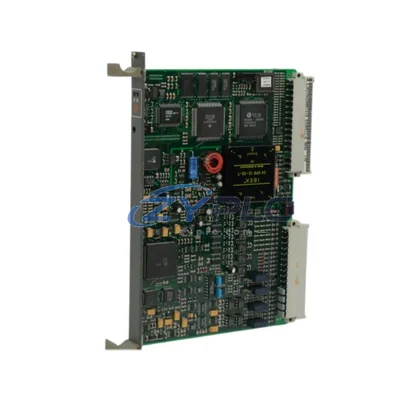
The Yokogawa SDV531-S23 S2 is a high-performance DCS signal validation module engineered for the CENTUM VP distributed control system platform. Designed to meet the rigorous demands of modern industrial automation, this module plays a critical role in reducing unplanned downtime risk, improving equipment utilization rates, and enabling smarter, data-driven control decisions across complex production environments. Whether deployed in chemical processing, oil refining, power generation, or advanced manufacturing, the SDV531-S23 S2 delivers the signal integrity and system responsiveness that energy-conscious facilities require.
In today’s industrial landscape, unplanned downtime is often invisible — buried in signal noise, delayed feedback loops, and poorly calibrated control responses. The SDV531-S23 S2 addresses this directly by providing accurate, validated signal data to the CENTUM VP controller, ensuring that every actuator command, every motor start, and every valve adjustment is based on clean, reliable process information. This eliminates the energy penalties associated with overcorrection, hunting behavior, and unnecessary equipment cycling.
Product Specification Table
| Parameter |
Specification / Value |
| SKU |
SDV531-S23 S2 |
| Brand |
Yokogawa |
| Series |
CENTUM VP |
| Module Type |
DCS Signal Validation Module |
| Power Consumption |
Low-power design optimized for continuous 24/7 industrial operation |
| Operating Efficiency |
High-accuracy signal processing minimizes control loop unplanned downtime |
| Compatible Systems |
Yokogawa CENTUM VP DCS Platform |
| Application Environment |
Chemical, Petrochemical, Power Generation, Pharmaceutical, Advanced Manufacturing |
| Value |
Reduces overcorrection cycles, lowers motor and actuator energy draw through validated feedback |
| Origin |
Japan |
| Warranty |
warranty terms confirmed during quotation |
| Stock Status |
RFQ Available — Ships within 3–5 business days after testing |
System Compatibility and Application
The SDV531-S23 S2 operates as a foundational signal validation layer within the CENTUM VP architecture. Its role becomes especially significant when considered alongside the broader ecosystem of Yokogawa automation components that together form an maintenance-focused control network.
At the field level, process variables — temperature, pressure, flow, and level — are collected by Yokogawa EJX series differential pressure transmitters and routed through the CENTUM VP I/O subsystem. The SDV531-S23 S2 validates these incoming signals before they reach the controller, filtering out noise and detecting sensor drift that would otherwise cause the control system to issue unnecessary corrective commands. When paired with the Yokogawa ADV151 analog input module and ADV161 digital input module, the signal chain from field instrument to controller becomes highly reliable, reducing the frequency of false alarms and spurious actuator activations that waste energy.
On the output side, validated control signals are dispatched through Yokogawa ADV551 analog output modules to variable frequency drives (VFDs) and control valves. When the SDV531-S23 S2 ensures that the input data is accurate, the VFD — such as a Yaskawa GA700 series drive — can modulate motor speed precisely to match actual process demand rather than running at fixed or overcorrected speeds. This alone can help restore stable operation when a compatible replacement is required.
For facilities using the Yokogawa STARDOM FCN/FCJ remote controllers at satellite process units, the SDV531-S23 S2 can serve as a validation checkpoint for signals aggregated before transmission to the central CENTUM VP system. This ensures that maintenance planning decisions made at the central controller are based on trustworthy data from remote nodes, preventing unplanned downtime caused by acting on corrupted or drifted field signals.
Power quality monitoring is another dimension where the SDV531-S23 S2 contributes indirectly. When integrated with Yokogawa WT series power analyzers or third-party power monitoring units connected via FOUNDATION Fieldbus or HART protocol, the CENTUM VP system gains visibility into real-time operating load at the equipment level. The SDV531-S23 S2 supports this architecture by maintaining the integrity of the signal infrastructure that carries power measurement data back to the control layer.
Human-machine interface visibility is provided through the Yokogawa CENTUM VP HIS (Human Interface Station), where operators can monitor validated process trends, energy KPIs, and equipment status in real time. Accurate signal validation from the SDV531-S23 S2 means that the data displayed on the HIS reflects true plant conditions, enabling operators to make informed decisions about load scheduling, equipment sequencing, and energy-intensive process steps.
Communication integrity across the system is maintained through the Yokogawa ESB Bus and V net control network, which connect the SDV531-S23 S2’s host I/O unit to the CENTUM VP field control stations (FCS). This deterministic, high-speed communication backbone ensures that validated signals reach the controller with minimal latency, supporting tight control loop performance and reducing the energy penalties associated with delayed or missed control actions.
Maintenance and Replacement Notes
In a typical continuous process plant — such as a refinery or chemical complex — the CENTUM VP system may be managing hundreds of control loops simultaneously. Each loop that operates on inaccurate or unvalidated signal data is a potential source of unplanned downtime. A pressure control loop that receives a noisy signal may oscillate, causing a control valve to hunt between open and closed positions. This hunting behavior not only wastes the energy consumed by the valve actuator itself but also creates pressure fluctuations that force upstream pumps to work harder, compounding the energy penalty across multiple pieces of equipment.
The SDV531-S23 S2 eliminates this class of unplanned downtime by ensuring that the signal entering the control loop is clean and validated before the controller acts on it. In practice, facilities that have deployed comprehensive signal validation across their CENTUM VP I/O infrastructure report measurable reductions in control valve wear, pump operating load, and overall process variability — all of which translate directly into lower operating costs and reduced maintenance frequency.
From a production line rhythm (takt time) perspective, validated signals also reduce the frequency of unplanned shutdowns caused by false alarms or sensor failures. Every unplanned shutdown represents not only lost production but also the energy cost of restarting equipment — bringing motors up to speed, re-pressurizing systems, and re-establishing thermal equilibrium in heat-intensive processes. By maintaining signal integrity, the SDV531-S23 S2 supports higher equipment availability and more consistent production throughput.
Predictive maintenance programs also benefit significantly from accurate signal validation. When vibration, temperature, and process data collected from field instruments are validated before storage in the CENTUM VP historian, the quality of the data used for predictive analytics improves substantially. Maintenance teams can identify genuine equipment degradation trends rather than chasing artifacts introduced by signal noise, allowing them to schedule maintenance during planned downtime windows rather than responding to unexpected failures.
All units supplied by ZYPLC undergo rigorous outgoing inspection and functional testing prior to shipment. Each SDV531-S23 S2 module is verified for signal accuracy, communication integrity, and compatibility with the CENTUM VP platform before dispatch. This testing protocol, combined with our warranty terms confirmed during quotation, ensures that customers receive a module that performs to specification from day one, minimizing the risk of installation delays or early-life failures that would disrupt production and waste energy during restart sequences.
Product Sourcing FAQ
Q1: How does the SDV531-S23 S2 contribute to measurable operational stability in a CENTUM VP system?
By validating field signals before they reach the controller, the SDV531-S23 S2 prevents control loops from responding to noise or sensor drift. This reduces unnecessary actuator movements, minimizes motor cycling, and allows variable frequency drives to operate at optimal speeds based on accurate process feedback — directly lowering operating load across pumps, fans, compressors, and other motor-driven equipment.
Q2: Is the SDV531-S23 S2 compatible with existing CENTUM VP installations, and can it replace older signal validation modules?
Yes. The SDV531-S23 S2 is designed for the Yokogawa CENTUM VP platform and is compatible with the standard CENTUM VP I/O bus architecture. It can replace legacy signal validation modules in existing installations, provided the host I/O unit and firmware version are compatible. ZYPLC recommends verifying the target system’s hardware revision and software version before ordering. Our technical team is available to assist with compatibility assessment.
Q3: What testing is performed before shipment, and what does the warranty terms confirmed during quotation cover?
Every SDV531-S23 S2 supplied by ZYPLC undergoes functional testing that includes signal accuracy verification, communication protocol validation, and visual inspection for physical integrity. The warranty terms confirmed during quotation covers manufacturing defects and functional failures under normal operating conditions. It does not cover damage resulting from improper installation, overvoltage events, or use outside the module’s specified environmental ratings.
Q4: What is the typical lead time, and is the SDV531-S23 S2 available from stock?
The SDV531-S23 S2 is currently RFQ Available at ZYPLC. Standard lead time from order confirmation to shipment is 3–5 business days, allowing for pre-shipment testing and documentation preparation. Expedited shipping options are available upon request. For large-quantity orders or project-based procurement, please contact our sales team to discuss scheduling and pricing.