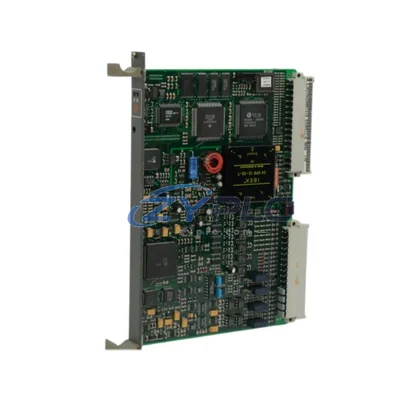
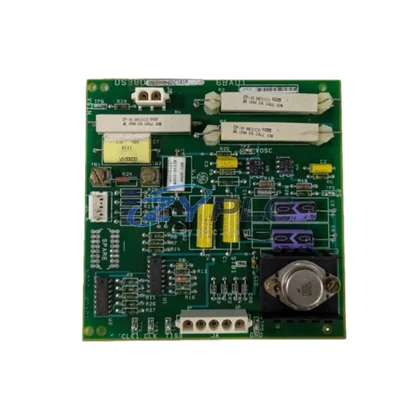
Yokogawa TAHYD16-3EAM DCS Module for Centum Automation
The Yokogawa TAHYD16-3EAM is a high-performance DCS master module engineered for the Centum VP distributed control system platform. Designed to meet the rigorous demands of modern industrial automation, this module plays a central role in reducing downtime risk, improving equipment utilization rates, and enabling real-time process optimization across complex production lines. Whether deployed in petrochemical refining, power generation, pharmaceutical manufacturing, or continuous process industries, the TAHYD16-3EAM delivers the precision control and system-level intelligence that maintenance-focused facilities require.
In today’s industrial environment, energy efficiency is no longer a secondary consideration — it is a core operational metric. The TAHYD16-3EAM addresses this directly by providing deterministic, high-speed communication between field devices and the Centum VP control network, minimizing latency-induced inefficiencies that can cause motors to run longer than necessary, actuators to overcorrect, and process loops to oscillate. By tightening control loop performance, this module directly contributes to measurable reductions in operating-hour consumption per unit of output.
Every unit supplied by ZYPLC is sourced from verified channels, subjected to full functional testing prior to shipment, and backed by a . Stock is maintained on-hand to support urgent replacement and MRO procurement needs.
Product Specification Table
| Parameter |
Specification / Value |
| SKU / Part Number |
TAHYD16-3EAM |
| Brand |
Yokogawa |
| Series |
Centum VP |
| Module Type |
DCS Master Module |
| Origin |
Japan |
| Communication Protocol |
Vnet/IP (Yokogawa proprietary high-speed control bus) |
| Operating Voltage |
24 VDC (nominal, supplied via system bus) |
| Power Consumption |
Low-standby design; optimized for continuous 24/7 operation |
| Operating Temperature |
0°C to 55°C |
| Compatible Systems |
Centum VP R5.x / R6.x, CENTUM CS 3000 (select configurations) |
| Application Environment |
Process industries: oil & gas, chemicals, power, pharma, pulp & paper |
| Maintenance Value |
Reduces control loop latency → less motor overcorrection → lower kWh/unit output |
| Warranty |
12 Months (ZYPLC) |
| Availability |
RFQ Available — shipment arranged after confirmation |
| Testing |
Full functional test prior to shipment |
System Compatibility and Application
The TAHYD16-3EAM does not operate in isolation — its maintenance planning value is fully realized when integrated within a well-architected Centum VP control system. In a typical industrial-grade plant configuration, the TAHYD16-3EAM master module coordinates data exchange between field I/O subsystems and the central control domain, working in concert with components such as the Yokogawa AAI143-H00 analog input module, which captures real-time current and voltage signals from field transmitters to feed accurate operating load data into the control loop.
On the drive side, the TAHYD16-3EAM integrates seamlessly with Yokogawa VariFlex variable frequency drives via the Vnet/IP bus, enabling the control system to issue precise speed reference commands to motors based on actual process demand rather than fixed setpoints. This demand-responsive motor control is one of the most impactful levers for reducing downtime in pump, fan, and compressor applications — often yielding Actual operating results depend on the installed system, load profile, and commissioning parameters.
For servo-driven axes in hybrid process-discrete environments, the TAHYD16-3EAM can coordinate with Yokogawa CP451-10 controller modules to synchronize motion sequences with process state, ensuring that servo systems are only energized and active during productive machine cycles. Idle-state power draw is minimized through coordinated enable/disable signaling managed at the DCS level.
Power quality and consumption monitoring is handled upstream by devices such as the Yokogawa WT series power analyzers and AMM12C multi-input modules, which feed real-time power factor, harmonic distortion, and load data back through the I/O network. The TAHYD16-3EAM processes this telemetry and makes it available to the Centum VP historian and alarm management layers, enabling operators to identify energy anomalies — such as a motor drawing 20% above baseline — before they escalate into failures or sustained waste.
HMI visibility is provided through Yokogawa FAST/TOOLS or compatible Exaopc OPC server interfaces, which surface energy KPIs — including real-time kWh consumption, efficiency ratios, and equipment utilization percentages — on operator workstations. This closed-loop visibility allows shift operators to make informed decisions about load scheduling, equipment sequencing, and setpoint adjustments that collectively reduce peak demand charges and improve overall energy intensity.
For facilities running Yokogawa PRM (Plant Resource Manager), the TAHYD16-3EAM’s diagnostic data feeds directly into predictive maintenance workflows. Abnormal communication patterns or module-level fault flags can trigger early maintenance alerts, preventing unplanned downtime that would otherwise result in energy-intensive restart sequences and production losses. Complementary field devices such as the Yokogawa EJX series differential pressure transmitters and YTA series temperature transmitters provide the high-accuracy process data that makes this predictive capability reliable.
Maintenance and Replacement Notes
In a continuous chemical processing plant, unplanned DCS communication failures can trigger emergency shutdowns that consume significant energy during restart — including purging cycles, heat-up sequences, and pump priming operations that may run for hours before production resumes. The TAHYD16-3EAM’s robust Vnet/IP master communication architecture is designed for high availability, with redundancy support that keeps the control network operational even during individual component faults.
By maintaining stable, low-latency communication between the field and the control layer, the TAHYD16-3EAM enables tighter PID loop tuning. Tighter loops mean less overshoot, less integral windup, and less corrective action — all of which translate directly into reduced actuator travel, lower valve wear, and less energy expended on unnecessary control corrections. In a large refinery with hundreds of control loops, the cumulative operational stability from improved loop performance can be substantial.
Production line throughput — or takt time — is also improved when the DCS master module operates with minimal jitter. Consistent scan cycle timing ensures that batch sequences execute on schedule, reducing idle time between production steps. Equipment that sits idle but remains energized (heaters at setpoint, agitators running, pumps circulating) consumes energy without producing output. The TAHYD16-3EAM’s deterministic communication helps compress these idle windows and improve the ratio of productive machine time to total operating time.
Maintenance cost reduction is another measurable benefit. Because the TAHYD16-3EAM supports comprehensive diagnostic reporting through the Centum VP system, maintenance teams can move from reactive to condition-based maintenance strategies. Rather than replacing modules on fixed schedules, technicians can act on actual health data — extending the useful life of components, reducing spare parts consumption, and eliminating the energy costs associated with unnecessary maintenance shutdowns.
Product Sourcing FAQ
Q1: How does the TAHYD16-3EAM contribute to measurable operational stability on the production floor?
The module improves DCS communication determinism, which enables tighter control loop performance. Tighter loops reduce motor overcorrection, actuator hunting, and process oscillation — all of which waste energy. When combined with VFD integration and real-time power monitoring, facilities typically observe reductions in specific operating load per unit of output.
Q2: Is the TAHYD16-3EAM compatible with both Centum VP R5 and R6 systems?
Yes. The TAHYD16-3EAM is designed for the Centum VP platform and is compatible with R5.x and R6.x system configurations. For CENTUM CS 3000 compatibility, please confirm your system revision with our technical team prior to ordering.
Q3: What is the recommended replacement procedure, and how long does it take?
Module replacement follows Yokogawa’s standard hot-swap procedure for Centum VP master modules. With a pre-configured replacement unit, the swap can typically be completed within a planned maintenance window of under 30 minutes, minimizing production interruption and the associated energy costs of an extended shutdown.
Q4: What does the cover, and what testing is performed before shipment?
Every TAHYD16-3EAM supplied by ZYPLC undergoes full functional testing — including communication interface verification, power-on diagnostics, and I/O channel checks — before shipment. The covers defects in materials and workmanship under normal operating conditions. Expedited replacement support is available for critical production environments.