Yokogawa VC401-10 VNET Coupler Unit: Industrial Data Link for CENTUM VP DCS Networks
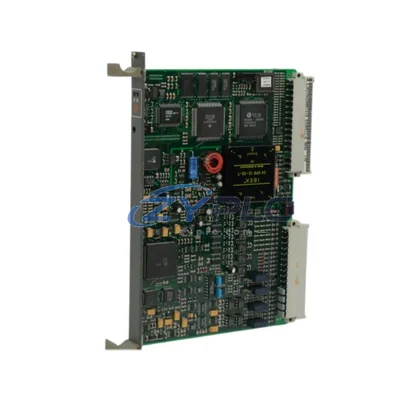
The Yokogawa VC401-10 is a high-performance VNET Coupler Unit engineered for seamless V-net bus communication within Yokogawa CENTUM VP Distributed Control Systems. As a critical industrial network interface, the VC401-10 bridges field-level instrumentation, process controllers, remote I/O nodes, and supervisory SCADA platforms into a unified, real-time data fabric. In smart factory environments where millisecond-level response and deterministic communication are non-negotiable, the VC401-10 delivers the protocol integrity and network stability that modern process automation demands.
Compatibility & Integration Notes
| Parameter |
Specification |
| SKU |
VC401-10 |
| Brand / Series |
Yokogawa / CENTUM VP VC401 Series |
| Communication Protocol |
V-net (VNET/IP), Ethernet-based DCS Bus |
| Interface Type |
V-net Coupler / Bus Interface Module |
| Transmission Capability |
High-speed real-time process data exchange |
| Network Compatibility |
CENTUM VP, CENTUM CS 3000 DCS Architecture |
| System Application |
DCS Controller Coupling, Remote I/O Integration, SCADA Gateway |
| Product Type |
Communication Module / Industrial Network Interface |
| Origin |
Japan |
| Warranty |
Warranty and support terms confirmed before quote |
Connected Automation Data Flow
In a typical CENTUM VP installation, the VC401-10 sits at the heart of the V-net bus segment, coupling field control stations to the plant-wide communication backbone. Signal acquisition begins at the analog input level — modules such as the AAI143-H00 (16-channel analog input) and ADV151-P00 (16-channel digital input) collect process variables from transmitters, flow meters, and pressure sensors distributed across the plant floor. These raw signals are passed upward through the V-net bus, where the VC401-10 ensures lossless, high-speed data transfer to the pair of CP451-10 or CP461-10 Field Control Stations (FCS) responsible for executing PID loops, sequence logic, and safety interlocks.
As data flows from the FCS layer toward the supervisory tier, the VC401-10 maintains bus synchronization and coupler redundancy, preventing single-point failures from disrupting the entire control loop. The ANB10D-400 Ethernet communication module extends this data stream to the plant LAN, enabling the CENTUM VP HIS (Human Interface Station) and third-party SCADA systems to receive live process values, alarm states, and trend data without latency spikes. For remote I/O expansion, the SCP451-11 node controller connects additional I/O racks — including AAI543-H00 analog output modules and ADV551-P00 digital output modules — back through the V-net segment managed by the VC401-10, extending the control reach to distant field cabinets without additional engineering overhead.
Power integrity across the bus is maintained by the PW482-10 power supply module, which provides stable 24 VDC to the coupler and associated I/O modules. The AIP827 interface processor further supports protocol bridging between legacy BRAIN/HART field instruments and the CENTUM VP V-net backbone, ensuring that older transmitters and positioners remain fully visible within the SCADA historian and alarm management system. This end-to-end data chain — from sensor signal to SCADA dashboard — is made reliable and deterministic by the VC401-10’s role as the central V-net coupling node.
Solving Data Isolation in Industrial Sites
Many process plants face persistent challenges with data silos: legacy field devices speaking proprietary protocols, control islands that cannot share real-time data with MES or ERP layers, and remote monitoring gaps that force operators to rely on manual rounds rather than live dashboards. The Yokogawa VC401-10 directly addresses these pain points within CENTUM VP architectures.
By providing a robust V-net coupler interface, the VC401-10 eliminates the communication barriers between distributed field control stations and the plant-wide supervisory network. Protocol inconsistencies between older CENTUM CS 3000 segments and newer CENTUM VP nodes are resolved through the coupler’s backward-compatible bus design, allowing phased migration without full system replacement. Remote diagnostics become possible because the VC401-10 exposes bus health metrics — coupler status, communication error counts, and node availability — directly to the CENTUM VP engineering workstation and connected SCADA clients, enabling maintenance teams to identify and resolve network faults before they escalate into unplanned shutdowns.
Production line transparency is achieved through continuous data streaming from every connected I/O node to the historian, supporting OEE calculations, batch reporting, and predictive maintenance analytics. System expansion is equally straightforward: additional V-net segments and remote I/O racks can be coupled into the existing network without reconfiguring the core DCS architecture, protecting the capital investment in the installed base while accommodating new process units or capacity additions.
Every VC401-10 unit supplied by ZYPLC undergoes pre-shipment functional testing to verify coupler initialization, bus communication integrity, and module identification. Units are shipped with a warranty and support terms confirmed before quote, and Availability confirmed by RFQ inventory ensures RFQ-confirmed dispatch to minimize project lead times globally.
Industrial Connectivity FAQ
Q1: What communication latency can be expected from the Yokogawa VC401-10 in a CENTUM VP DCS network?
The VC401-10 operates on the high-speed V-net bus, which is designed for deterministic, low-latency process data exchange. In standard CENTUM VP configurations, control cycle times of 100 ms to 1 second are typical, with the coupler introducing negligible additional delay. Actual latency depends on the number of nodes on the bus segment and the configured scan rate of the Field Control Station.
Q2: Is the VC401-10 compatible with both CENTUM VP and CENTUM CS 3000 systems?
The VC401-10 is primarily designed for CENTUM VP DCS architectures. Compatibility with CENTUM CS 3000 depends on the specific system revision and bus configuration. We recommend consulting the Yokogawa hardware compatibility matrix or contacting our technical team to confirm interoperability for your specific installation.
Q3: How does the VC401-10 support network stability in high-availability process environments?
The VC401-10 supports redundant V-net bus configurations, allowing dual-coupler setups that provide automatic failover in the event of a single coupler failure. This redundancy architecture is critical for continuous process industries such as oil and gas, petrochemicals, and power generation, where downtime carries significant operational and safety consequences.
Q4: What does the warranty and support terms confirmed before quote cover, and how is pre-shipment testing conducted?
All VC401-10 units supplied by ZYPLC are Warranty terms are confirmed during quotation. Prior to shipment, each unit undergoes functional verification including power-on self-test, bus communication initialization, and module identification checks. Test records are available upon request. For warranty claims or technical support, contact our team directly.