Product identification and sourcing context
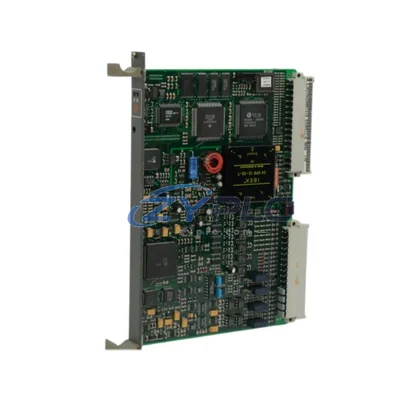
Yokogawa ANB10D-427/CU2T DCS Communication Module for CENTUM Systems is handled as a quote-based CENTUM DCS spare part for DCS maintenance, process automation, and legacy-system replacement projects. ZYPLC checks the exact model suffix, installed Yokogawa platform, required condition, quantity, and destination country before quotation.
| Brand |
Yokogawa |
| Model / SKU |
ANB10D-427/CU2T |
| Series context |
CENTUM VP |
| Part type |
Industrial Automation Spare Parts |
| RFQ basis |
Availability, condition, lead time, and export shipment options are confirmed before quote. |
Where this part is typically used
This item is requested for CENTUM VP / CS3000 process-control maintenance, field-control station support, and installed-base replacement sourcing. Yokogawa CENTUM VP, CENTUM CS3000, ProSafe, field-control unit, ESB bus node, and DCS I/O installations often require exact suffix and cabinet-context checks before a replacement can be sourced.
RFQ information for maintenance teams
- Exact part number, suffix, and Yokogawa platform or cabinet context.
- Installed system such as CENTUM VP, CENTUM CS3000, ProSafe, Vnet/IP, or ESB bus where applicable.
- Quantity, urgency, required condition, and destination country.
- Photos of module labels, terminal bases, bus-node nameplates, or existing spare packaging.
Browse related Yokogawa spare parts, review the CENTUM VP series, or compare similar Industrial Automation Spare Parts records. If the exact suffix is not shown, send the model and photos so the RFQ can be checked manually.
Request quote for this model
Yokogawa ANB10D-427/CU2T: Industrial Data Link for CENTUM VP Smart Factory Networks
The Yokogawa ANB10D-427/CU2T is a high-performance ESB (Enhanced Serial Backplane) Bus Node Unit engineered for seamless integration within Yokogawa’s CENTUM VP and CENTUM CS 3000 Distributed Control System (DCS) architectures. As a critical communication node, the ANB10D-427/CU2T bridges field-level instrumentation, remote I/O stations, and upper-level supervisory systems — forming the backbone of real-time industrial data flow across process automation environments. Whether deployed in oil and gas refineries, chemical processing plants, power generation facilities, or advanced manufacturing lines, this module delivers the network stability, protocol fidelity, and deterministic communication latency that modern smart factories demand.
In today’s industrial landscape, the integrity of the data link between field devices and control systems is non-negotiable. The ANB10D-427/CU2T fulfills this role by maintaining synchronised, low-latency communication across the ESB bus backbone, ensuring that process variables — from temperature transmitters and pressure sensors to flow meters and valve positioners — are accurately and continuously relayed to the CENTUM VP controller nodes. This uninterrupted data pipeline is the foundation upon which SCADA visibility, HMI responsiveness, and automated alarm management are built.
Compatibility & Integration Notes
| Parameter |
Specification |
| SKU / Part Number |
ANB10D-427/CU2T |
| Brand |
Yokogawa |
| Series |
CENTUM VP / CENTUM CS 3000 |
| Module Type |
ESB Bus Node Unit (DCS Communication Module) |
| Communication Protocol |
ESB (Enhanced Serial Backplane) Bus |
| Interface Type |
Backplane Bus / Node Interface |
| Transmission Capability |
High-speed deterministic data transfer across DCS node segments |
| Network Compatibility |
CENTUM VP, CENTUM CS 3000, Vnet/IP, V-net |
| System Application |
DCS, SCADA, HMI Integration, Remote I/O, Process Automation |
| Origin |
Japan |
| Product Category |
Industrial Automation / DCS Communication Module |
| Warranty |
Warranty and support terms confirmed before quote |
| Availability |
Availability confirmed by RFQ — Global Shipping |
Connected Automation Data Flow
The ANB10D-427/CU2T operates at the heart of a layered industrial communication architecture. At the field level, sensors and transmitters — including Yokogawa EJA-series differential pressure transmitters and YTA-series temperature transmitters — feed process data upward through FOUNDATION Fieldbus or HART-enabled I/O modules such as the AAI141-S00 and AAI543-H00 analog input cards. These signals are aggregated at the remote I/O node and transmitted via the ESB bus to the central controller, where the ANB10D-427/CU2T serves as the node interface unit managing bus arbitration and data synchronisation.
Within the CENTUM VP cabinet, the ANB10D-427/CU2T works in concert with the ACF11 Field Control Station (FCS) processor and the ANB10S ESB bus coupler to maintain a redundant, fault-tolerant communication ring. Should a primary path experience degradation, the system automatically reroutes data through the secondary ESB segment — a capability that is essential for continuous process operations where even milliseconds of data loss can trigger costly shutdowns.
At the supervisory layer, the real-time process data collected through the ANB10D-427/CU2T node is made available to Yokogawa’s CENTUM VP HIS (Human Interface Station) and integrated SCADA platforms via the Vnet/IP Ethernet backbone. Operators at the HIS workstation gain live visibility into process trends, alarm states, and controller outputs — all underpinned by the reliable node communication that the ANB10D-427/CU2T provides. For plants leveraging Yokogawa’s Exaquantum plant information management system (PIMS), the data chain extends further, enabling historical trending, KPI dashboards, and production reporting at the enterprise level.
In multi-cabinet DCS configurations, the ANB10D-427/CU2T enables seamless node expansion. Additional field control stations — such as the KFCS2 or PFCS — can be integrated into the ESB bus network without disrupting existing node communications, supporting phased plant expansions and capacity upgrades. For remote field stations connected via optical fiber or industrial Ethernet, the ANB10D node unit family provides the interface layer that bridges geographically distributed I/O clusters back to the central DCS, enabling remote diagnostics and parameter adjustment without requiring on-site intervention.
Edge computing integration is increasingly common in modern CENTUM VP deployments. Industrial edge gateways — such as Yokogawa’s OpreX Field Device Advisor or third-party IIoT gateways — connect to the DCS data layer through OPC-UA or Modbus TCP interfaces, pulling real-time process values from the CENTUM VP historian. The ANB10D-427/CU2T’s role in maintaining a stable, low-latency ESB bus ensures that the data quality reaching these edge nodes is consistent and reliable, which is critical for machine learning-based predictive maintenance and digital twin applications.
Solving Data Isolation in Industrial Sites
One of the most persistent challenges in legacy and hybrid industrial environments is data isolation — the condition where field devices, controllers, and supervisory systems operate in disconnected silos, preventing plant-wide visibility and coordinated control. The ANB10D-427/CU2T directly addresses this challenge by providing a standardised, high-integrity ESB bus interface that unifies communication across all nodes within the CENTUM VP or CS 3000 DCS network.
In plants where older CENTUM CS 3000 systems coexist with newer CENTUM VP installations, protocol incompatibility between node generations can create communication gaps. The ANB10D-427/CU2T’s compatibility with both platforms allows engineers to maintain a unified bus topology during phased migration projects, eliminating the need for costly parallel infrastructure. This cross-generation compatibility is particularly valuable in brownfield projects where capital expenditure must be carefully managed.
Remote monitoring and diagnostics are further enhanced by the ANB10D-427/CU2T’s role in the ESB bus network. By ensuring that all node communications are continuously available to the CENTUM VP’s built-in diagnostic tools, maintenance teams can remotely identify bus errors, node timeouts, and communication anomalies without dispatching field technicians. This capability reduces mean time to repair (MTTR) and supports predictive maintenance strategies that are central to Industry 4.0 initiatives.
Production line transparency — the ability to see real-time process status across every unit operation — is achieved when every field device is reliably connected to the DCS. The ANB10D-427/CU2T ensures that no node becomes a blind spot in the network, supporting the alarm management, event logging, and audit trail functions that regulatory compliance and operational excellence programs require. System scalability is also preserved: as production capacity grows, additional ESB bus nodes can be added to the network with minimal configuration overhead, protecting the long-term value of the DCS investment.
Every ANB10D-427/CU2T unit supplied by ZYPLC undergoes pre-shipment functional testing to verify communication integrity, bus arbitration performance, and hardware condition. Units are shipped with full documentation and are Warranty terms are confirmed during quotation.
Industrial Connectivity FAQ
Q1: What communication protocol does the Yokogawa ANB10D-427/CU2T use, and is it compatible with both CENTUM VP and CENTUM CS 3000?
The ANB10D-427/CU2T uses the ESB (Enhanced Serial Backplane) Bus protocol, which is the native backplane communication standard for Yokogawa’s CENTUM DCS platform. It is fully compatible with both CENTUM VP and CENTUM CS 3000 architectures, making it suitable for both greenfield installations and brownfield migration projects where both system generations coexist.
Q2: How does the ANB10D-427/CU2T contribute to network stability and low communication latency in a DCS environment?
The ANB10D-427/CU2T is designed for deterministic, real-time communication across the ESB bus. Its bus arbitration and node synchronisation functions ensure that process data is transmitted with consistent, predictable latency — typically within the millisecond range — which is essential for closed-loop control applications where delayed feedback can affect process stability and product quality.
Q3: Can the ANB10D-427/CU2T support system expansion without disrupting existing DCS operations?
Yes. The ESB bus architecture supported by the ANB10D-427/CU2T is designed for modular expansion. Additional field control stations, remote I/O nodes, and communication modules can be integrated into the bus network while the system remains in operation, provided that proper engineering procedures are followed. This hot-expansion capability minimises production downtime during plant upgrades and capacity additions.
Q4: What pre-shipment testing and warranty coverage does ZYPLC provide for the ANB10D-427/CU2T?
All ANB10D-427/CU2T units supplied by ZYPLC are subject to pre-shipment functional testing, including communication bus verification and hardware inspection. Each unit is covered by a warranty and support terms confirmed before quote from the date of shipment. In the event of a verified defect within the warranty period, ZYPLC will arrange for repair or replacement. For urgent requirements, expedited shipping options are available to minimise plant downtime.
RFQ sourcing notes for Yokogawa ANB10D-427/CU2T DCS Communication Module for CENTUM Systems
Product identification: Yokogawa ANB10D-427/CU2T DCS Communication Module for CENTUM Systems is listed by ZYPLC as a DCS Communication Module for RFQ-based industrial automation spare-part sourcing. The working identity should be confirmed against the complete model number, visible suffix, nameplate photo, and installed-system requirement before quotation.
System context: Yokogawa DCS and field-control modules should be checked by complete model code, suffix, node context, and CENTUM platform requirement. The current catalog context links this item with CENTUM VP and Industrial Automation Spare Parts, but final compatibility should always be checked against the buyer’s rack, panel, controller, drive, DCS, safety, or field-device configuration.
Application use: This product is handled as an industrial automation spare part where the exact model, suffix, and application context guide sourcing. Maintenance teams usually request this type of part when a production line, process unit, drive cabinet, monitoring rack, robot cell, or control cabinet needs a direct replacement or a verified compatible sourcing option.
- Complete model number / SKU: ANB10D-427/CU2T
- Quantity, destination country, and required delivery urgency
- Condition requirement: new surplus, refurbished, tested used, or compatible replacement
- Photos of the front label, side label, terminal block, connector, or installed cabinet position
- Any firmware, revision, voltage, communication, coating, or suffix requirement visible on the existing part
Availability, condition, and shipment
Availability is confirmed via RFQ. ZYPLC does not use this page to guarantee immediate stock, a fixed price, or one default condition. Where applicable, condition, testing scope, packing method, lead time, and export shipment options are confirmed in the quotation before payment.
Internal sourcing paths
Related model pages
FAQ
Can ZYPLC quote this exact model?
Send the full model number, photos, quantity, destination, and urgency. ZYPLC will review availability, condition, lead time, and sourcing options before quotation.
Can a similar model replace it?
Not automatically. Similar-looking industrial modules may differ by suffix, firmware, voltage, communication option, revision, or safety approval. Compatibility must be confirmed before using an alternative.
Is this an online checkout item?
No. This product page supports RFQ-based sourcing rather than automated checkout. The confirmed quotation should define condition, price, shipment method, and any available test or inspection scope.